




Traditional Magazine Stand
A traditional magazine stand keeps your papers and folios tidy, combining timber and brass to hold the day's reading close at hand.

Traditional Magazine Stand
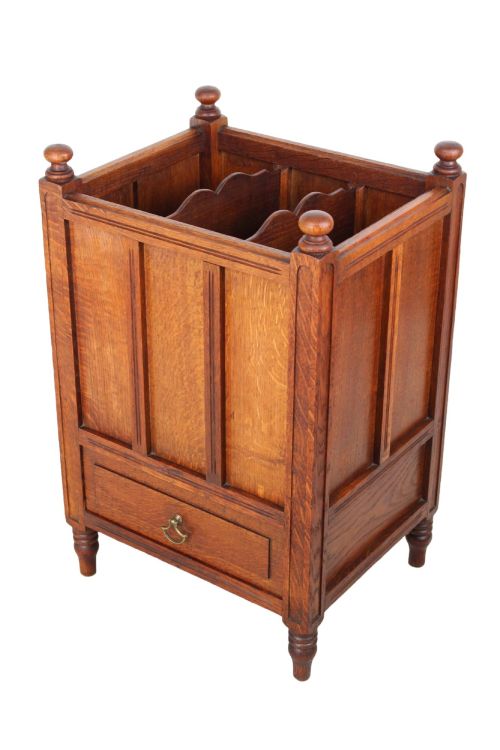
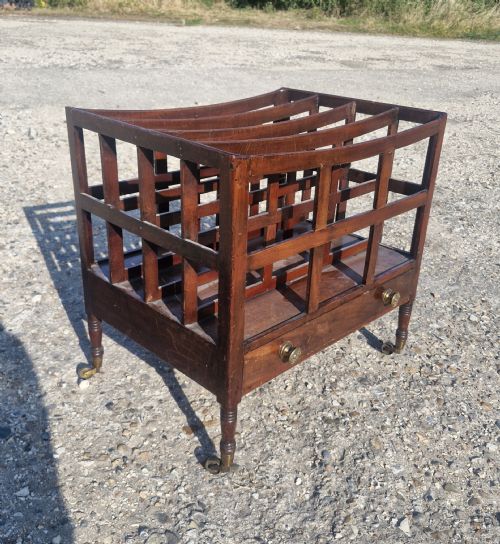
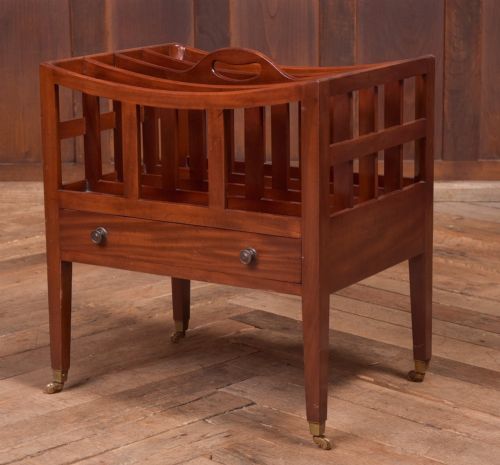
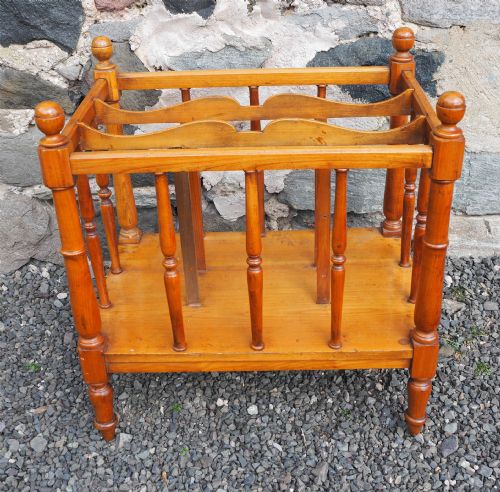
When you search for a traditional magazine stand, you find pieces designed to hold periodicals, newspapers, and sheet music within easy reach. These items range from open compartmentalised racks to revolving book stands and canterburys fitted with drawers.
The selections span several periods, drawing on Edwardian, Victorian, Regency, and George III styles. Mahogany and rosewood appear frequently alongside oak, fruitwood, and satinwood inlay.
Many of these stands take the form of canterburys or dedicated magazine holders. You will also encounter revolving bookcases and three-tier racks designed for domestic studies and living rooms.
Materials and construction
Cabinet makers relied heavily on hardwoods such as mahogany, rosewood, and oak to build these stands. Flame mahogany veneer and satinwood inlay added decorative contrast to the surfaces.
Metal components appear in brass fittings, stands, and castors that support revolving bookcases and mobile racks. Fruitwood also provided an alternative timber for smaller magazine holders.
Listings feature items spanning the 19th century, Edwardian era, Regency period, and the 1920s, constructed in mahogany, rosewood, oak, and brass.
Assessing quality and craftsmanship
Quality rests in the selection of timbers, such as figured rosewood and flame mahogany veneer, paired with fine satinwood inlay. The integration of brass castors and structural joinery dictates the distinction between standard items and finer specimens.
Finer examples demonstrate careful attention to compartmental division, especially in canterburys featuring drawers and turned supports. Simpler oak and fruitwood versions focus on functional utility rather than elaborate ornamentation.
The Traditional Magazine Stand Glossary
- Canterbury
- A low stand with partitions for holding sheet music, newspapers, or magazines, often featuring a small drawer below. Originating in the late 18th century, it remains a staple form.
- Regency
- A style spanning the early 19th century characterised by classical influences and rich timbers such as rosewood and mahogany. Pieces from this era often display clean geometric lines.
- Satinwood inlay
- A decorative technique using contrasting light-coloured wood inserted into the primary timber surface. It adds refined detail to mahogany and rosewood panels.
- Revolving bookcase
- A compact shelving unit mounted on a rotating pivot to allow easy access to books from any angle. They frequently incorporate brass stands and revolving mechanisms.
Traditional Magazine Stand: Frequently Asked Questions
What is a canterbury?
A canterbury is a low, partitioned stand originally designed for holding sheet music and papers.
Over time, these pieces evolved to serve as magazine racks in domestic interiors.
How do I date a mahogany rack?
Dating relies on the prevailing style of the period, such as Regency or Edwardian.
Examining the timber choice, such as flame mahogany veneer or satinwood inlay, helps confirm the era.
Where should I place a revolving stand?
These compact stands work well beside armchairs or desks where reading materials are kept.
The rotating mechanism allows convenient access in smaller study spaces.
What woods were used for stands?
Cabinet makers utilised dense hardwoods including mahogany, rosewood, and oak.
Lighter accents were achieved through fruitwood and satinwood inlay work.