

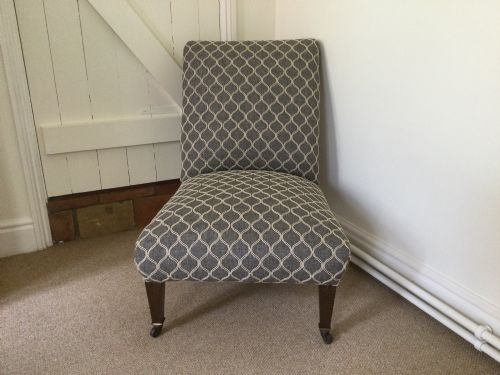


Traditional Low Bedroom Seat
A traditional low bedroom seat offers intimate proportions and graceful seating low to the floor, combining practicality with period charm for the home.
Traditional Low Bedroom Seat
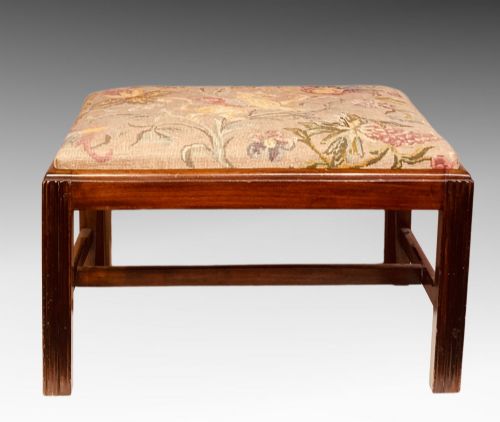
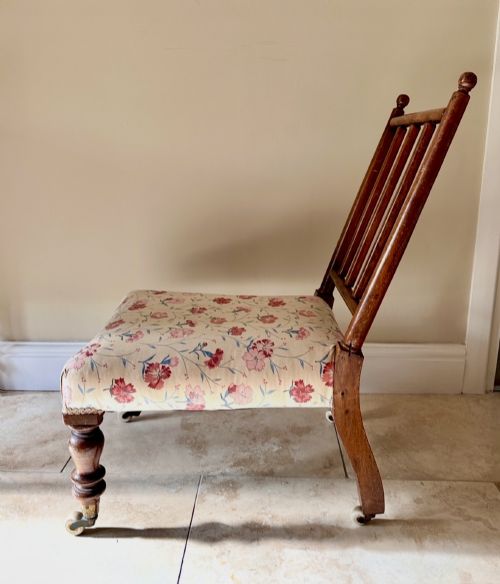
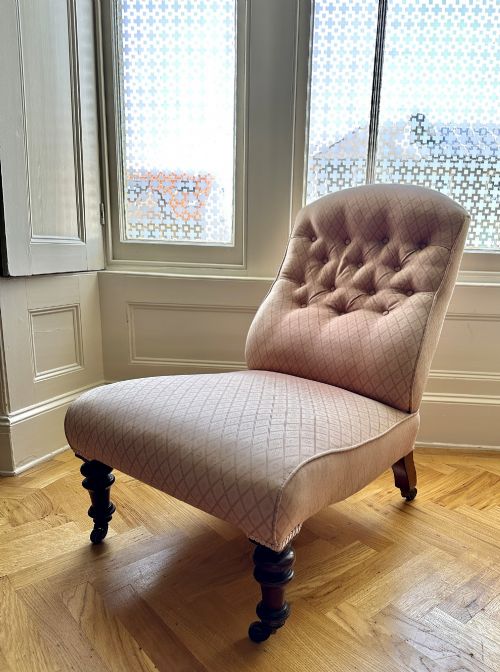
When you search for a traditional low bedroom seat, you are looking at compact seating designed for personal spaces, primarily taking the form of slipper chairs, nursing chairs, and dressing stools. These pieces sit close to the floor, originally serving practical domestic purposes in bedrooms and dressing rooms.
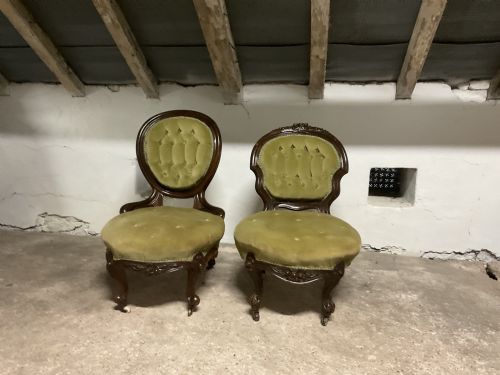
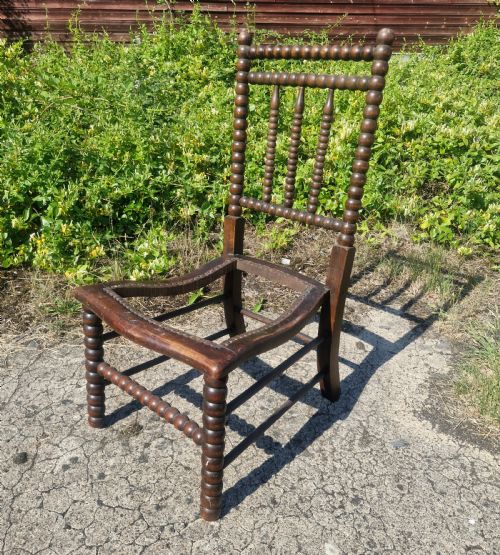
The selections available here span from the mid-nineteenth century through the Edwardian era and into the 1930s. You will encounter styles ranging from plain wooden frames to elaborate Victorian button backs, William IV designs, and Queen Anne style walnut dressing stools.
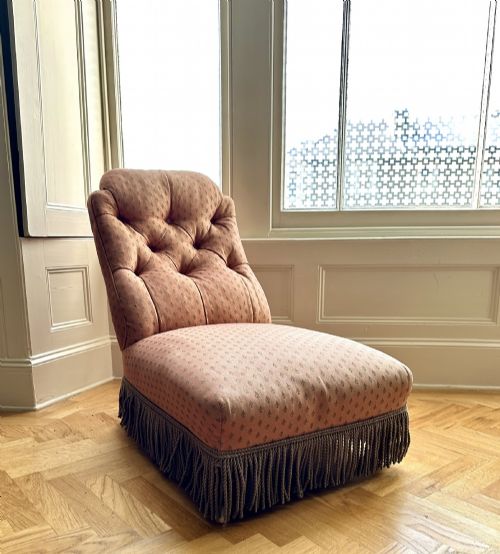
The majority of these seats are upholstered items designed for comfort, often featuring low backs or armless silhouettes. They function well today as accent chairs in contemporary interiors, maintaining their historic character.
How They Were Made
Frames rely on solid timbers such as mahogany, oak, rosewood, and general wood structures to provide sturdy support beneath upholstery. Craftspeople shaped these timbers into distinct styles, incorporating turned wooden legs, bobbin frames, and brass details.
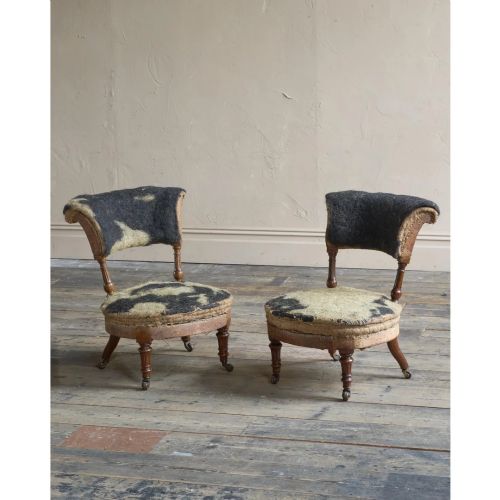
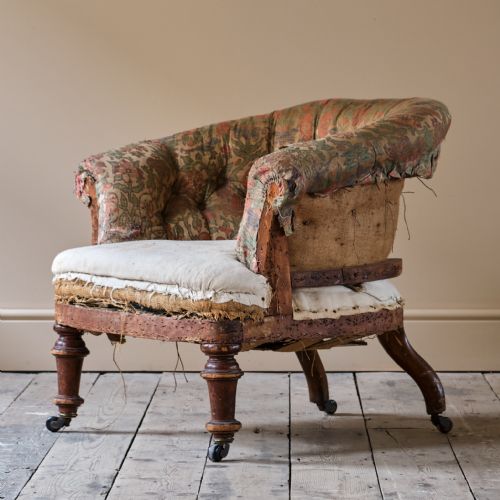
Traditional upholstery methods utilise materials like hessian as a foundation beneath fabric and velvet coverings. Button backs, fringing, and vintage linen finishes were applied by hand to complete the construction of these chairs and stools.
Listings feature items constructed from mahogany, oak, rosewood, and timber, upholstered in fabric, velvet, hessian, and vintage linen.
What Varies in Quality
The grade of timber used for the frame establishes the baseline integrity of the piece, with dense hardwoods like mahogany and rosewood representing solid construction. Finer examples display meticulous joinery and carefully turned components that maintain their stability over generations.
The sophistication of the upholstery work and the choice of covering materials dictate the visual impact of the seat. Pieces retaining high-grade velvet, vintage linen, or traditional button-back detailing reflect a higher standard of craftsmanship.
Howard and Sons
The Traditional Low Bedroom Seat Glossary
- Slipper chair
- An upholstered chair with low legs designed originally for ladies to sit upon while putting on shoes or garments.
- Nursing chair
- A low-seated chair historically used by mothers for feeding infants, typically featuring an upholstered back.
- Dressing stool
- A compact seat placed near a dressing table, often constructed with a solid wood frame and an upholstered top.
- Bobbin frame
- A wooden framework turned on a lathe to resemble a series of bobbins or spools strung together.
- Button back
- An upholstery technique where buttons are pulled deep into the padding to create a quilted diamond pattern.
Traditional Low Bedroom Seat: Frequently Asked Questions
What is a traditional low bedroom seat?
A traditional low bedroom seat is a compact, low-to-the-ground chair or stool designed for domestic dressing rooms and chambers. These pieces include slipper chairs, nursing chairs, and dressing stools from past centuries.
They are characterised by their lack of high legs, making them suitable for intimate spaces or as decorative accent seating in modern homes.
How were these chairs originally used?
These seats were placed in bedrooms and dressing rooms to provide comfortable seating for personal tasks such as dressing or nursing infants. Their low profile made them practical for sitting close to the floor.
Over time, they transitioned from utilitarian furniture into decorative accent pieces used in living areas and studies.
How do I identify a Victorian bedroom chair?
Victorian examples often feature rich timbers like mahogany or rosewood, combined with upholstered button backs, fringe details, or turned wooden legs. They frequently reflect revival styles or mid-nineteenth-century cabinet-making techniques.
Examining the underlying frame materials and upholstery style helps date the piece to the nineteenth century.
Can I use a bedroom seat in a living room?
These seats integrate well into modern living rooms as accent chairs, offering low-profile seating that does not overwhelm smaller spaces. Their historic upholstery and distinct silhouettes add character to contemporary interiors.
Pairing a vintage slipper chair or dressing stool with modern furnishings creates a balanced and eclectic room scheme.