



Traditional Low Accent Chair
A traditional low accent chair brings nineteenth-century seating and low proportions into a room with distinct character.
Traditional Low Accent Chair
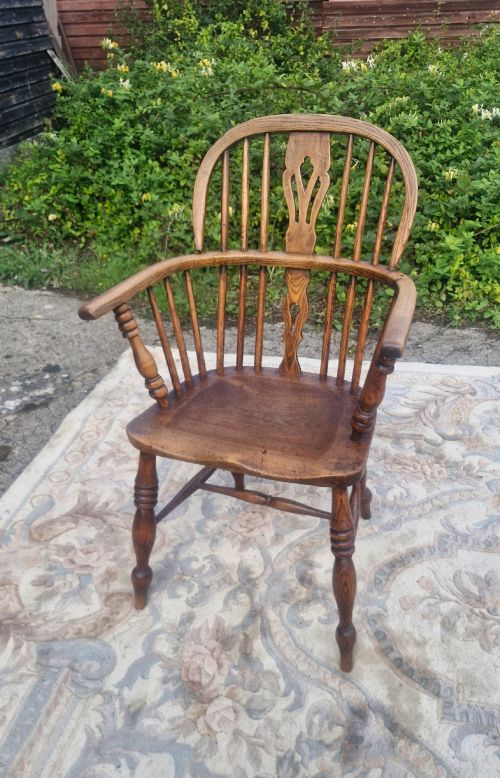
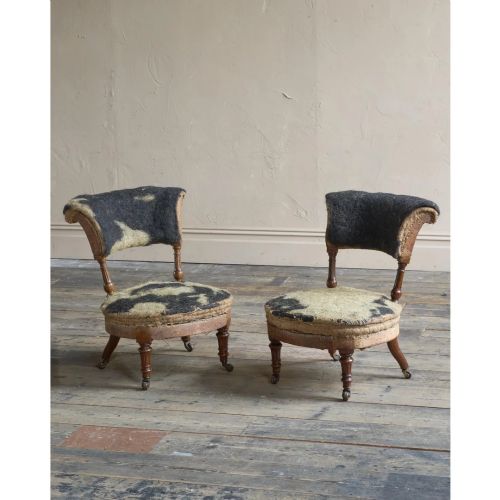
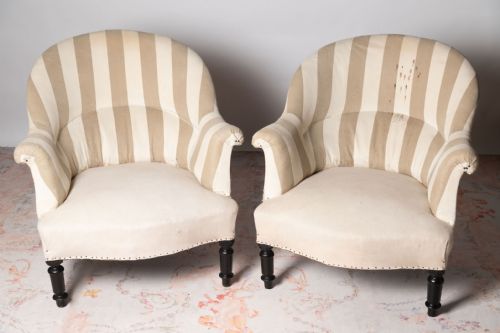
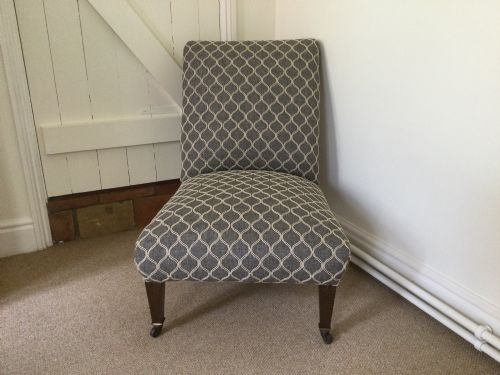
When you search for a traditional low accent chair, you encounter a range of nineteenth-century seating designed for low placement and comfortable repose. These forms include Victorian bedroom chairs, nursing chairs, slipper chairs, and low back Windsor chairs.
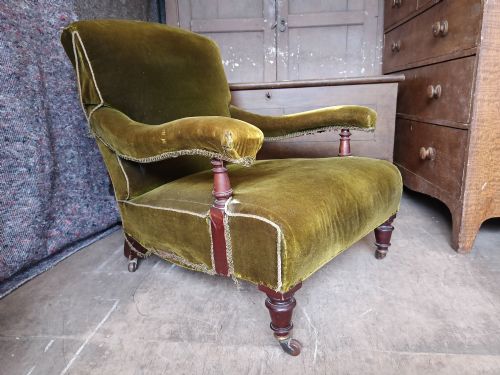
The pieces on this page span the Victorian era, the Edwardian period, and the early twentieth century. They appear in formats such as open armchairs, tub armchairs, and gossip chairs, originating from English and French workshops.
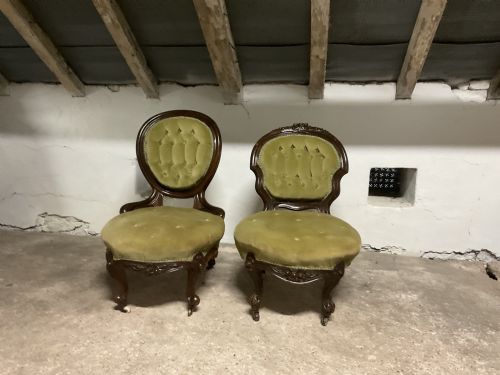
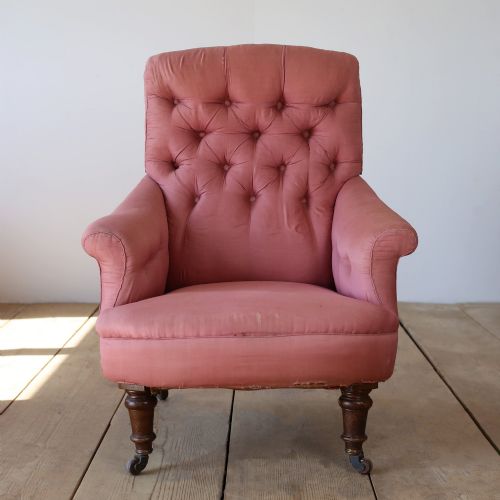
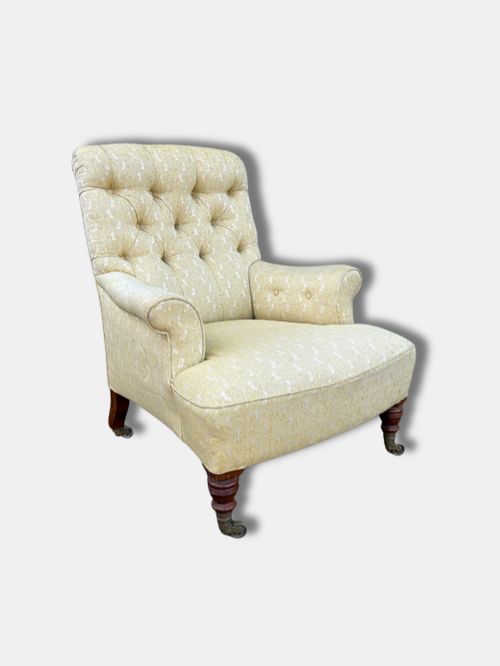
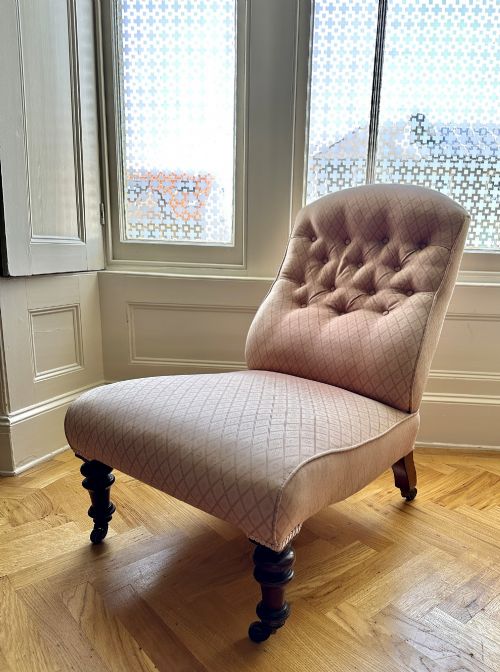
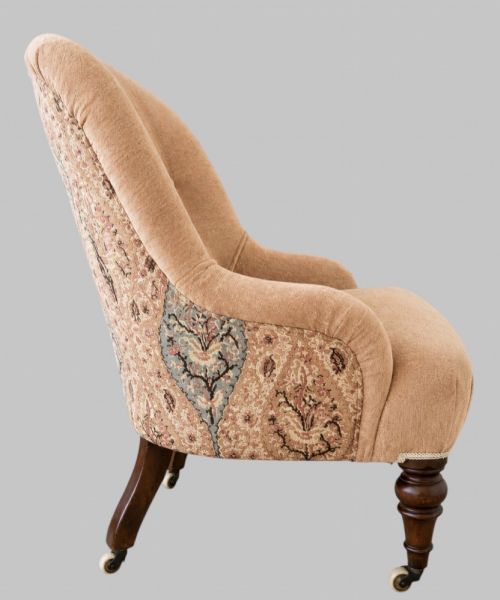
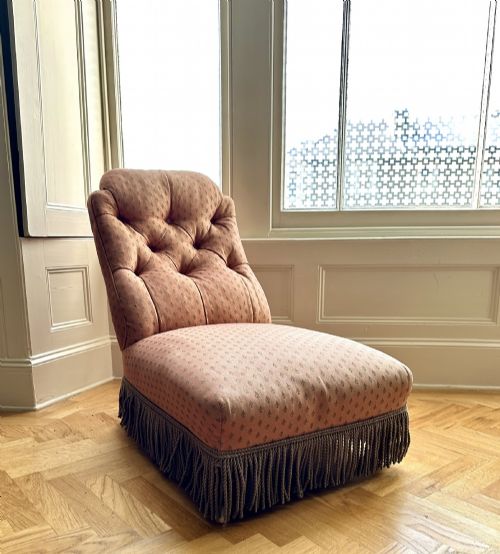
You are most likely to meet upholstered slipper chairs and low-slung nursing chairs featuring button backs, velvet or fabric coverings, and turned wood or ebonised legs.
How they were made
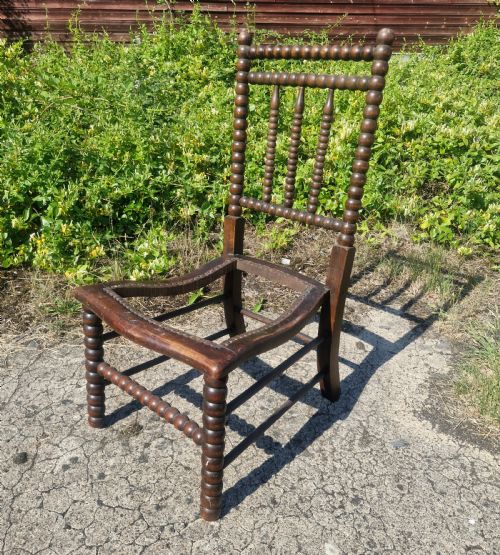
The frames are constructed from traditional timbers including mahogany, oak, elm, ash, yew, and rosewood, sometimes supported by brass or iron components. Woodworkers shaped these materials into bobbin-framed structures, spindle backs, and solid wood bases.
Upholstery relies on traditional textiles such as velvet, wool, linen, carpet, and printed fabrics, often finished with button-back detailing and fringes. Makers employed internal padding and springs to achieve the low, supportive profiles characteristic of the era.
Gossip chairs allowed two people to sit facing opposite directions for intimate Victorian conversations.
What varies in quality
Quality reveals itself in the integrity of the timber frame and the skill of the joinery, from hand-carved details to the sturdiness of the low stance. Finer examples retain their original structural balance and genuine period upholstery materials.
The distinction between standard pieces and exceptional ones rests on maker attribution, stamp marks, and the subtlety of proportion. Original maker stamps and untouched nineteenth-century textiles elevate the standing of a chair.
Howard and Sons·J.Mills
The Traditional Low Accent Chair Glossary
- Nursing chair
- A low Victorian armchair designed originally for nursing infants. Its shortened legs and supportive back provide comfort in domestic spaces.
- Windsor chair
- A wooden chair built with a solid saddle-shaped seat into which the back and legs are dowelled directly. They appear here in low-back formats using timbers like elm and ash.
- Button back
- An upholstery technique where buttons are pulled deep into the padding in a geometric pattern. This method secures the internal stuffing and creates a textured surface.
- Bobbin frame
- Furniture framing turned on a lathe to resemble a series of wooden bobbins or spools. It is a decorative turning style frequently seen on nineteenth-century seating.
Traditional Low Accent Chair: Frequently Asked Questions
What is a traditional low accent chair?
A traditional low accent chair is a nineteenth-century or early twentieth-century seating form designed with a low centre of gravity. These pieces encompass slipper chairs, nursing chairs, and low Windsor armchairs.
They bring historic character and compact seating to modern interiors, functioning well in bedrooms, reading corners, and living spaces.
What woods were used for these chairs?
Cabinet makers utilised a variety of hardwoods and softwoods depending on the style. Mahogany, oak, rosewood, elm, ash, and yew appear frequently across the listings.
In some instances, frames incorporate brass hardware or iron bracing to reinforce the low structures.
How do I identify a Victorian slipper chair?
A Victorian slipper chair is characterised by its very low seat and absence of arms, designed to facilitate dressing. They frequently feature button-backed upholstery and turned wooden legs.
Fabric choices on these chairs often include velvet, linen, or patterned textiles reflecting nineteenth-century tastes.