
Traditional Leather Club Armchair
A traditional leather club armchair offers deep, heavy seating built from sturdy hardwood frames and rich animal hide.
Traditional Leather Club Armchair
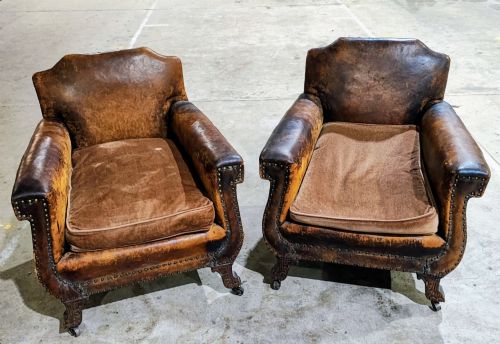
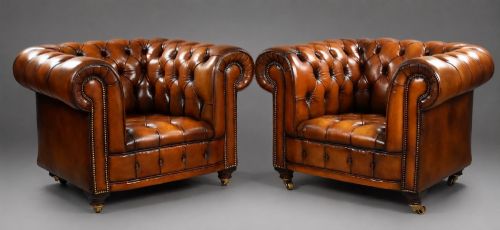
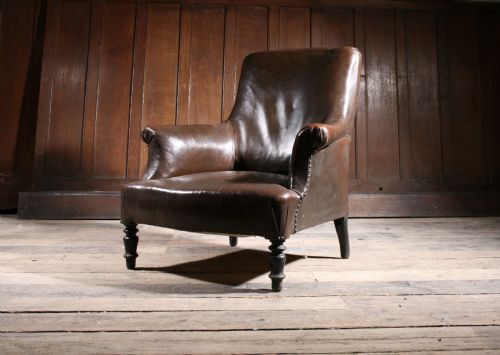
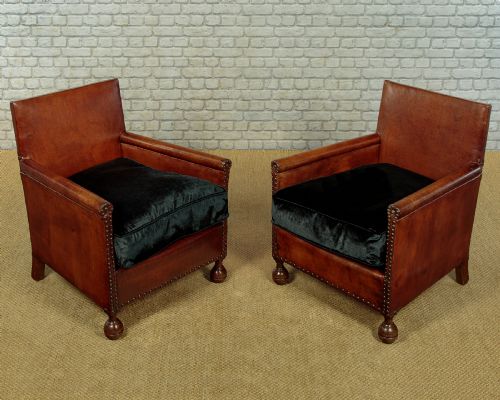
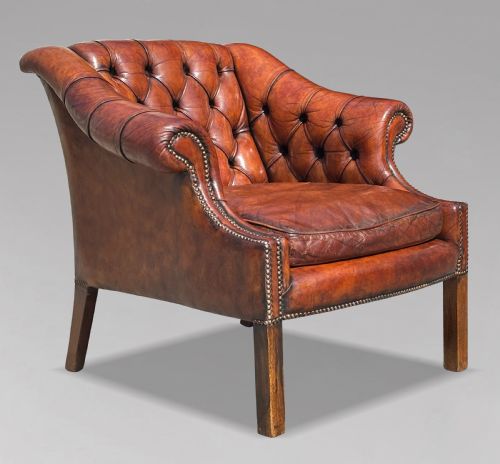
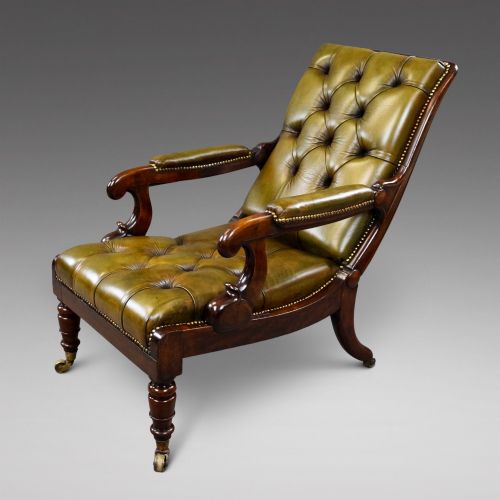
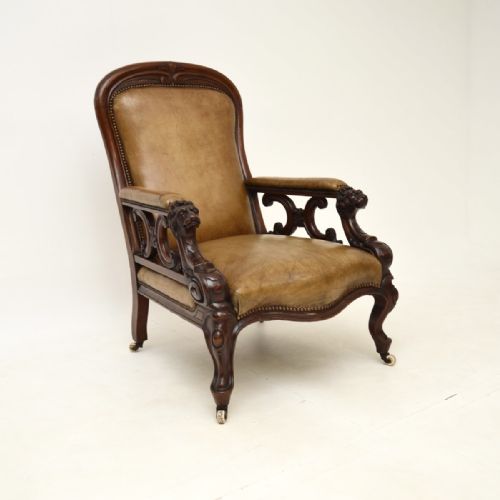
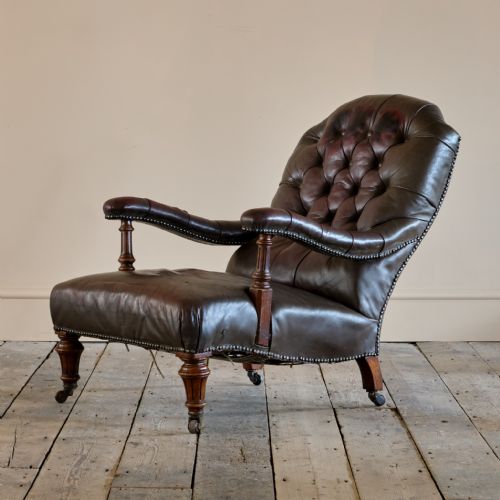
A traditional leather club armchair is a substantial seating form built for comfort, frequently encountered in brown, tan, or green hides across this selection. These pieces span periods from the Georgian era through the Victorian years and into the 1930s Art Deco movement, maintaining a low, welcoming profile designed for daily use.
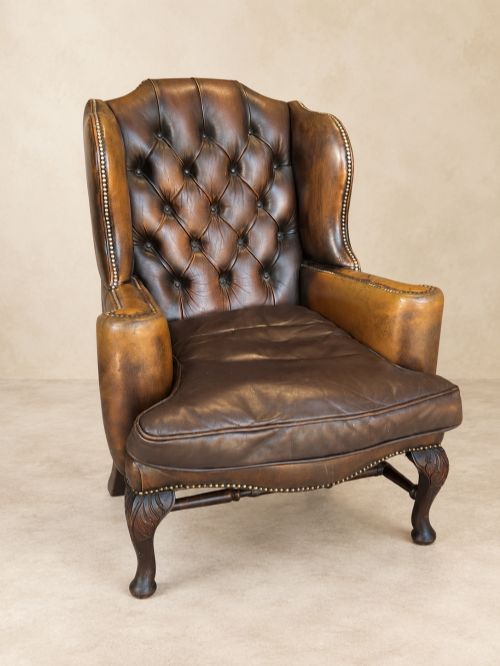
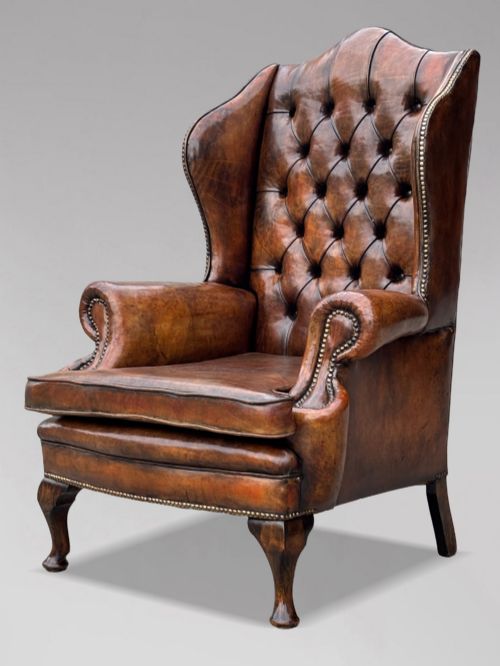
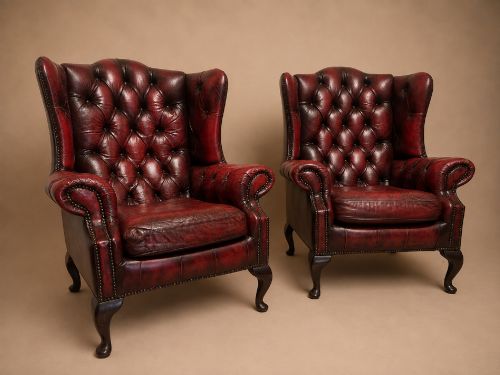
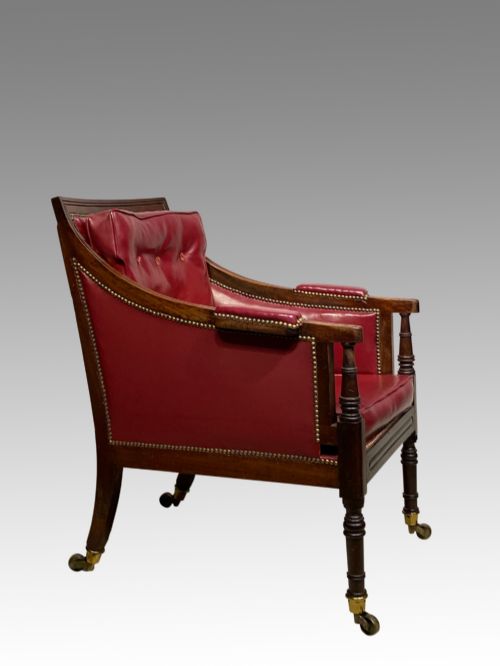
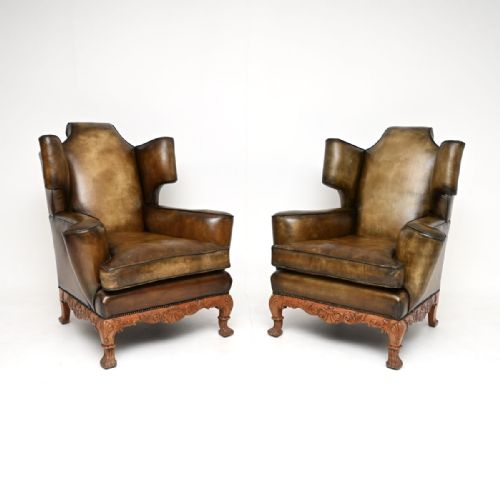
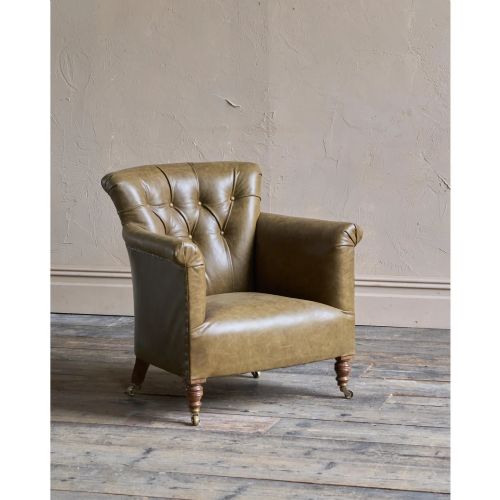
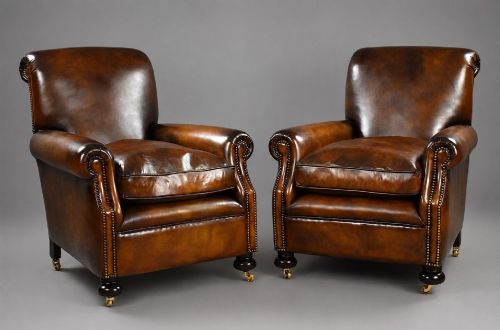
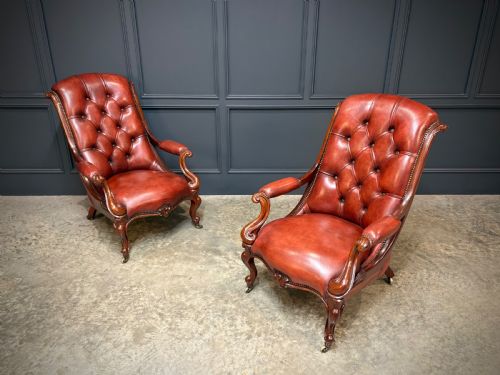
The specimens appearing here include winged variations, buttoned library chairs, and simpler club shapes originating from English, French, and Swedish workshops. Buyers will find both single seats and symmetrical pairs upholstered in heavy cattle hide or sheep's hide, supported by timber frames.
Makers utilised resilient internal webbing and springs beneath the leather upholstery to create deep cushions that invite long sitting. Whether constructed as an open armchair, a reclining seat, or a high-backed wing chair, each example balances domestic utility with robust carpentry.
Materials and construction methods
Makers built the foundational framework of a traditional leather club armchair using hardwoods such as mahogany, oak, walnut, and rosewood. These dense timbers provided the structural backbone necessary to support heavy springing and continuous daily weight.
Upholsterers stretched tough leather, including sheep's hide and cattle leather, over padded stuffing and secured the edges using decorative brass nails. Exposed wooden elements often featured carved details or plain turned legs, occasionally mounted on castors for mobility.
Materials recorded across these items include mahogany, oak, walnut, rosewood, brass, and multiple types of leather and hide.
What separates examples
The standard of a traditional leather club armchair rests upon the depth of the timber frame carving and the integrity of the underlying joinery. Heavier structural timber and substantial framing denote more ambitious workshop production.
The grade of the hide and the fineness of the hand-stitched detailing or buttoning dictate the visual presence of the piece. Superior examples exhibit harmonious proportions between the padded arms, the rake of the back, and the exposed wood.
Howard and Sons·Heals of London
The Traditional Leather Club Armchair Glossary
- Wingback
- An armchair featuring protective side panels attached to the arms to deflect draughts. These upholstered extensions frame the sitter's head.
- Library chair
- A comfortable seat designed for reading rooms and studies, frequently upholstered in buttoned leather and paired with a sturdy mahogany or oak frame.
- Club chair
- A deep, low-slung armchair upholstered in leather, originating in French and English clubs during the nineteenth and early twentieth centuries.
- Buttoning
- A upholstery technique where depressions are formed in the padding by pulling twine tightly through to the frame, secured with fabric or leather covered buttons.
- Art Deco
- A design style prevalent in the 1920s and 1930s characterised by smooth lines, streamlined forms, and modernist touches applied to traditional seating.
Traditional Leather Club Armchair: Frequently Asked Questions
How do I spot an art deco club chair?
Art deco examples from the 1930s feature smoother, more streamlined profiles compared to heavy Victorian buttoned variants. They often utilise caramel tan leather or sheep's hide.
Look for simplified arm contours and a lower, more rounded silhouette that reflects modernist design shifts away from ornate nineteenth-century carving.
What is a library armchair?
Library armchairs were built as robust seating for domestic studies and institutional reading rooms. They frequently combine heavy mahogany or oak frames with supportive buttoned leather upholstery.
These pieces prioritise ergonomic comfort and durable construction to withstand long hours of reading and writing.
Are these armchairs sold in pairs?
This selection includes numerous matched pairs alongside individual armchairs. Pairs typically share identical hide colours, framing timbers, and upholstery styles.
Symmetrical sets suits larger drawing rooms and country house interiors where balanced furniture placement creates visual harmony.
Which woods are used in the frames?
Framing timbers include mahogany, oak, walnut, and rosewood alongside general hardwoods. These dense woods form the hidden structural skeleton beneath the upholstery.
Exposed wooden elements on the arms or legs often display period-specific carving, such as Victorian mahogany mouldings or Georgian cabriole legs.