

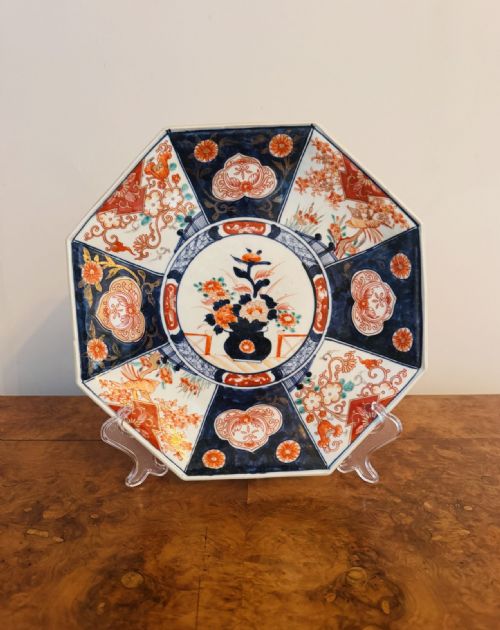
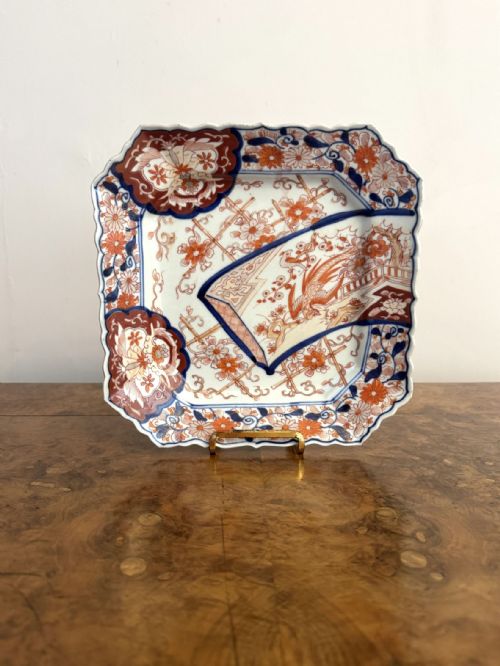
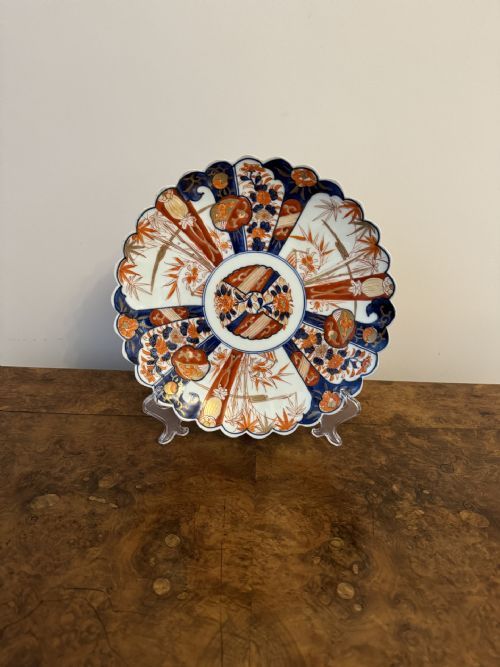


Traditional Imari Ware Dish
A traditional imari ware dish brings bold palettes and intricate patterns to a room, offering the distinctive hand-painted designs collectors value.
Traditional Imari Ware Dish
When you search for a traditional imari ware dish, you are looking at hand-painted ceramics originating from Japan, spanning periods from the seventeenth century to the early twentieth century. These pieces encompass decorative plates, chargers, shaped dishes, and bowls that display rich patterns intended for display or use.
The version you are most likely to meet on this page is a nineteenth-century or nineteen-hundreds plate or charger, often featuring scalloped edges, square shapes, or collections of matching service pieces. Earlier examples, such as seventeenth-century Arita pieces, also appear in the selection.
These items serve primarily as decorative focal points, whether arranged on a wall, displayed in a cabinet, or set upon a table. Their distinct visual character comes from traditional Japanese motifs rendered in contrasting enamels and metallic accents.
How they were made
Traditional imari ware dishes are shaped from porcelain and finished with specialised glazes that provide a smooth, vitreous base for subsequent decoration. The firing process prepares the ceramic body to receive detailed painting.
Artisans apply enamel colours alongside gold leaf and gilt details to create the characteristic palette associated with the style. These pigments are layered onto the glazed surface before a final fixative firing.
Traditional Imari Ware Dish Retail Price Guide 2026
Typical asking prices for traditional imari ware dish among the pieces listed under this phrase on Sellingantiques today, from the lower quarter to the upper quarter. They describe what is for sale here now, not the wider market.
The listings span from the seventeenth century through the nineteenth century up to nineteen-hundreds production, utilising porcelain, enamel, gold leaf, and glaze.
What varies in quality
The distinction between standard and finer examples rests upon the precision of the hand-painting and the complexity of the design layout across the porcelain surface. Finer dishes show meticulous brushwork that defines each motif with clarity.
The application of gold leaf and gilt accents also dictates the standing of a piece, with superior items displaying rich, intact metallic detailing that enhances the enamel palette without appearing crowded.
The Traditional Imari Ware Dish Glossary
- Aka-e
- A Japanese term meaning red pictures, referring to red-dominant overglaze enamels used on ceramics. This technique provides the vibrant warmth characteristic of many traditional dishes.
- Charger
- A large decorative plate intended for display rather than for serving food at the table. These substantial pieces showcase expansive painted compositions.
- Arita
- The Japanese town and surrounding region in Hizen province where the production of porcelain first began. Pieces from this area form the foundation of the imari tradition.
Traditional Imari Ware Dish: Frequently Asked Questions
What is a traditional imari ware dish?
A traditional imari ware dish is a Japanese porcelain ceramic decorated with hand-painted enamels, underglaze blue, and gilt highlights. These items include plates, chargers, and bowls.
They originate from various periods, ranging from seventeenth-century Arita production to pieces made around nineteen hundred, reflecting traditional Japanese ceramic artistry.
How were traditional imari dishes used?
These pieces were primarily utilised for display, particularly larger chargers and decorative plates that showed off intricate patterns in formal rooms.
Smaller dishes and bowls also served functional roles in dining and household settings, combining ornamental appeal with practical utility.
How do I date an imari dish?
Dating relies on examining the characteristics of the porcelain body, the style of the enamel painting, and the specific form of the dish. Seventeenth-century pieces often show distinct Arita traits.
Items from the nineteenth century and the nineteen-hundreds display variations in palette and manufacturing marks that help place them in their historical context.
How do I display imari ware?
Imari ware can be showcased in cabinets, mounted on walls using appropriate plate hangers, or placed flat on sideboards to highlight the detailed surface patterns.
The bold palette and metallic accents make them effective focal points in both traditional and contemporary interiors.