





Traditional Hunting Dog Art
Traditional hunting dog art captures the enduring partnership between man and hound through centuries of British sporting heritage.
Traditional Hunting Dog Art
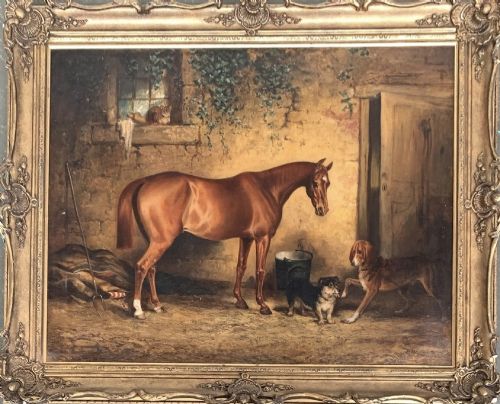
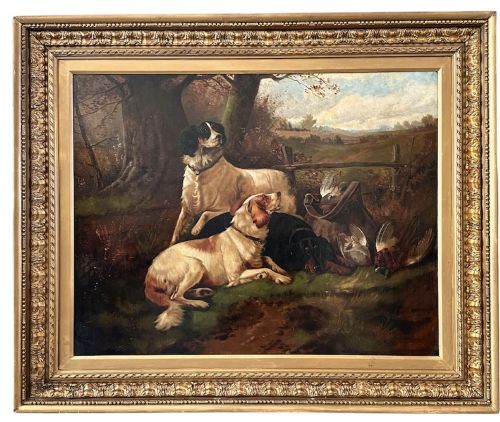
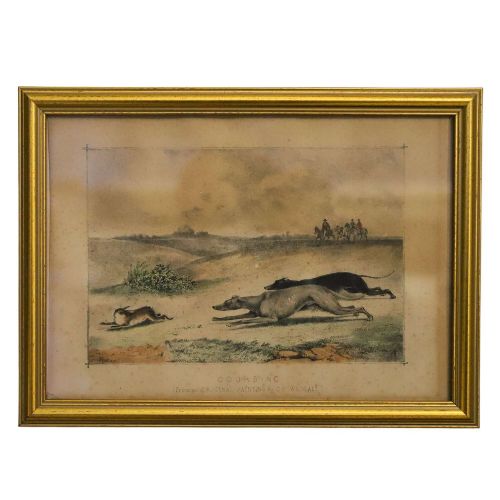
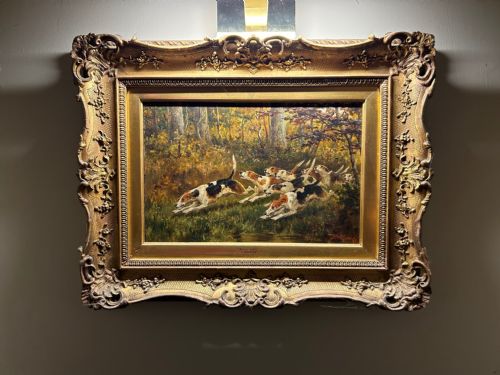
Traditional hunting dog art encompasses oil paintings, watercolours, lithographs and framed prints depicting spaniels, setters, pointers, terriers and hounds in field sports and moorland settings. These works record sporting life, field trials and shooting scenes from the nineteenth century onwards.
Buyers seek these pieces to bring authentic sporting history and animal portraiture into studies, country houses and traditional interiors.
Assessing quality
Quality rests upon the artist's ability to render canine anatomy, muscle structure and expression with precision and life. The handling of background landscapes and light distinguishes accomplished practitioners from routine works.
Condition and the retention of original surface texture without excessive restoration separate desirable examples.
Traditional Hunting Dog Art Retail Price Guide 2026
Typical asking prices for traditional hunting dog art among the pieces listed under this phrase on Sellingantiques today, from the lower quarter to the upper quarter. They describe what is for sale here now, not the wider market.
The listings span the nineteenth century, Victorian era, and twentieth century up to nineteen sixty, utilising canvas, paper, wood and gilt wood frames.
Fannie Moody·Colin Graeme Roe·John Charles Tunnard·Michael Lyne·Henri Schouten·Tom Carr·Thomas Blinks·James Ward·William Albert Clark·Frank Dadd·Samuel John Egbert Jones·Dean Wolstenholme
The Traditional Hunting Dog Art Glossary
- Oil on canvas
- Pigment suspended in drying oil applied to stretched woven fabric. This medium allows for deep tonal blending and rich textures in animal painting.
- Sporting art
- Depictions of hunting, shooting, fishing and equestrian subjects. It forms a distinct genre within British painting.
- Lithograph
- A print made from a flat stone or metal plate treated to retain ink where required. It enabled mass reproduction of original illustrations.
- Watercolour
- Paint made with water-soluble binders and pigment, used on paper. It offers transparency and delicate washes suited to rapid field sketches.
- Gilt wood
- Wood carved and coated with gold leaf or metallic powder. It provides traditional framing for nineteenth-century oils.
Traditional Hunting Dog Art: Frequently Asked Questions
What subjects appear in these paintings?
The works depict sporting dogs including spaniels, pointers, setters, terriers and foxhounds engaged in field sports, hare coursing or resting with the day's bag. Landscapes range from winter snow scenes to wooded clearings and moorland.
Artists focused on the distinct characteristics and focused expressions of working breeds during active hunts.
How do I date these artworks?
Dating relies on costume in the hunting scenes, artist signatures, framing methods and canvas stamps from nineteenth-century suppliers. Stylistic shifts from Victorian realism to later twentieth-century watercolours also provide chronological markers.
Documentation and recorded exhibition histories help narrow the period.
Where should I hang these pieces?
Traditional hunting dog art suits libraries, studies, hallways and reception rooms with classic interior styling. They pair well with wood panelling, equestrian decor and traditional British furnishings.
Direct sunlight and damp walls should be avoided to protect oil paint and paper watercolours.
Are these works original or prints?
The selection includes original oil paintings on canvas and board alongside watercolour paintings and period lithographs. Each listing specifies the medium employed by the artist or printer.
Original oils feature visible brushwork and texture while printed works show a dot matrix or inked plate mark.