
Traditional Hearth Irons
Traditional hearth irons anchor the fireplace with practical strength, bringing enduring metalwork into daily rooms.
Traditional Hearth Irons
Traditional hearth irons encompass andirons, fire dogs, grates, and companion sets designed to support wood and coal fires. These pieces originate from domestic and manor house settings across multiple centuries.
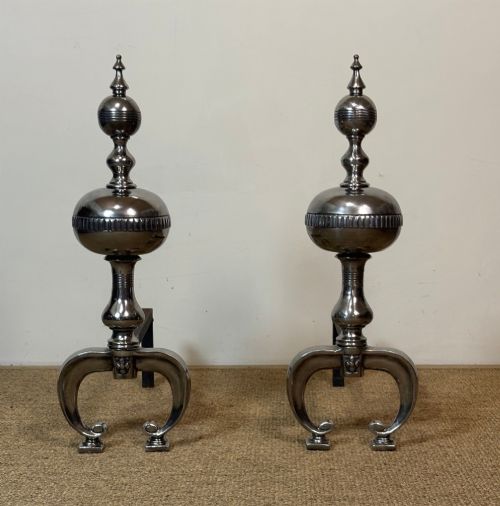
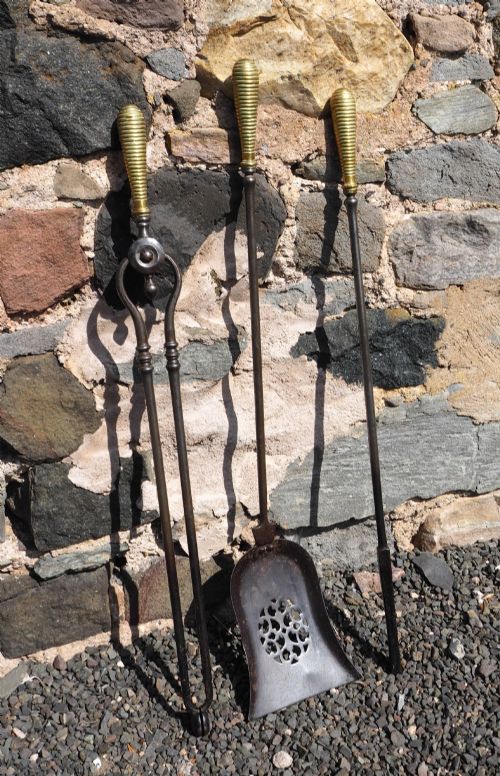
The selections available here lean heavily toward Victorian and Georgian designs, alongside 18th century examples and early twentieth-century revivals. Buyers encounter heavy iron tool sets, polished steel grates, and brass-mounted accessories.
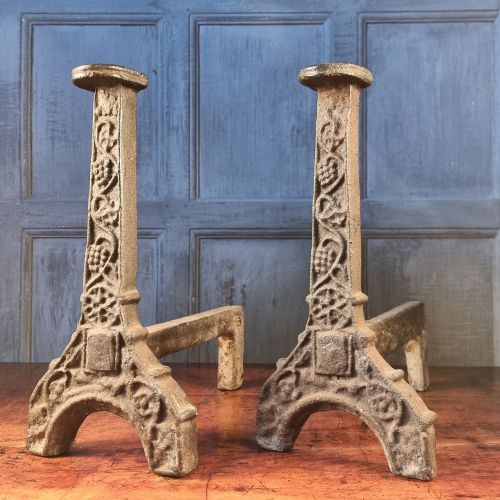
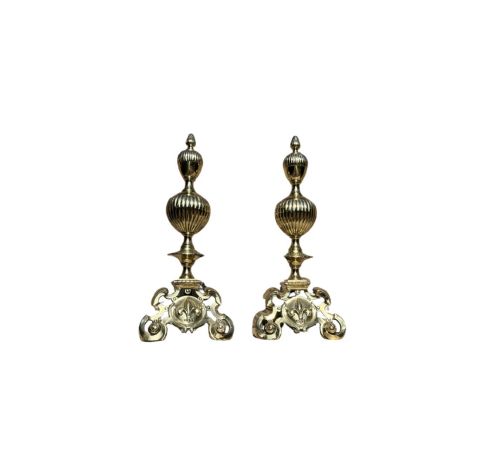
Forms range from simple wrought iron pokers and trammel hooks to decorative cast brass fire dogs featuring neoclassical or gothic motifs. Each item served a direct role in managing the hearth before central heating altered domestic routines.
Materials and construction methods
Blacksmiths and founders shaped these objects using cast iron, wrought iron, and steel, often combining them with cast or sheet brass for decorative elements. Wrought iron pieces show the distinct hammer marks of hand-forging, while grates and fire backs utilise heavy cast iron to withstand intense heat.
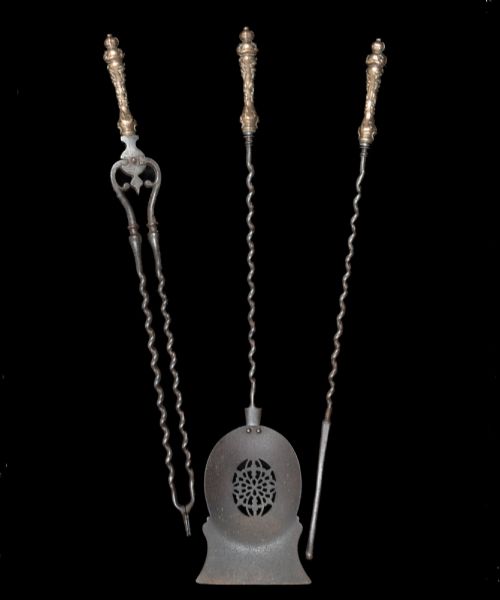
Polished steel appears frequently in fire irons and grates, requiring precise finishing to achieve a bright surface. Brass components are typically cast and turned, then secured to iron shafts with threaded fasteners or pins.
Chimney trammel hooks adjusted pot heights with notched iron ratchets, letting cooks fine-tune stews without burning their fingers.
Distinctions in construction and finish
Quality rests upon the weight of the metal and the crispness of the casting or forging. Heavier gauge iron and solid brass components indicate robust workshop production intended for heavy daily use rather than light decoration.
Attention to detail in the assembly, such as tightly fitted joints on fire irons and well-defined relief work on fire backs, separates standard utilitarian items from finer examples commissioned for prominent hearths.
The Traditional Hearth Irons Glossary
- Andirons
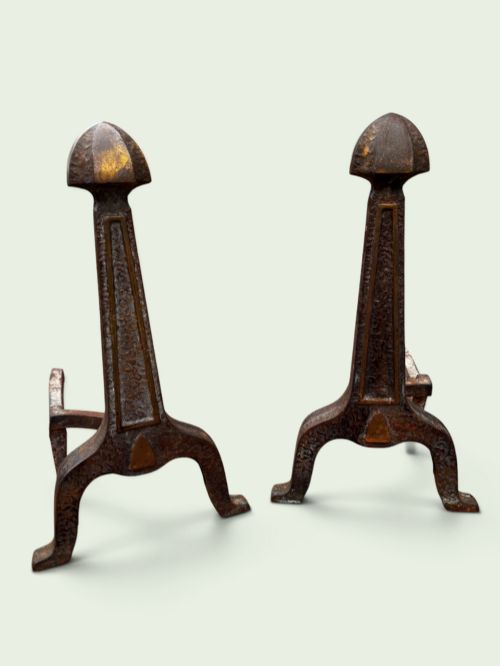
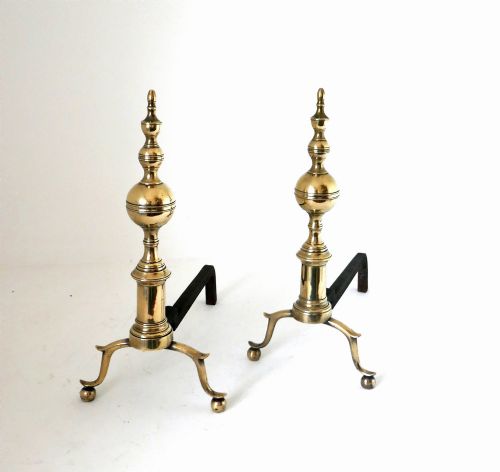
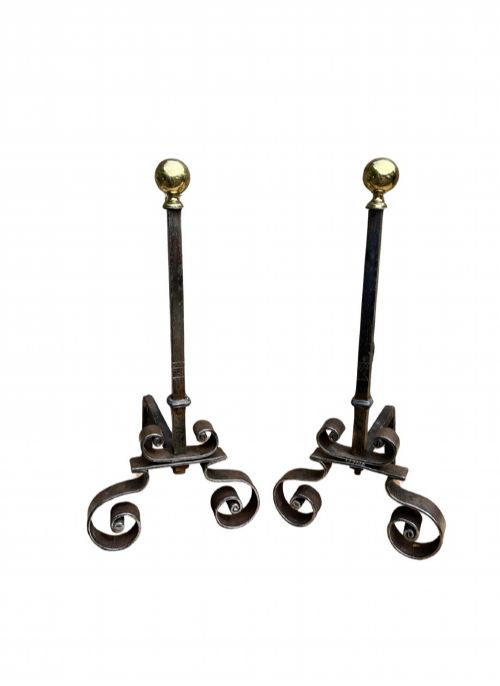
- Supports used to hold logs above the hearth floor to improve air circulation. They often feature decorative brass or iron fronts.
- Fire Grate
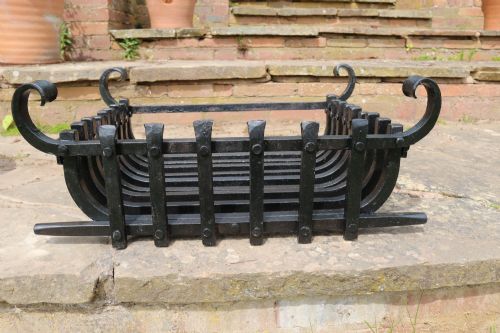
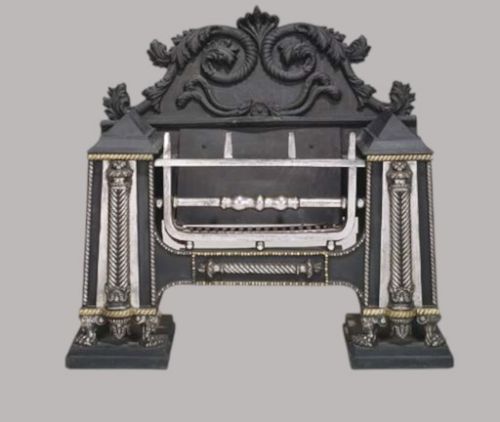
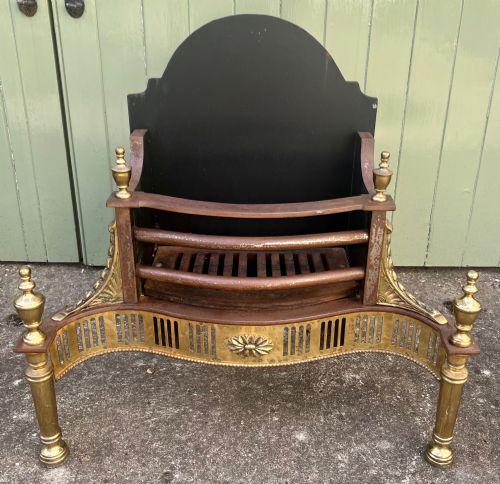
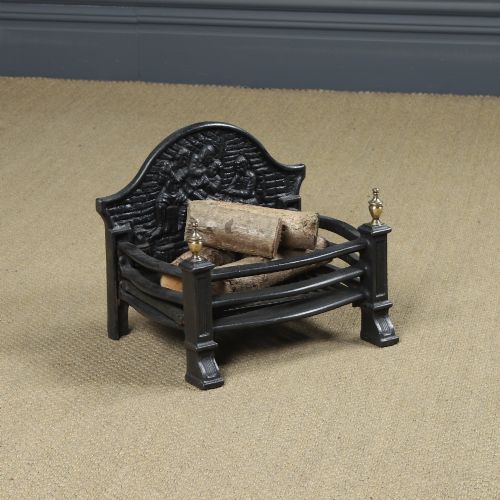
- A metal basket or frame designed to hold coal or wood off the base of the fireplace. These insert directly into the hearth opening.
- Trammel Hook
- An adjustable hanging device used in large chimneys to suspend pots over the fire at varying heights. They are typically hand-forged from wrought iron.
- Companion Set
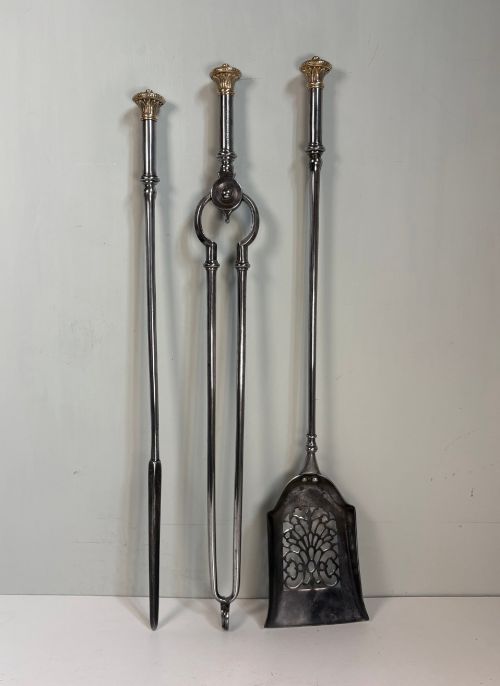
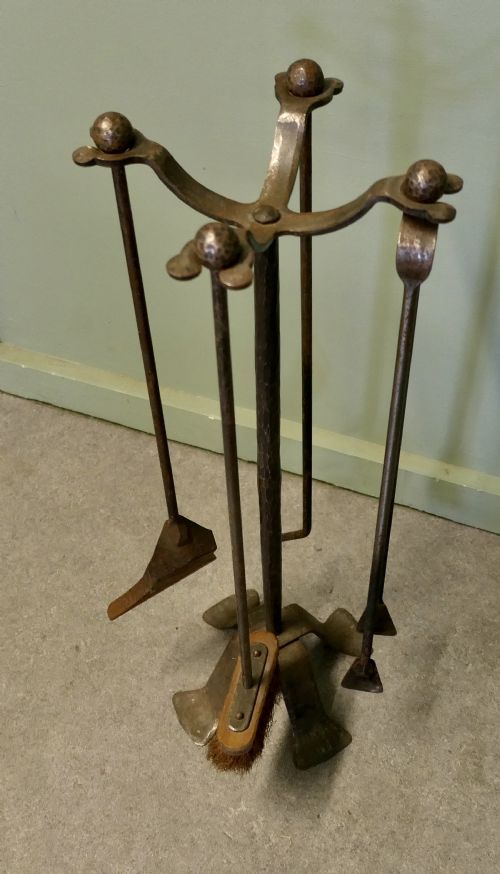
- A matched collection of fireplace tools, such as pokers, tongs, and shovels, usually displayed together on a dedicated stand.
- Fire Back
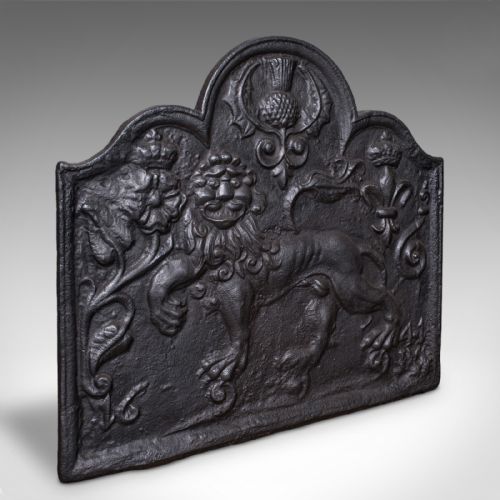
- A heavy metal plate placed at the back of a fireplace opening to protect the masonry and reflect heat back into the room.
Traditional Hearth Irons: Frequently Asked Questions
What is the difference between andirons and fire dogs?
The terms are often used interchangeably to describe metal supports placed on the hearth to hold logs. Historically, fire dogs sometimes included horizontal spits for cooking, while andirons focused strictly on supporting fuel.
Both types serve the same visual and functional purpose in an open fireplace, elevating wood to allow proper airflow beneath the fire.
How do I care for cast iron hearth pieces?
Cast iron requires regular dusting and occasional treatment with a protective grate polish or black lead paste to prevent surface oxidation. Keeping the metal dry ensures it retains its dark finish over decades of use.
Avoid using harsh chemical cleaners that strip the protective carbon layer from the iron surface.
Can antique fire grates still be used?
Many antique grates remain structurally sound for burning seasoned wood or coal, provided a professional checks the installation and chimney safety. Heavy cast iron handles thermal stress well when used sensibly.
For decorative fireplaces, uninstalled grates also function effectively as interior hearth displays or log baskets.
How do I distinguish Georgian from Victorian ironwork?
Georgian pieces typically display restrained neoclassical lines, featuring clean brass finials and balanced proportions. Victorian examples often embrace heavier ornamentation, drawing on Gothic revival or elaborate decorative motifs.
Examining the casting texture and assembly methods also helps determine the period of manufacture.