

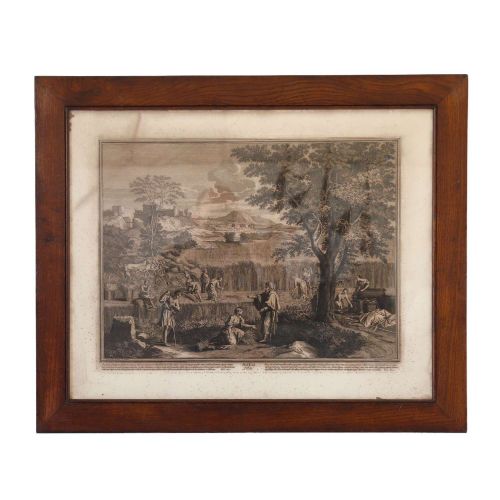


Traditional Harvest Wall Art
Traditional harvest wall art brings rural labour and late summer cornfields into a room through oil paint and watercolour.
Traditional Harvest Wall Art
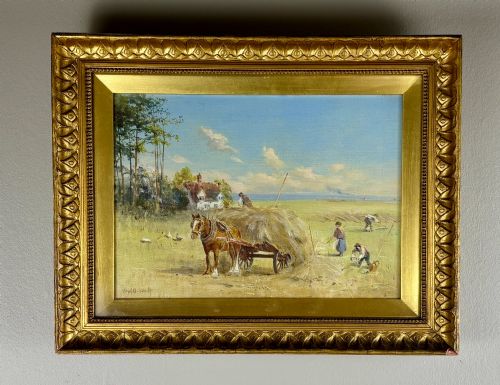
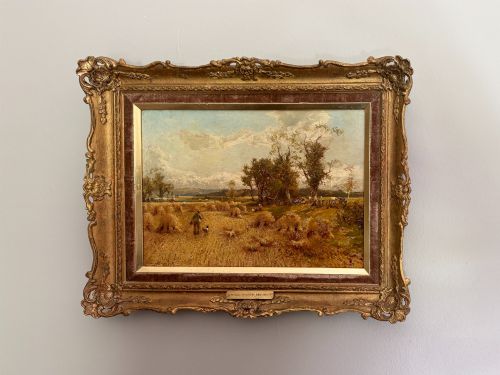
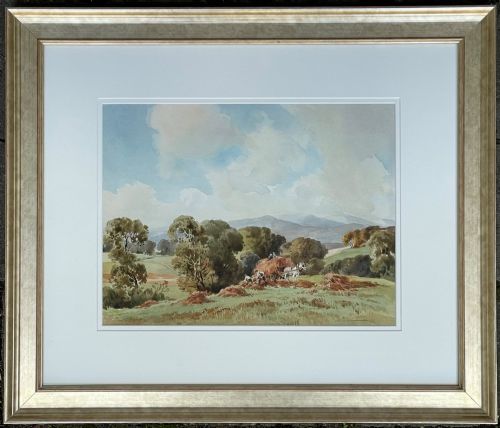
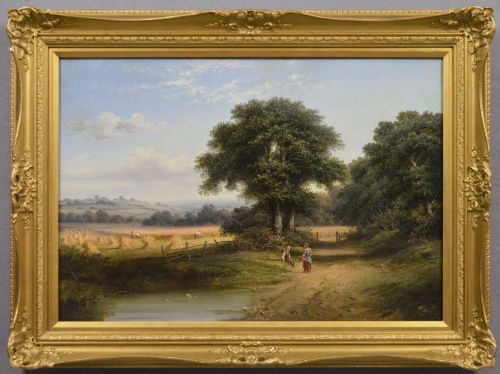
Traditional harvest wall art encompasses framed paintings and prints depicting agricultural scenes, rural landscapes, and farmworkers gathering crops. These works capture the seasonal rhythm of the countryside through depictions of wheat fields, haymaking, and figures at work outdoors.
The pieces available originate across several periods, stretching from the seventeenth century through the Victorian era and into the early twentieth century. Common subjects include farmers, horses, and cornfields rendered in oil on canvas or watercolour on paper.
Buyers encounter oil paintings and watercolours signed by named British artists alongside period engravings. These works suit rooms requiring pastoral calm and a connection to historical agricultural life.
How they were made
The majority of these pieces utilise oil paint applied to canvas, often supported by wooden stretchers and housed in giltwood frames. Canvas provides a durable surface that accepts layered brushwork, allowing artists to build depth in skies and harvest fields.
Watercolour on paper appears in works by artists working closely with natural light and lighter washes. Giltwood and plain wood frames complement the pastoral subject matter by enclosing the composition.
Traditional Harvest Wall Art Retail Price Guide 2026
Typical asking prices for traditional harvest wall art among the pieces listed under this phrase on Sellingantiques today, from the lower quarter to the upper quarter. They describe what is for sale here now, not the wider market.
Listings feature oil paintings, watercolours, and engravings spanning the seventeenth, nineteenth, and early twentieth centuries.
What varies in quality
Quality in traditional harvest wall art depends upon the handling of light, atmosphere, and human form within the landscape. Superior works integrate figures naturally into the surrounding fields rather than placing them as static additions.
The execution of the canvas support, the preservation of the original oil paint layer, and the matching period frame influence the overall integrity of the piece.
Walter Heath Williams·Henry John Boddington·James William Booth·Henry H Parker·Joseph Paulman·Arthur Walker Redgate·George Cole·Joseph Thors·Alfred Augustus Glendening Snr·Robert Thorne Waite
The Traditional Harvest Wall Art Glossary
- Oil on Canvas
- A painting medium where pigments suspended in oil are applied to a stretched woven fabric support. This combination allows for rich colour blending and texture.
- Giltwood
- Wood that has been coated with a thin layer of gold leaf or metallic gilt. It provides a bright decorative border often seen on nineteenth-century frames.
- Watercolour
- A painting method where fine pigment is mixed with a water-soluble binder and applied to paper. It produces translucent washes suited to delicate landscapes.
- Engraving
- A printmaking technique where an image is incised into a metal plate, which then holds ink for transfer to paper. This method reproduces detailed compositions like historical pastoral scenes.
- Genre Painting
- Artwork depicting scenes from everyday life, including farmworkers and rural labourers. These works record the social realities of historical agricultural communities.
Traditional Harvest Wall Art: Frequently Asked Questions
What periods do these paintings come from?
The works span from the seventeenth century through the Victorian period, Edwardian era, and into the early twentieth century.
Most pieces date from the nineteenth century, reflecting the popularity of pastoral subjects among Victorian artists and collectors.
Are these works painted on canvas?
Many pieces use oil paint on canvas, while others are watercolours on paper or period engravings.
The support material varies according to the medium chosen by the artist for the specific landscape.
How should I hang a harvest painting?
These works require wall space with stable humidity and protection from direct sunlight to preserve the oil paint or watercolour pigments.
Pairing them with traditional wooden or gilt frames helps integrate the artwork into domestic interiors.
What subjects appear in these scenes?
Common subjects include farmers harvesting wheat, horses working in cornfields, and pastoral landscapes at sunset.
Figures near harvest fields and rural views form the central focus of the compositions.