


Traditional Harvest Scene Art
Traditional harvest scene art captures rural labour and golden fields through the brush of nineteenth and early twentieth century painters.
Traditional Harvest Scene Art
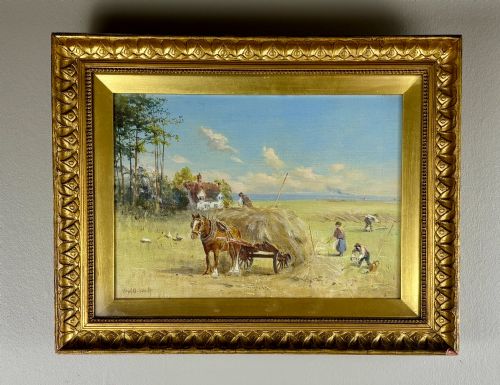
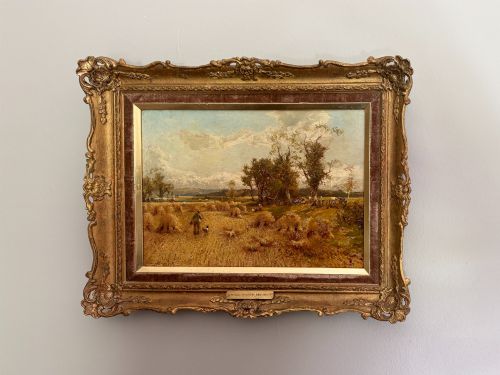
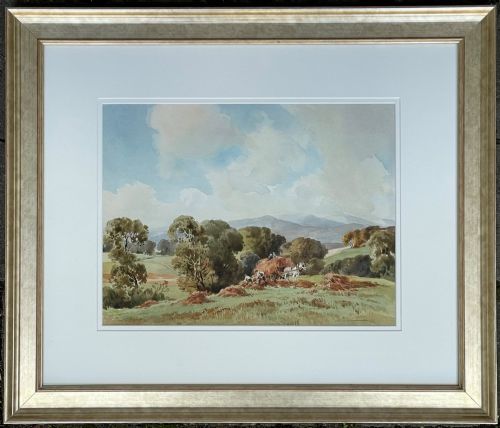
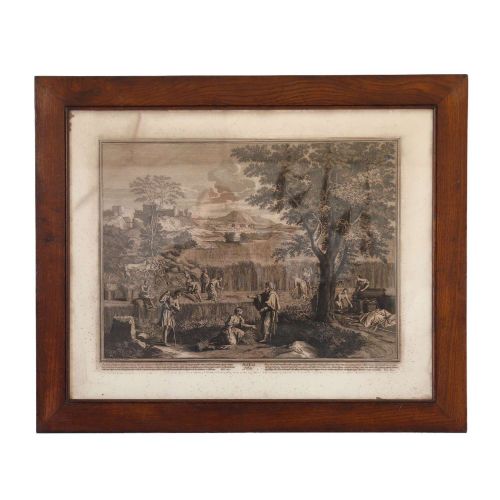
Traditional harvest scene art depicts agricultural life, grain fields, and farm workers across various periods from the seventeenth century to the twentieth century. These works most commonly appear as oil paintings on canvas and watercolours on paper, framed for domestic display.
The selection here encompasses Victorian pastoral scenes, British Impressionism, and Edwardian watercolours. Pieces range from detailed depictions of hay cutting to broader landscapes showing horses and figures gathered by the river or cornfield.
How they were made
Artists applied oil paint to canvas or used watercolour on paper, often working plein air or finishing compositions in the studio. Pigments capture the characteristic golden light of late summer and autumn landscapes.
Framing typically involves wood and gilt mouldings designed to complement the palette of the canvas or paper within. Engravings on paper also represent the subject, translating earlier classical compositions into printed form.
Materials in this collection include oil paint, canvas, watercolour, paper, wood, and gilt.
What varies in quality
Quality rests in the handling of light and atmosphere, particularly how the artist renders the low sun and expansive skies characteristic of agricultural work. Stronger pieces demonstrate confident brushwork and precise anatomical drawing of horses and figures.
The depth of the composition and the subtlety of the colour palette separate ambitious gallery works from simpler decorative watercolours. Evidence of the artist's specific observation of local landscape details elevates the regional validity of the piece.
Henry John Boddington·James William Booth·Henry H Parker·Arthur Walker Redgate·Walter Heath Williams
The Traditional Harvest Scene Art Glossary
- Oil on Canvas
- Pigment suspended in drying oil applied to stretched woven fabric. This medium allows for rich texture and deep colour layering.
- Watercolour
- Pigments suspended in a water-soluble vehicle applied to paper. It yields translucent washes of light.
- Victorian Pastoral
- A nineteenth-century artistic style romanticising rural life and agricultural labour. It focuses on idealised views of the countryside.
- Gilt
- A thin layer of gold leaf applied to wood frames. It enhances the visual weight and warmth of the artwork.
- Impressionism
- A style focusing on accurate depiction of light in its changing qualities. British variations often apply this to traditional agricultural landscapes.
Traditional Harvest Scene Art: Frequently Asked Questions
What periods do these paintings date from?
The works span from the seventeenth century through the Victorian and Edwardian eras up to the mid-twentieth century. Most examples date specifically from the nineteenth and early twentieth centuries.
Collectors will find both original oils on canvas and period watercolours reflecting these distinct historical periods of British art.
How should I hang these artworks?
These pieces suit traditional domestic interiors, particularly dining rooms or studies with adequate wall space for framed canvases. Ensure they hang away from direct sunlight to protect watercolours and oil pigments.
Matching the gilt or wood frame to existing furniture helps integrate the picture smoothly into a room.
What subjects do these scenes feature?
The art depicts agricultural labour, including hay cutting, wheat harvesting, and farm workers with horses and carts. Settings range from Hampshire and Nottinghamshire to the Vale of Evesham.
Scenes often capture specific times of day, such as dusk or sunset over cornfields.
Are these works signed by the artists?
Several pieces include signatures or attributions to named painters such as Henry H Parker and James William Booth. Signatures offer direct connection to the creator and help verify the period.
Unsigned works rely on stylistic evidence and subject matter to determine their origin and approximate date.