


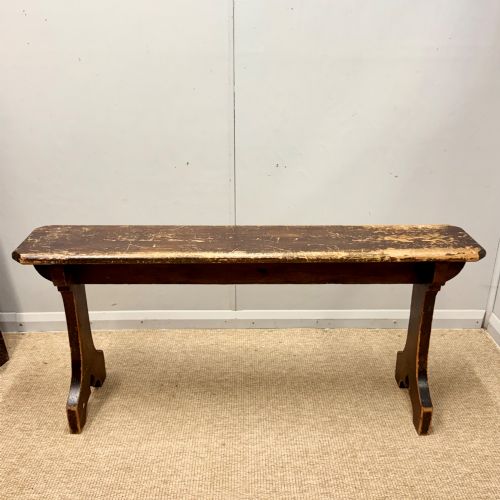
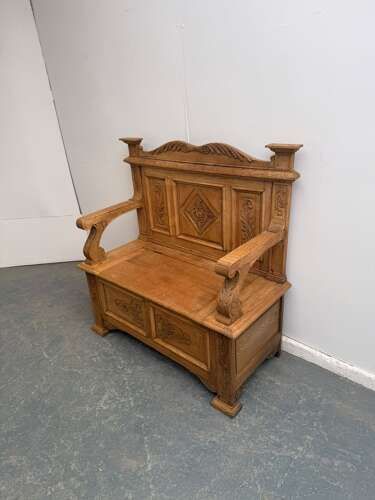
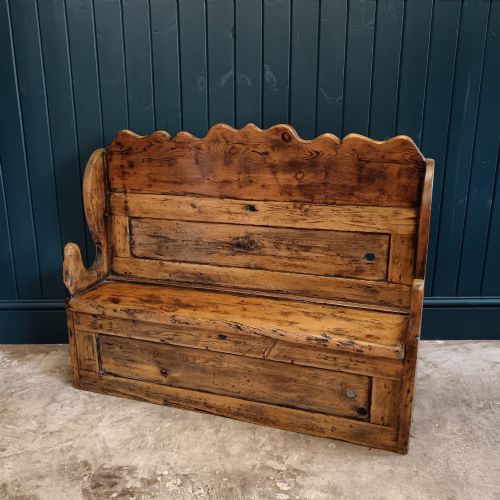
Traditional Hallway Seat
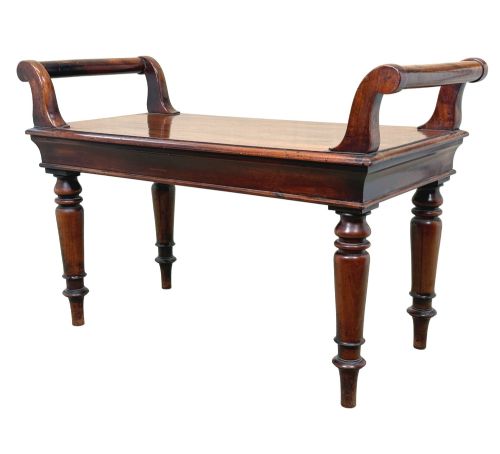
A traditional hallway seat welcomes visitors with sturdy timber, offering a practical place to pull off muddy boots while anchoring an entrance hall.
Traditional Hallway Seat
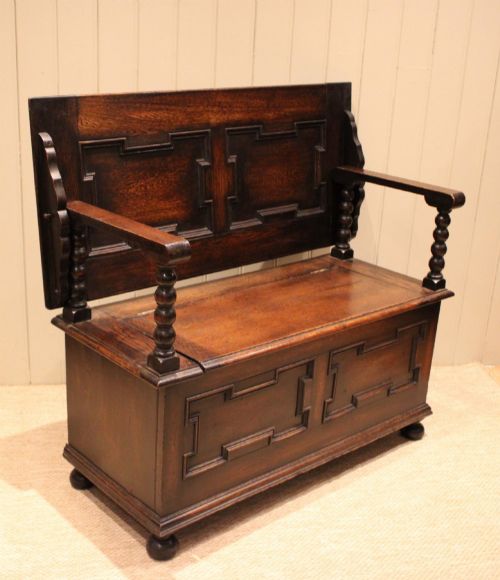
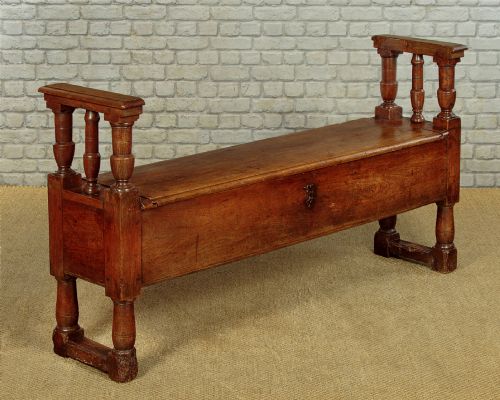
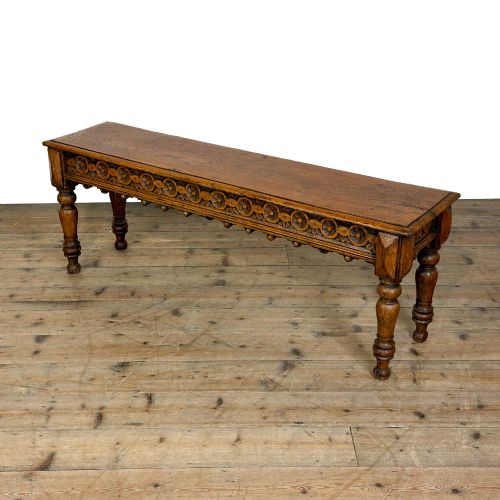
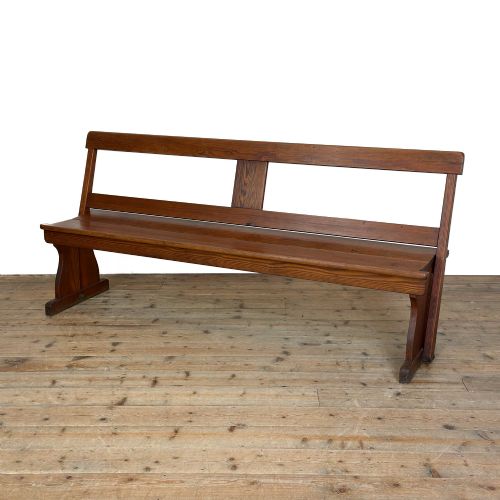
A traditional hallway seat provides solid seating and storage right inside the front door, taking the form of wooden benches, settles, and window seats. These pieces appear across the eighteenth, nineteenth, and early twentieth centuries in various regional British and continental formats.
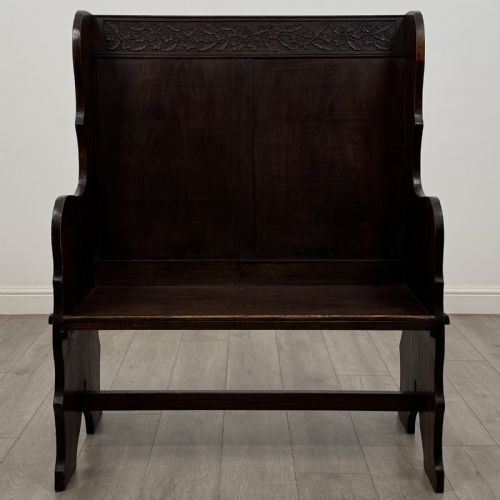
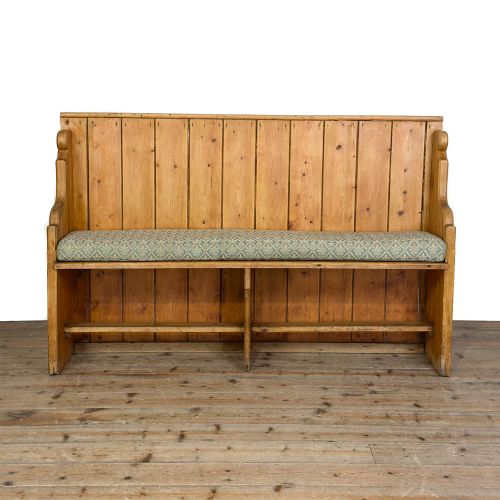
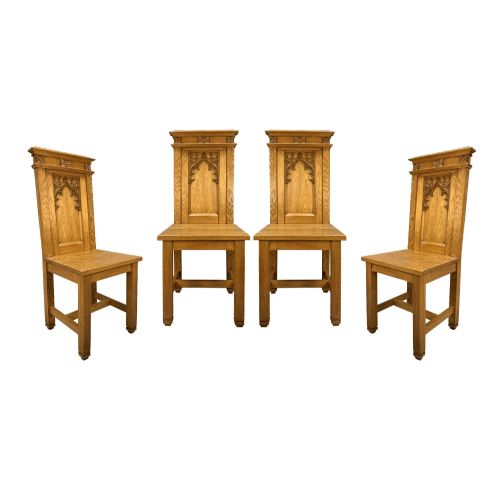
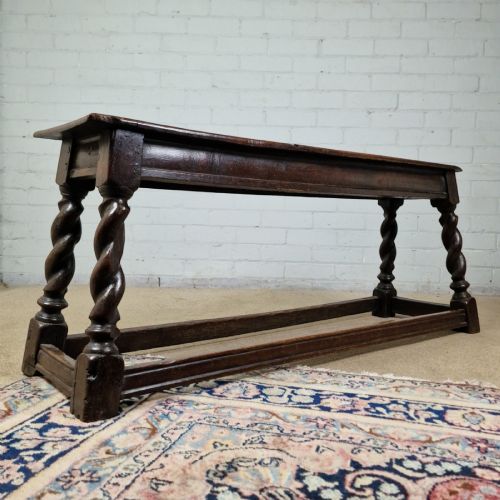
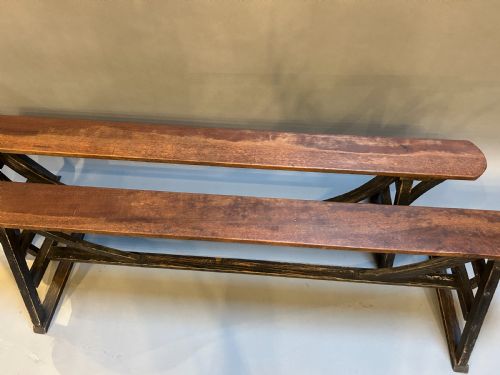
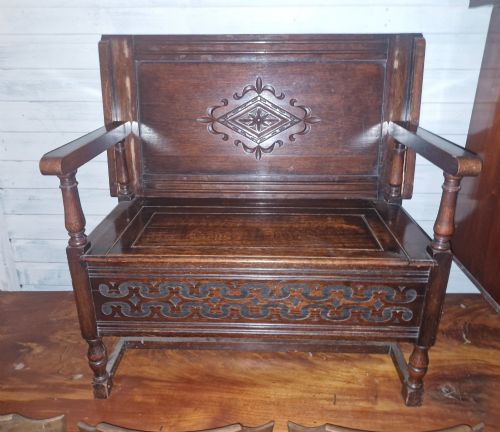
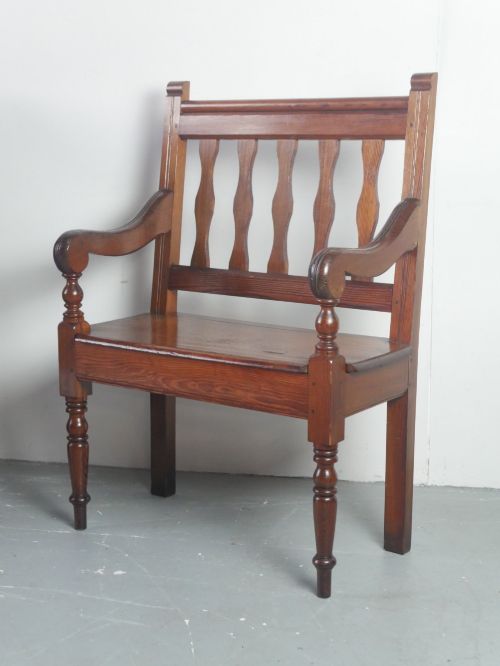
Most examples found here are constructed from dense oak or pine, ranging from simple plank benches to high-backed settles with integrated boxes. One frequently encounters Victorian church pews, Georgian oak settles, and slim elm hallway benches built specifically for narrow passages.
Makers designed these items for heavy daily use rather than formal display, which accounts for their enduring utility in modern homes. The selection spans straightforward country carpentry alongside more polished Regency mahogany and carved Victorian designs.
How they were made
Cabinet makers and country joiners relied heavily on solid oak, pine, and mahogany, joining thick boards with pegged mortise and tenon joints to withstand heavy loads. Carpenters selected timber for strength, often pairing elm seats with pine or oak frames.
Surfaces received wax finishes, natural polish, or traditional paint layers such as black, grey, and blue over the decades. Box settles incorporated hinged lids using simple iron hinges, while chairs and benches featured carved backrests and board seats.
Traditional Hallway Seat Retail Price Guide 2026
Typical asking prices for traditional hallway seat among the pieces listed under this phrase on Sellingantiques today, from the lower quarter to the upper quarter. They describe what is for sale here now, not the wider market.
Listings feature woods including oak, pine, mahogany, elm, and cherry across periods spanning the Georgian era into the twentieth century.
What varies in quality
Quality rests in the integrity of the original timber and the retention of honest patination built up through generations of use. Pieces retaining their original board seats, hinges, and painted or waxed finishes command greater appreciation than heavily restored equivalents.
Construction details differentiate standard workshop output from finer cabinet work, seen in the depth of hand-carved panels, the thickness of timber used for seats, and the balance of proportions in high-backed settles.
The Traditional Hallway Seat Glossary
- Settle
- A wooden bench with a high back, solid arms, and often a box compartment beneath the seat to block draughts in an entranceway.
- Patina
- The deep, lustrous surface sheen developed on wood through decades of handling, polishing, and natural ageing.
- Box settle
- A dual-purpose seating unit featuring a hinged lid that opens to reveal storage space inside the base.
- Window seat
- A long, narrow bench designed to fit beneath a window recess, frequently adapted for hallway use.
- Mortise and tenon
- A traditional woodworking joint where a projecting tongue fits tightly into a matching cavity to lock timbers securely.
Traditional Hallway Seat: Frequently Asked Questions
Where should I place a hallway seat?
These pieces suit narrow corridors, boot rooms, and entrance lobbies where visitors pause to remove footwear. Slimmer pine and elm versions fit tight spaces without blocking passage.
Placing a box seat near the front door also provides concealed storage for scarves, gloves, and everyday outdoor accessories.
How do I care for waxed oak furniture?
Maintain waxed timber surfaces by applying a quality beeswax paste occasionally and buffing gently with a soft, dry cloth. Avoid placing wooden seats near direct heat sources which can dry out the boards.
Regular dusting prevents particle buildup, while prompt cleaning of moisture preserves the historic finish.
How can I tell an older pine bench from a newer one?
Older pine pieces display distinct tool marks, hand-cut joinery, and deep honey-brown patination acquired through extended use. The timber feels denser and drier than modern softwood.
Inspect the undersides and interior boards for uniform wear patterns, period fixings, and signs of genuine age rather than artificial distressing.