

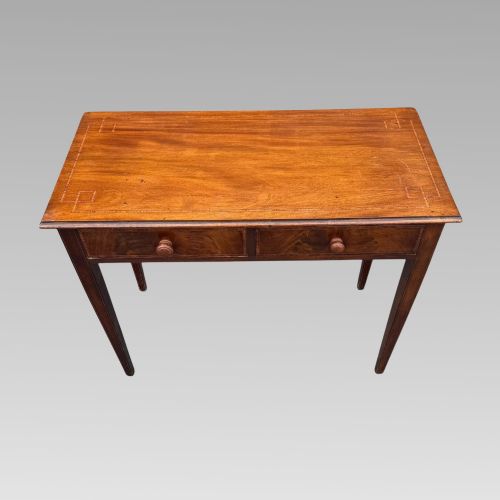
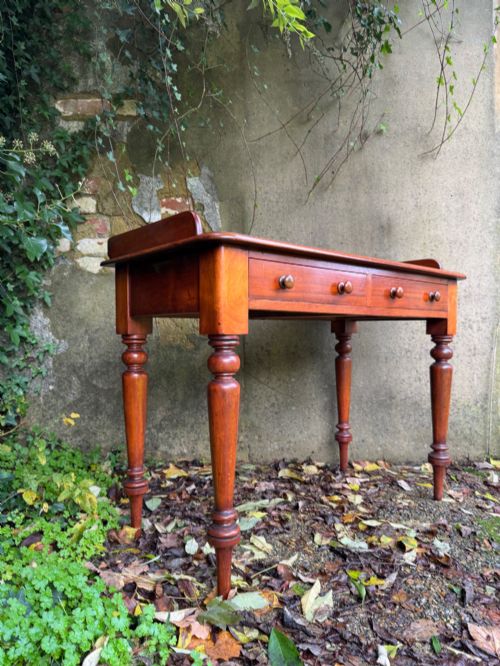
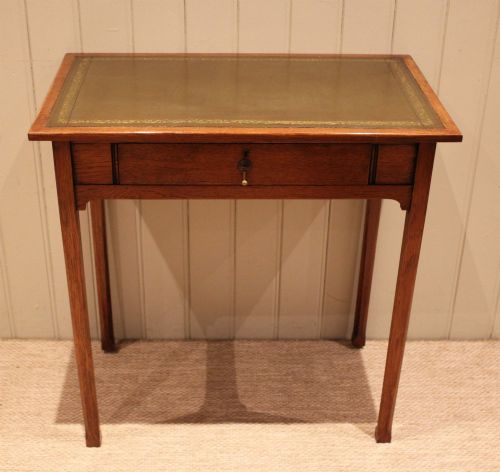
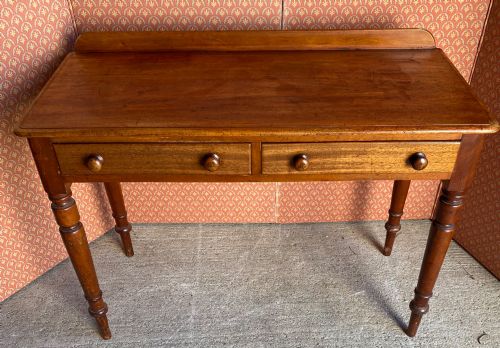
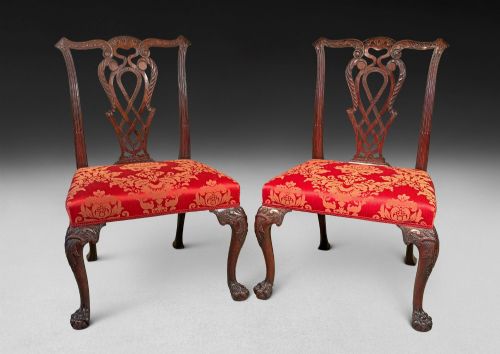
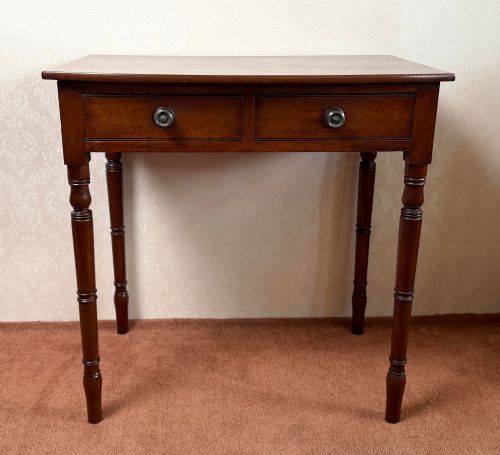
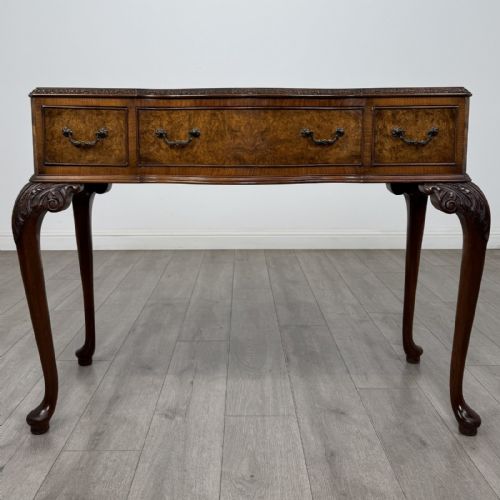
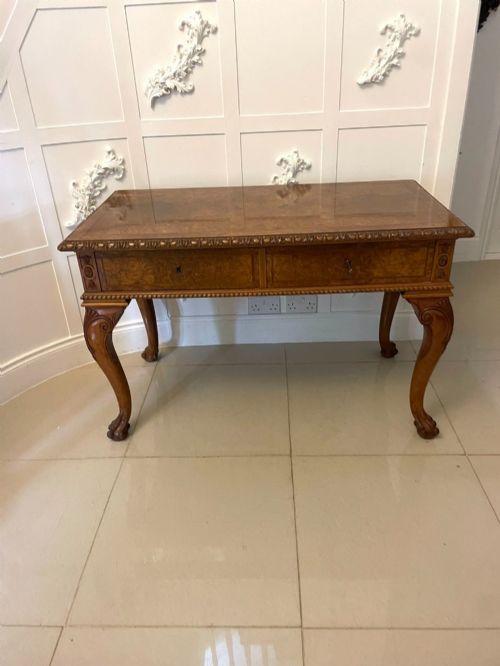
Traditional Hall Desk
A traditional hall desk provides a compact writing surface and storage in an entranceway, spanning Georgian oak lowboys to Victorian mahogany writing tables.
Traditional Hall Desk
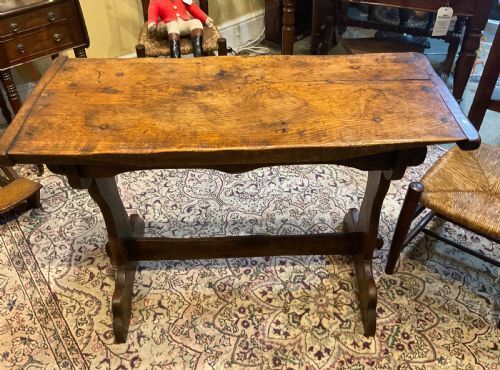
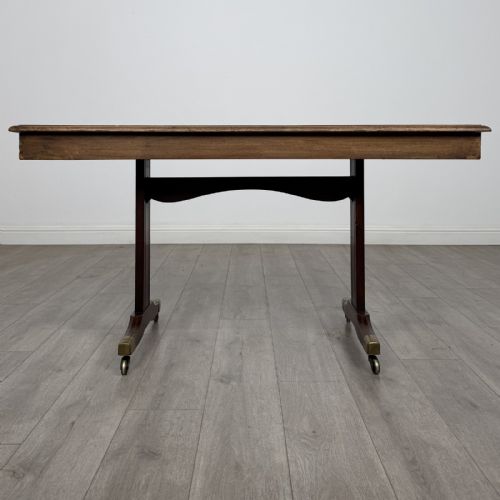
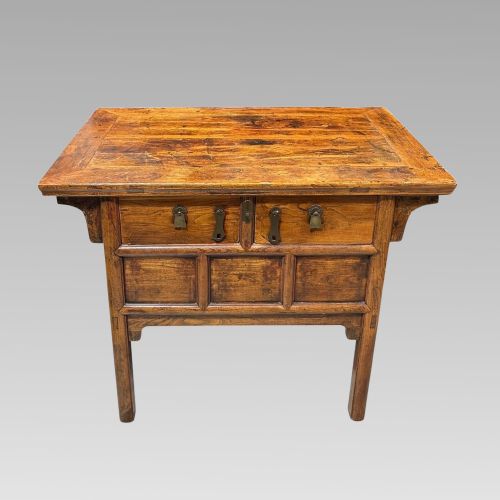
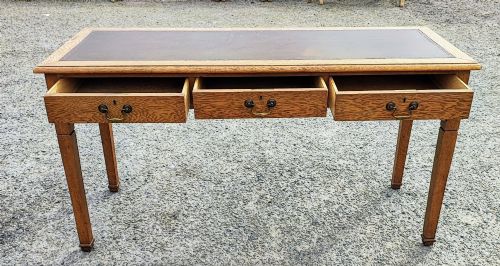
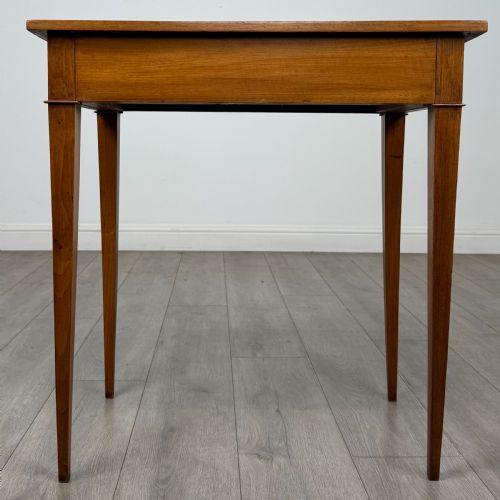
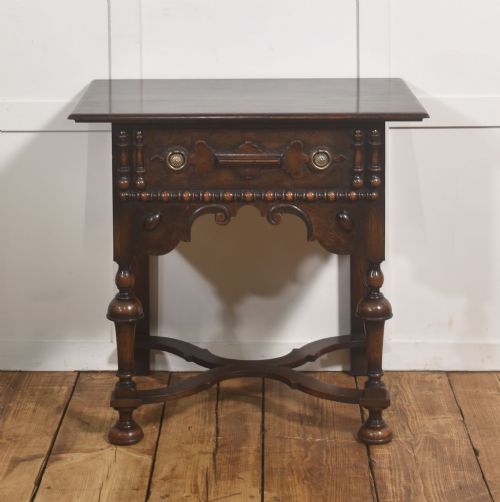
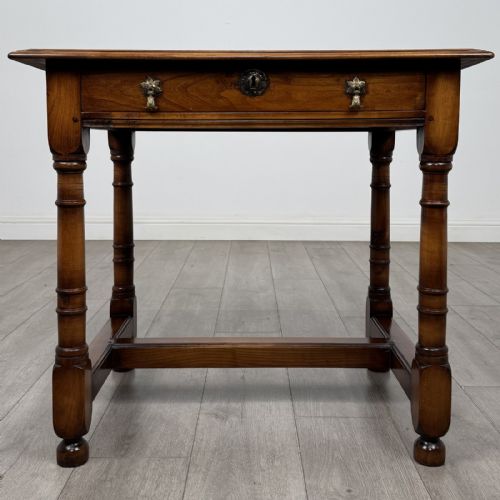
When searching for a traditional hall desk, a buyer encounters pieces designed for occasional correspondence and entranceway placement rather than primary office work. These items frequently take the form of side tables, lowboys, or writing tables equipped with drawers.
The selection on this page relies heavily on nineteenth-century and Victorian pieces, alongside eighteenth-century Georgian examples and early twentieth-century oak or walnut variations. Forms range from simple single-drawer pine or mahogany tables to elaborate burr walnut freestanding consoles and desks with raised galleries.
While designated as writing tables or side tables in period terminology, these compact furnishings suit narrow hallways and reception rooms alike. Their construction prioritises a shallow depth to fit transitional spaces while maintaining a practical working surface.
How they were made
Cabinet makers utilised dense hardwoods such as mahogany, oak, walnut, and elm, often pairing them with brass handles and leather or fabric writing surfaces. Construction methods relied on traditional joinery techniques to accommodate drawers, turned legs, and carved details.
Surface finishes applied to these timbers include polish that enhances the grain patterns of mahogany and burr walnut. Secondary woods like pine appear in internal drawer framing, while auxiliary materials such as leather provide a durable writing plane.
Traditional Hall Desk Retail Price Guide 2026
Typical asking prices for traditional hall desk among the pieces listed under this phrase on Sellingantiques today, from the lower quarter to the upper quarter. They describe what is for sale here now, not the wider market.
Listings feature periods from the 18th century through the Edwardian era, constructed in mahogany, oak, walnut, and pine.
What varies in quality
The standard of a piece depends on the choice of timber and the crispness of its carving, where figured mahogany or burr walnut elevates the visual weight of a hall console. Finer examples display precise dovetailing in the drawer construction and well-proportioned turned or barley twist legs.
Attribution to known makers or workshops influences the standing of a desk, as seen in pieces linked to cabinet makers like Gillows. Original hardware, intact leather writing surfaces, and balanced proportions separate utilitarian furniture from higher-grade cabinet work.
Charles Tozer·Gillows·J A Mein Edinburgh Cabinet Maker
The Traditional Hall Desk Glossary
- Lowboy
- A small oak or walnut table with drawers, typically originating from the eighteenth century and serving as a dressing or writing surface.
- Gallery
- A raised wooden border or rail fitted to the top edge of a desk to prevent items from rolling off.
- Bow front
- A convex curved front contour found on side tables and chests of drawers.
- Dovetail
- A joint formed by interlocking wedge-shaped fingers, commonly used in drawer construction.
- Console table
- A wall-mounted or freestanding table designed to fit against a hallway or reception room wall.
Traditional Hall Desk: Frequently Asked Questions
What is a traditional hall desk used for?
These pieces serve as compact writing stations and surface space in entranceways and reception rooms. Drawers provide storage for correspondence and keys.
They bridge the gap between utilitarian side tables and dedicated writing desks. The shallow depth suits narrow corridors without obstructing movement.
How do I identify a Georgian hall table?
Georgian pieces often feature solid oak or mahogany construction with understated lines, pad feet, or bracket feet. Drawer linings typically show hand-cut dovetails.
Proportions remain restrained, reflecting the domestic architecture of the eighteenth century. Timber selection favours straight-grained oak and rich brown mahogany.
Are these desks suitable for daily laptop use?
Compact writing tables accommodate modern laptops while maintaining period character in a room. Their shallow depth requires checking interior drawer clearances for keyboard storage.
Leather or fabric writing surfaces offer a protective plane for daily writing tasks. Care must be taken with historic finishes when placing electronic equipment.