

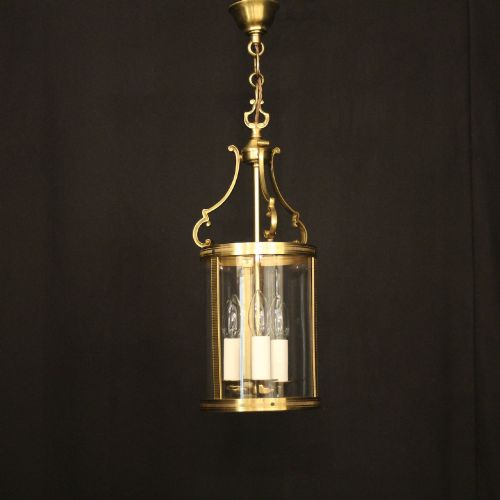
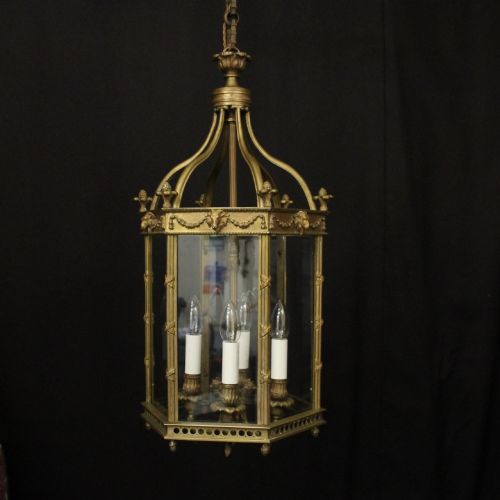
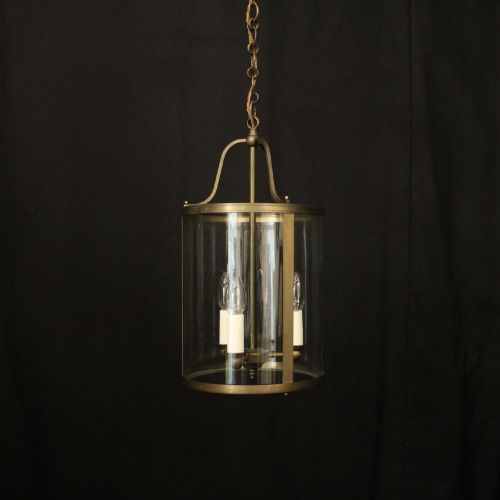
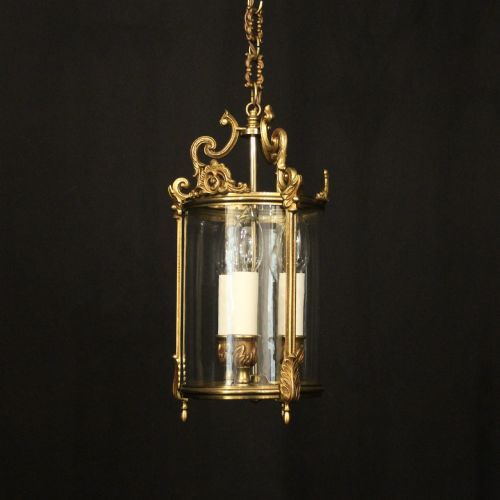
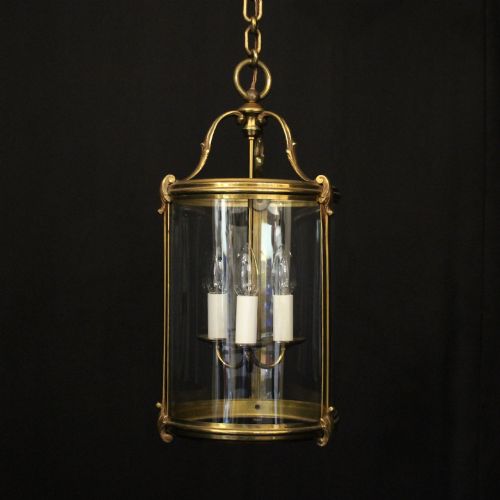
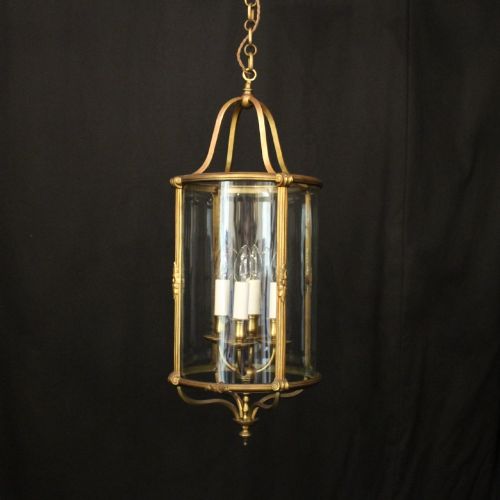


Traditional Glass Cylinder Light
These traditional glass cylinder light fixtures offer clear illumination and timeless proportion, bringing refined historical character to entrance halls and corridors.
Traditional Glass Cylinder Light
When you search for traditional glass cylinder light, you are looking at lantern forms designed primarily for hanging in hallways, vestibules and entrance spaces. These fixtures provide vertical presence while maintaining a compact footprint suited to narrower architectural spaces.
The pieces available on this page lean heavily towards French hall lanterns and English designs, spanning from the nineteenth century through the early twentieth century. You will encounter styles ranging from plain brass frames to ornate French Neoclassical and Rococo gilt bronze compositions.
How they were made
Makers constructed the structural frames of these lanterns using cast brass, gilt brass, and gilded bronze to support the weight of the glass panels. Metalwork components often feature chased or moulded decorative details reflecting the prevailing historical style of the period.
The transparent enclosures utilise blown or formed glass, frequently shaped with convex profiles to diffuse light effectively across the space. These glass cylinders or panels are securely held within the metal framework by pins or collars.
Traditional Glass Cylinder Light Retail Price Guide 2026
Typical asking prices for traditional glass cylinder light among the pieces listed under this phrase on Sellingantiques today, from the lower quarter to the upper quarter. They describe what is for sale here now, not the wider market.
The listings show materials restricted to glass, brass, gilded bronze, and gilt bronze across pieces dated between the nineteenth century and 1930.
What varies in quality
The standard of metal casting and the crispness of the chasing set finer examples apart from simpler commercial productions. Heavy gilded bronze and detailed ormolu mounts demonstrate superior craftsmanship compared to basic sheet brass assemblies.
Proportion and the quality of the glass further distinguish individual pieces. Thick, clear, or convex glass elements paired with well-balanced frames create a more harmonious visual weight when suspended.
The Traditional Glass Cylinder Light Glossary
- Gilt bronze
- Metal cast in bronze and treated with a gold finish or mercury gilding. This material offers a rich surface appearance often found on high-end French lanterns.
- Convex glass
- Glass formed with an outward curve. This shape softens internal glare and disperses light wider than flat panes.
- Hall lantern
- A ceiling-hung light fixture specifically proportioned for narrow circulation spaces like corridors and entryways.
- Neoclassical
- A decorative style drawing inspiration from classical antiquity, marked by symmetry, restraint, and formal geometric ornament.
Traditional Glass Cylinder Light: Frequently Asked Questions
Where should a hall lantern hang?
These fixtures suit entrance halls, vestibules, and high-ceilinged corridors where vertical clearance allows adequate hanging space.
Ensure the bottom of the lantern clears head height while remaining central to the architectural volume of the room.
How do I date these lanterns?
Dating relies on examining the metal casting techniques, assembly fixings, and stylistic motifs present in the bronze or brass frame.
Eighty-year-old and nineteenth-century pieces often display hand-finished components and heavier gauge metalwork than modern reproductions.
Are these lights wired for modern use?
Many surviving antique lanterns undergo professional rewiring to meet contemporary electrical standards while preserving the original historical hardware.
Check individual listings to confirm the current wiring status and lamp holder specifications.
What maintenance do gilt surfaces need?
Gilded bronze and gilt brass surfaces require gentle dusting with a soft, dry cloth to prevent the accumulation of airborne grime.
Avoid abrasive cleaners or chemical polishes that can strip away historic gold finishes over time.