


Hanging Glazed Lantern Light
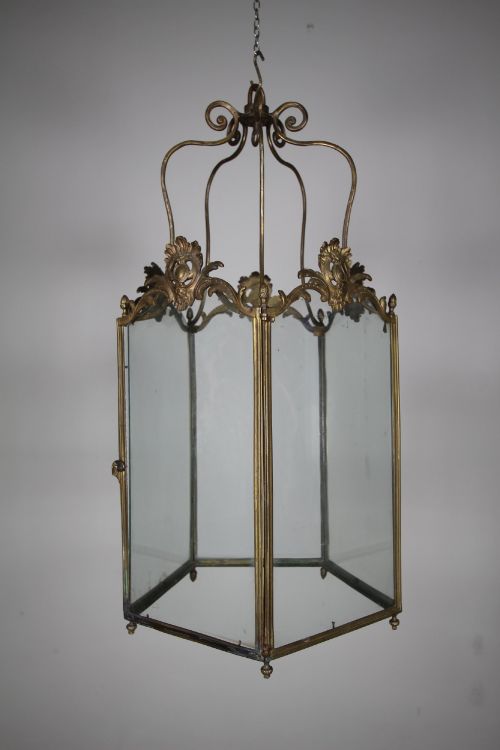
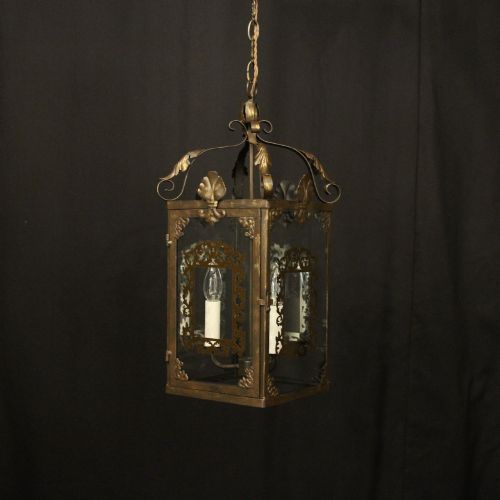
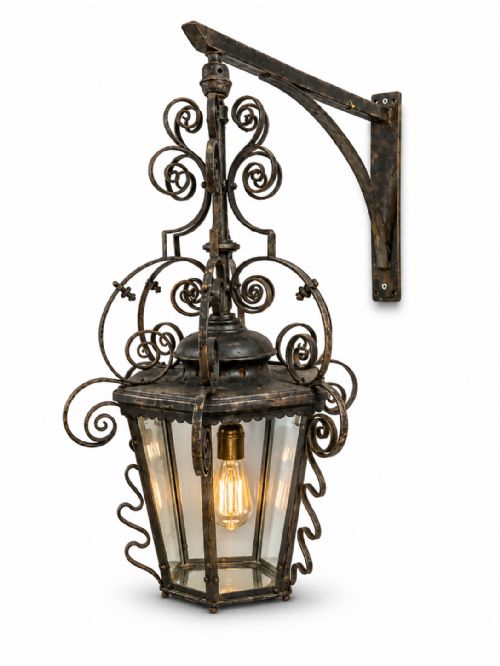
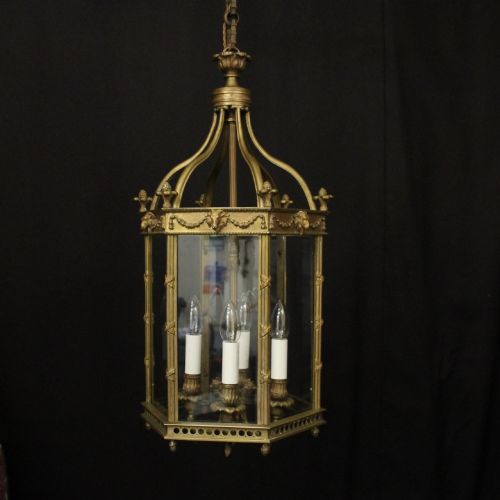
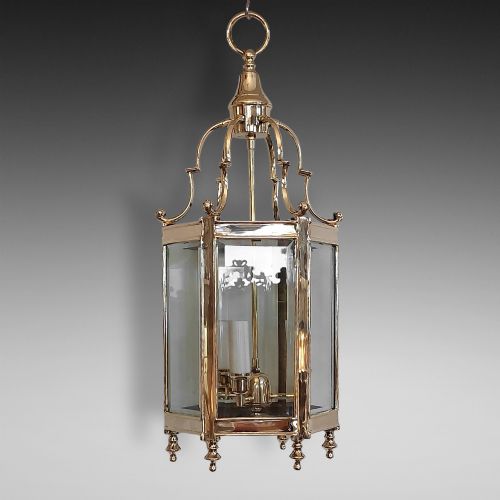
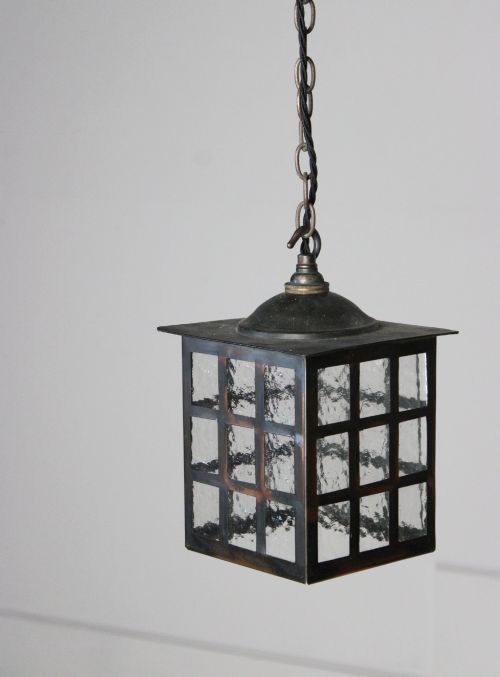
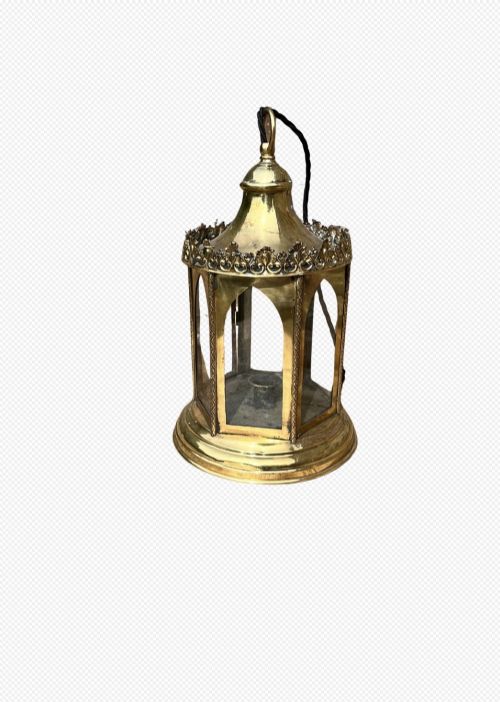
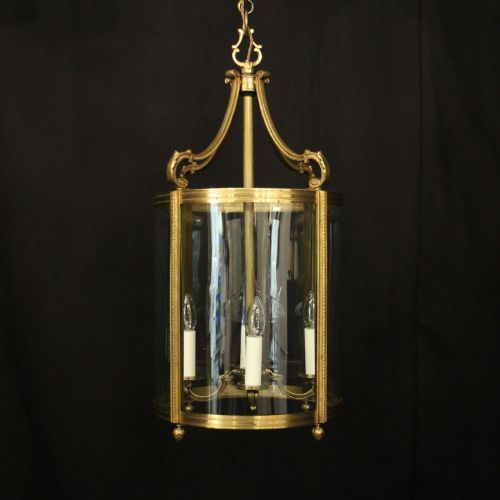
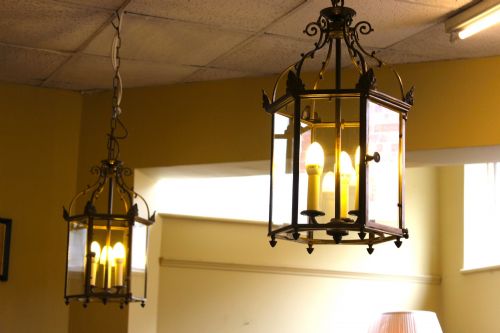
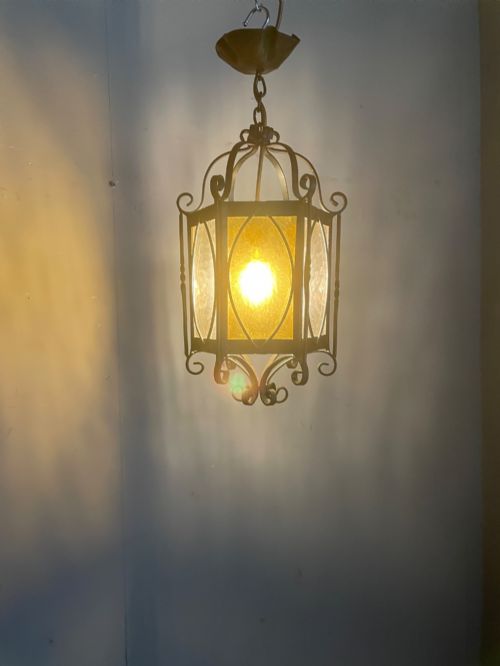
These hanging glazed lantern light examples bring architectural presence to a hallway, drawing the eye with their metal framing and glass panels.
Hanging Glazed Lantern Light
A hanging glazed lantern light brings overhead illumination to halls, landings and porches through enclosed glass panels held within a rigid metal frame. These pieces span the nineteenth century and the early decades of the twentieth century, emerging from both English workshops and continental makers.
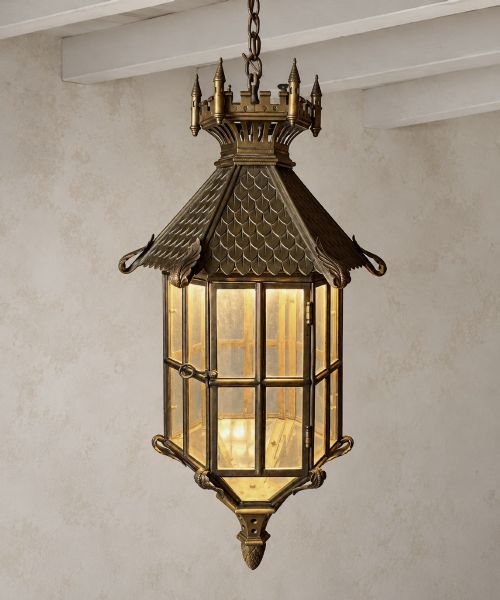
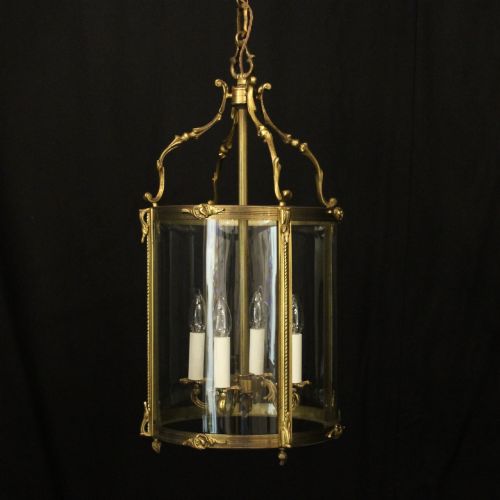
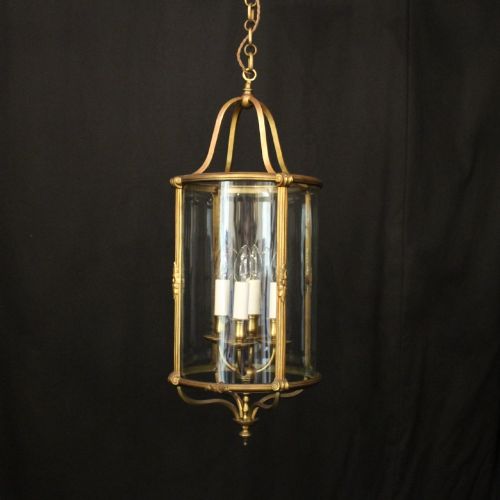
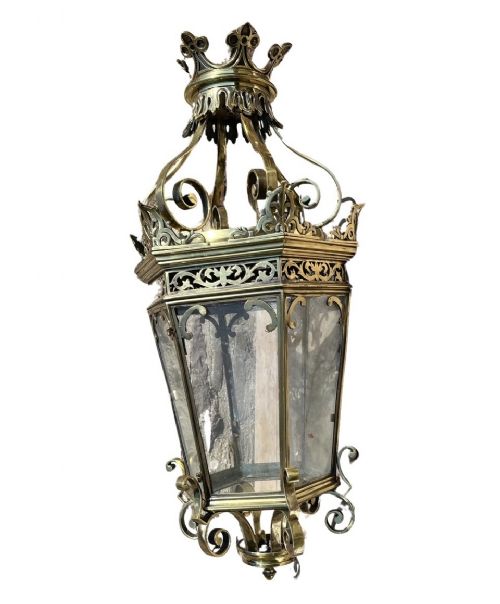
The most common examples on this page are French hall lanterns in gilded bronze, alongside English brass hexagonal models. Forms range from simple geometric shapes to large pieces with castellated crowns or convex glazing.
Makers designed these fixtures for high-ceilinged entranceways and circulation spaces where a pendant light needs to command attention without overwhelming the room.
Materials and construction methods
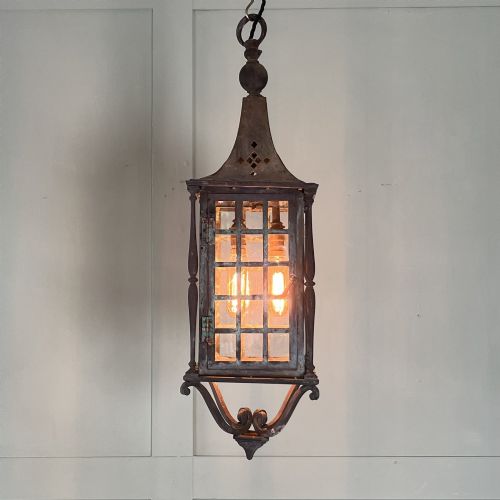
Foundry workers cast the structural components in brass, bronze, gilded bronze, copper, steel or wrought iron to build a rigid housing for the electrical or candle fittings. Artisans then soldered or bolted these metal frames together, often adding decorative crests or hinges for access.
Glaziers fitted flat, curved or bevelled glass panels into the metal channels, securing them with glazing bars or metal tabs. Gilded bronze and silver-gilded variants received chemical or metal finishes to catch the internal light.
Hanging Glazed Lantern Light Retail Price Guide 2026
Typical asking prices for hanging glazed lantern light among the pieces listed under this phrase on Sellingantiques today, from the lower quarter to the upper quarter. They describe what is for sale here now, not the wider market.
One copper lantern carries a decorative green man mask, watching over the hallway from beneath its metal hood.
Distinctions in execution and scale
The sophistication of the cast metal ornamentation dictates the calibre of the piece, moving from plain folded sheet brass to heavily chased bronze or wrought iron. Heavier gauge metals and complex multi-light internal clusters indicate more ambitious production.
Glass selection separates standard utilitarian lanterns from grander specimens, particularly where bevelled edges or convex panels require specialised glass-cutting techniques. The integrity of the original framing joints and the retention of finishing details further divide the output.
The Hanging Glazed Lantern Light Glossary
- Bevelled glass
- Glass with edges ground and polished at an angle to refract light and create a decorative border. This treatment appears frequently on larger early twentieth-century examples.
- Castellated crown
- An upper decorative collar shaped like the battlements of a medieval castle. It often crowns Gothic Revival lanterns.
- Hexagonal form
- A six-sided geometric body shape that provides multiple viewing angles for the internal light source. Many brass and iron hall lanterns use this configuration.
- Gilded bronze
- Bronze metal treated with a gold leaf or mercury gilt finish to produce a lustrous surface. French chateau and neoclassical models utilise this finish extensively.
Hanging Glazed Lantern Light: Frequently Asked Questions
How do I hang a heavy brass lantern?
Suspension requires securing the ceiling rose directly to a structural timber or joist using appropriate fixings to bear the dead weight of the metal and glass.
Heavier specimens demand reinforced chain links and professional wiring assessment to ensure the electrical components handle the lamp load safely.
Where should I place a hall lantern?
These fixtures suit entrance halls, vestibules and high-ceilinged landings where vertical space allows the hanging chain and frame to dangle freely.
Positioning the base above head height ensures safe clearance while casting light across circulation routes and architectural doorways.
How do I clean the glass panels?
Removing dust and grime requires a soft cloth and a mild glass cleaner applied directly to the cloth rather than sprayed near the metal frame.
Care must be taken around antique gilt or bronze surfaces to avoid harsh chemical contact that might strip the historic finish.
Are these lights wired for modern use?
Many surviving examples arrive with modern electrical fittings installed, though older pieces may require rewiring by a qualified electrician to meet current safety standards.
Internal lamp holders accommodate standard SES or CES bulbs depending on the scale of the interior cluster.