





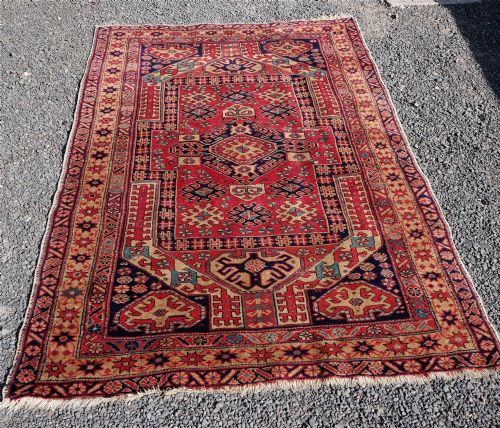
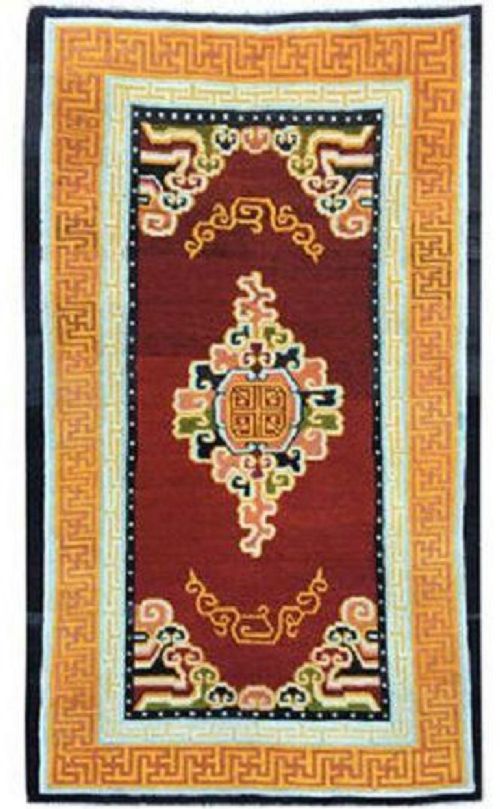
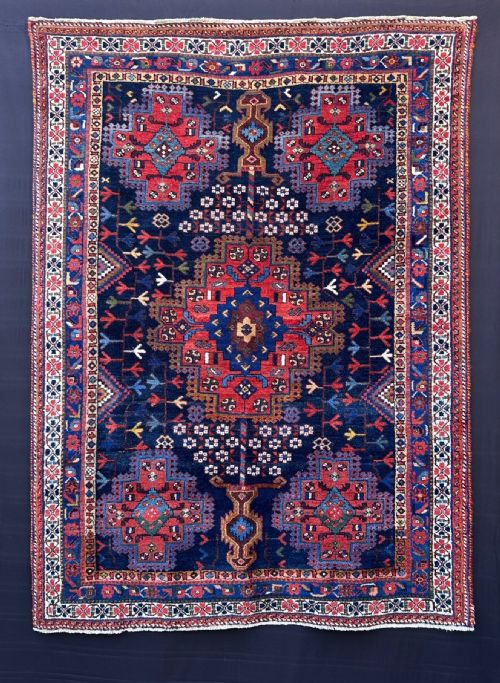
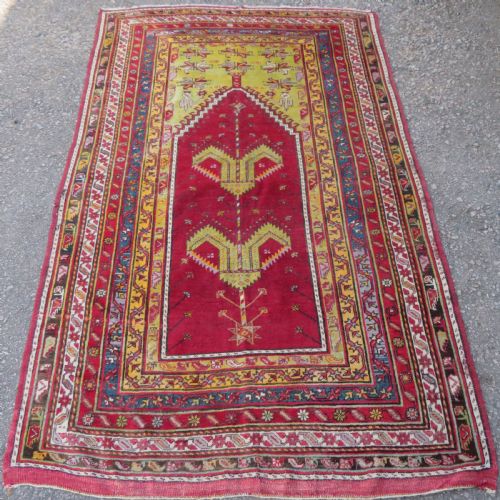
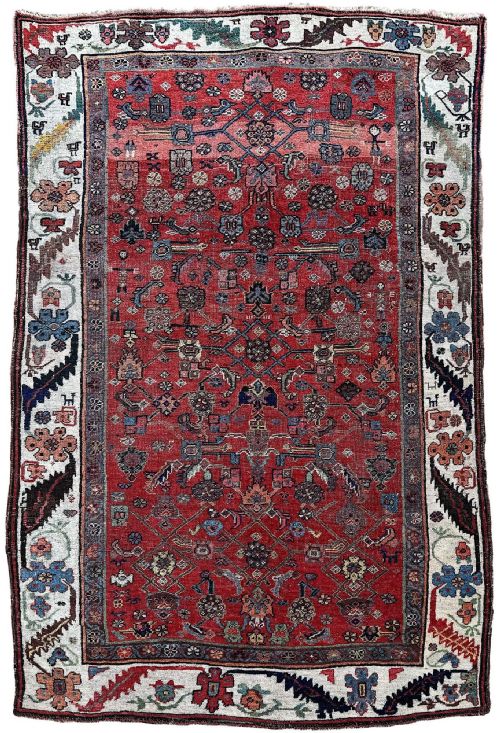
Traditional Geometric Area Rug
These traditional geometric area rugs bring floor-bound symmetry from Persian, Caucasian, Turkmen, and Anatolian traditions into domestic spaces.
Traditional Geometric Area Rug
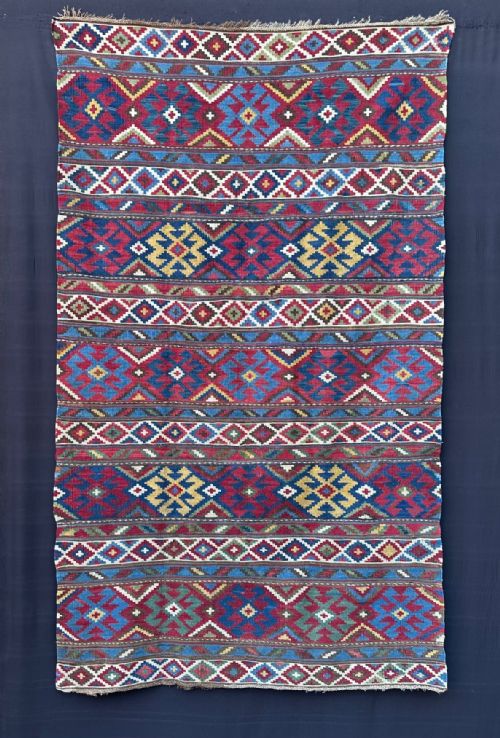
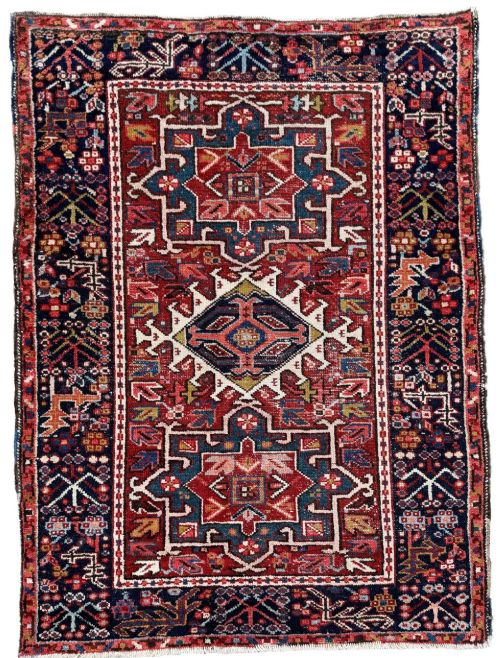
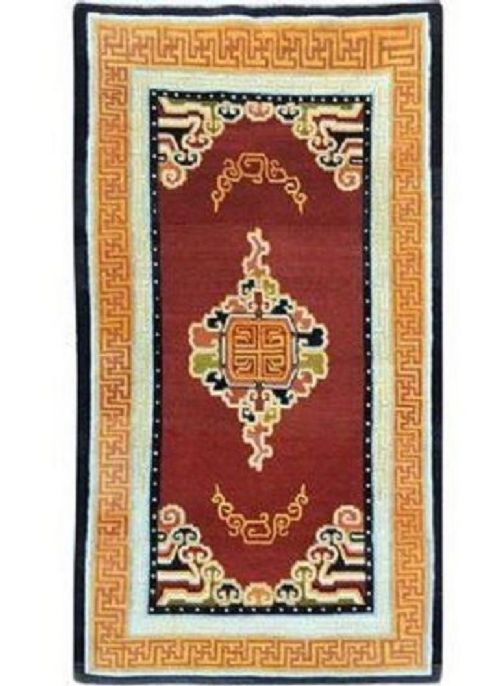
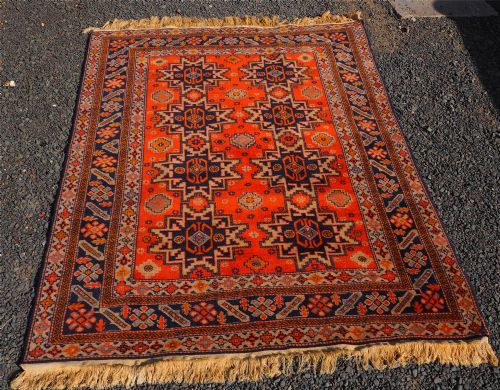
A traditional geometric area rug uses repeating motifs like medallions, lattice patterns, and guls across field designs rooted in regional tribal and village weaving practices.
The selections span the late nineteenth century through the early twentieth century, originating from regions such as the Caucasus, Persia, Turkey, Turkmenistan, and Tibet.
Forms range from compact prayer rugs and small square formats to room-sized carpets and hearth-sized runners intended for functional floor placement.
Materials and construction
Weavers relied principally on wool and hand-spun wool foundations, occasionally incorporating camel hair and cotton to build durable piles and structures.
Natural dyes provide the palette, generating warm reds and mellow colourways that age across decades of household foot traffic.
Pieces are hand-woven, utilising regional knotting techniques and village methods that define the structural integrity of each carpet.
The listings feature rugs from the 1870s to the 1930s, constructed predominantly from wool, cotton, and natural dyes.
Variations in quality
The standard of a weave rests on knot density, the precision of straight lines within complex geometric layouts, and the clarity of the design motifs.
Materials dictate longevity, with tightly spun wool and well-fixed natural dyes holding their depth and structural cohesion far better than weaker fibres.
The Traditional Geometric Area Rug Glossary
- Gul
- A repeating octagonal or medallion motif commonly found in Turkmen and Baluch weaving traditions. These shapes act as tribal insignia.
- Prayer rug
- A small format rug featuring a mihrab or arch design at one end, traditionally used for personal devotion. They are portable and highly decorative.
- Medallion
- A central ornamental design element placed in the middle of the carpet field. It anchors the surrounding geometric composition.
- Kilim
- A flat-woven carpet or rug made without a pile by tightly interweaving warp and weft strands. This technique produces a lightweight, reversible textile.
Traditional Geometric Area Rug: Frequently Asked Questions
Where should I place a rug?
These pieces suit high-traffic living areas, hallways, and studies where the wool pile can withstand daily movement while grounding the room's colour scheme.
Smaller formats work well beside beds or in hearth spaces, whereas larger carpets anchor central furniture groupings.
How do I clean my rug?
Gentle surface brushing and regular light vacuuming without a rotating beater bar remove loose dirt before it settles into the wool fibres.
Professional specialist cleaning is necessary for deep washing to protect the natural dyes and hand-spun materials.
Are these rugs durable?
The combination of dense wool pile and sturdy foundation materials ensures these textiles endure decades of domestic use.
Placing an appropriate underlay beneath the carpet prevents slipping and reduces friction against hard flooring.
How do I identify tribal designs?
Tribal patterns often feature repeating geometric elements like cruciforms, hooked polygons, and stark lattices associated with specific regional weavers.
Examining the structural characteristics and specific colour palettes helps connect a piece to traditions like Kazak, Heriz, or Baluch.