





Traditional Garden Urns
Traditional garden urns bring formal classical proportion to outdoor spaces, most often seen here as cast iron campana shapes and terracotta oil jars.

Traditional Garden Urns
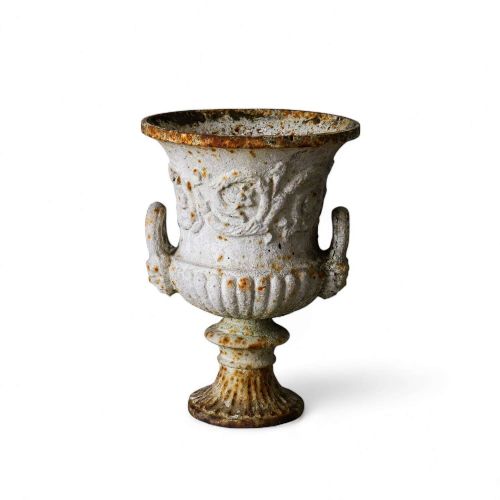
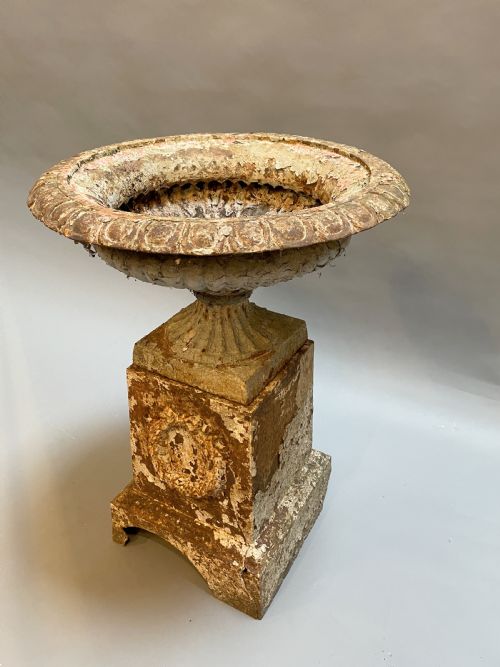
Traditional garden urns are classic planting vessels designed to anchor focal points in landscapes, courtyards and terraces. When you search for traditional garden urns, you encounter robust Victorian and 19th-century cast iron campana models alongside weathered terracotta oil jars and amphorae from various European regions.
The materials span heavy metals and porous earths, with cast iron pieces frequently mounted on matching plinths or stands. Terracotta examples often originate from Mediterranean and French workshops, displaying organic glazes or the natural patination of age.
Most pieces date from the 19th century through the mid-20th century, encompassing Victorian, Edwardian and Georgian revivals. Forms range from fluted and gadrooned bodies to simple classical silhouettes intended for direct planting or display.
Materials and Fabrication
Cast iron versions rely on foundry casting, utilising moulds to create crisp classical details such as gadrooning and fluting. These metal bodies frequently receive coats of paint or develop natural surface weathering over decades outdoors.
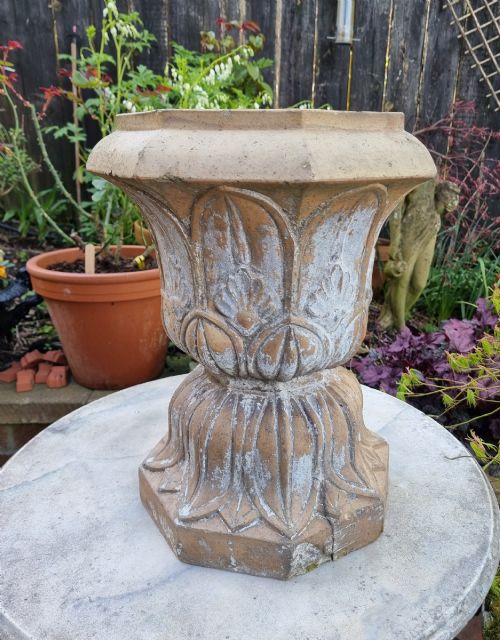
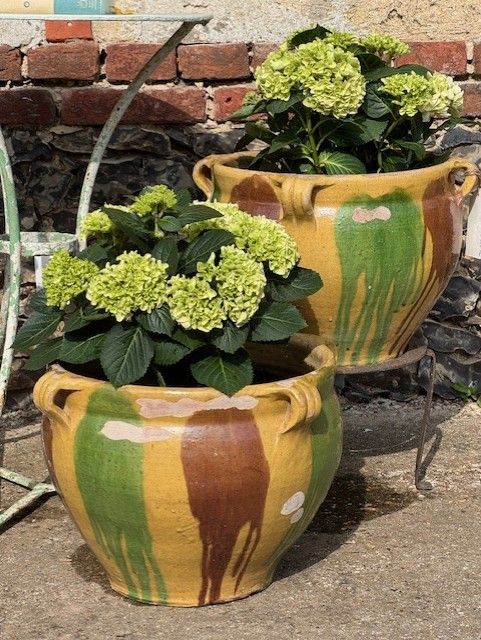
Terracotta and earthenware pieces are thrown or moulded from regional clay before firing, resulting in porous walls that breathe with the soil. Certain French and Portuguese iterations feature applied dripped glazes or remain as raw, sun-baked clay.
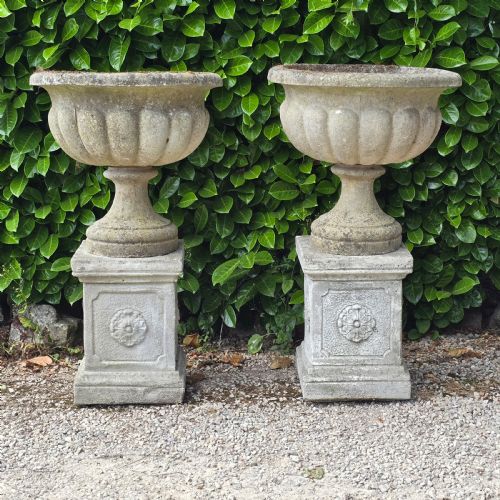
Reconstituted and cast stone offer heavier structural alternatives, binding aggregate materials into durable classical forms that withstand seasonal freezing.
Traditional Garden Urns Retail Price Guide 2026
Typical asking prices for traditional garden urns among the pieces listed under this phrase on Sellingantiques today, from the lower quarter to the upper quarter. They describe what is for sale here now, not the wider market.
Several heavy cast iron urns spent a century quietly holding geraniums before finding their way onto modern stone terraces.
Assessing Quality and Character
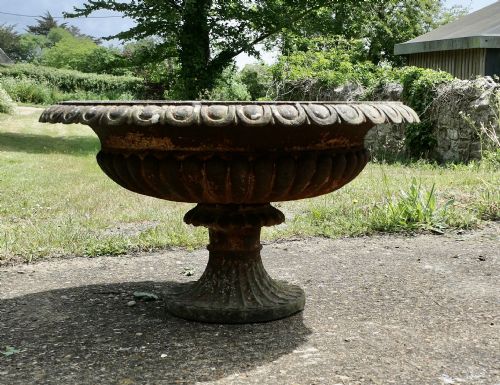
Quality in cast iron urns rests on the crispness of the original moulding and the thickness of the metal walls. Finer examples retain sharp relief work on classical motifs and sit squarely on substantial iron or stone plinths.
With terracotta and earthenware, superior pieces show uniform kiln firing and stable structural integrity despite surface weathering. The depth of the natural patina and the presence of historic dripped glazes contribute to the visual weight of an oil jar or amphora.
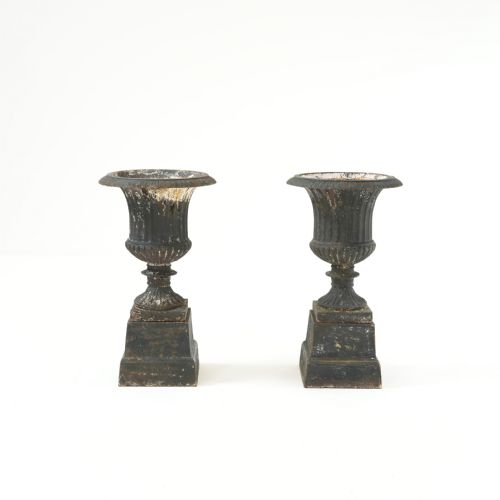
Matched pairs command greater presence than single vessels, particularly when the weathering and casting details align evenly across both pieces.
Andrew Handyside
The Traditional Garden Urns Glossary
- Campana urn
- A bell-shaped garden vessel with a flaring rim and a tapered body, popular in classical design. This profile forms the basis of many traditional metal and terracotta planters.
- Gadrooned
- Decorated with a series of convex curves or flutes moulded in a continuous row around the body. This ornamental carving frequently encircles the lower bowl of Victorian iron urns.
- Amphora
- A tall ancient storage vessel with two handles and a narrow neck, often adapted for garden display. These earthenware pots bring distinct Mediterranean character to a terrace.
- Plinth
- A heavy base or pedestal that elevates an urn above ground level. Many 19th-century cast iron designs rely on these supporting blocks for proper architectural balance.
- Terracotta
- Fired unglazed clay ranging in colour from buff to deep orange-red. The porous nature of the material absorbs moisture, encouraging organic weathering over time.
Traditional Garden Urns: Frequently Asked Questions
How do I choose between cast iron and terracotta?
Cast iron offers immense structural durability and a formal architectural presence, often featuring crisp classical moulding that suits grand terraces. These metal vessels handle heavy planting schemes with ease.
Terracotta brings warmth and a porous structure that interacts naturally with soil and moisture. These earthen jars develop rich surface patinas over decades outdoors.
Can these garden urns stay outside all winter?
Most cast iron and heavy stone urns tolerate freezing temperatures well, provided they have adequate drainage holes to prevent ice expansion inside the bowl.
Terracotta and earthenware vessels are more vulnerable to frost damage when saturated with wet soil. Gardeners often move porous pots under cover or empty them during the coldest months.
What is a campana urn?
A campana urn is a bell-shaped vessel with a wide, flaring rim and a slender lower stem resting on a footed base. This classic silhouette originates from ancient Roman metal and stone models.
Victorian foundries reproduced this profile extensively in cast iron for parks and large estates. The shape provides generous space for trailing plants while maintaining formal symmetry.
How do I care for a weathered cast iron urn?
Cast iron urns develop protective rust and paint patinas over generations of exposure to the elements. Light brushing removes debris without disturbing the historic surface.
Applying a fresh coat of suitable metal paint every few years protects the iron from deep corrosion. This maintenance preserves the structural integrity of 19th-century foundry work.