
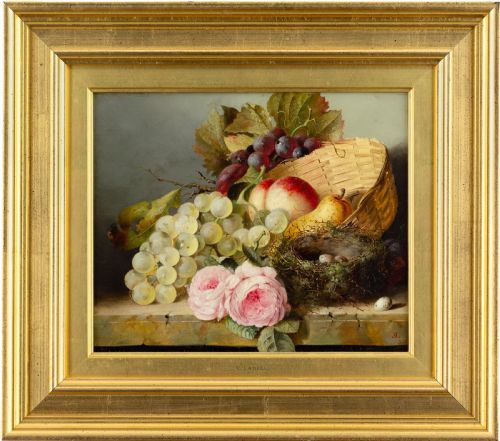
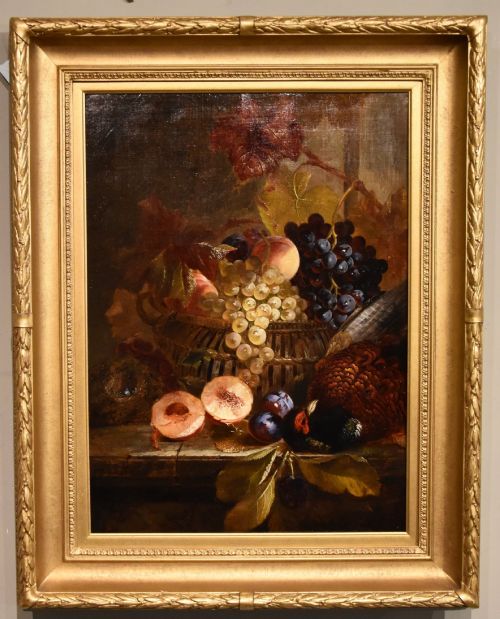
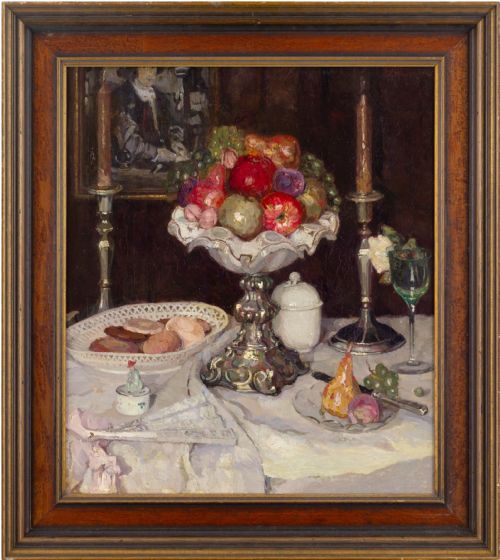
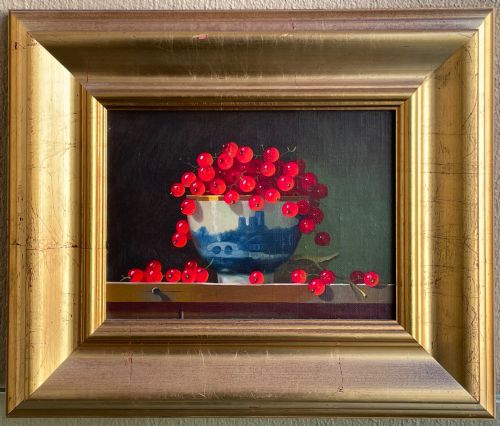
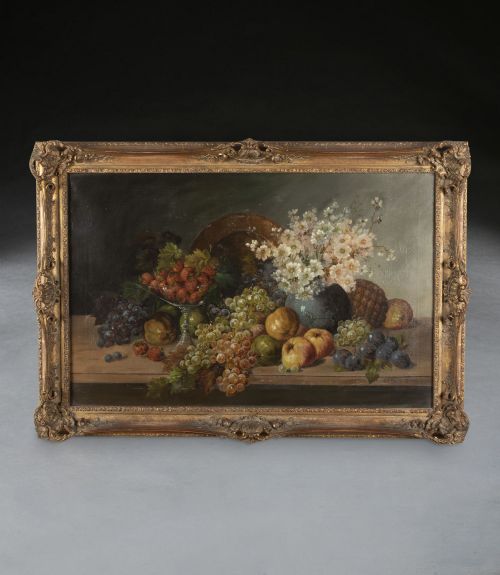



Traditional Fruit Painting Framed
A traditional fruit painting framed brings the rich, classical harvest of the larder straight to the wall in oil and watercolour.
Traditional Fruit Painting Framed
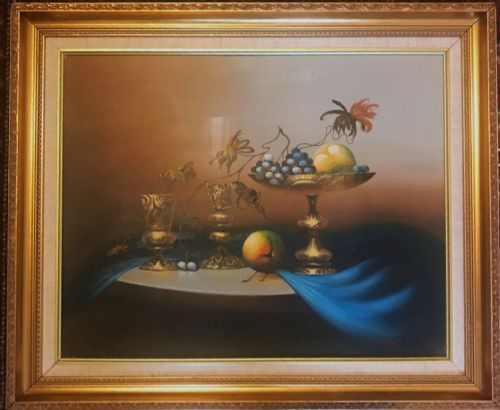
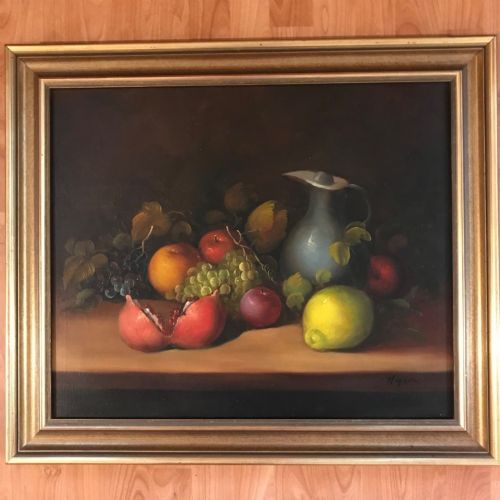
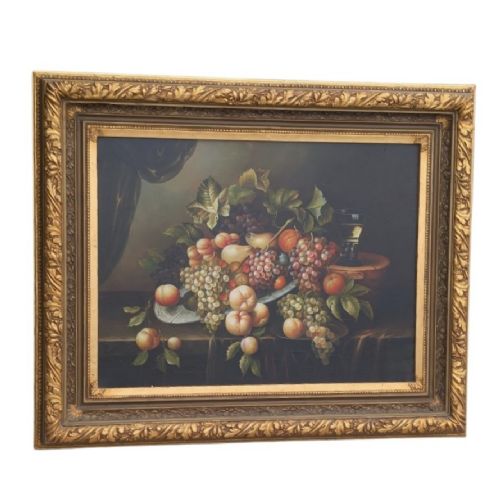
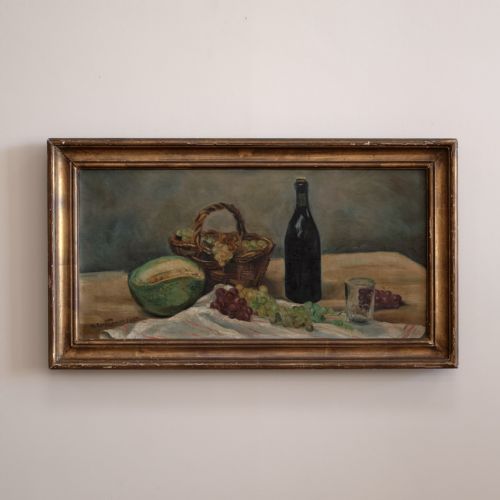
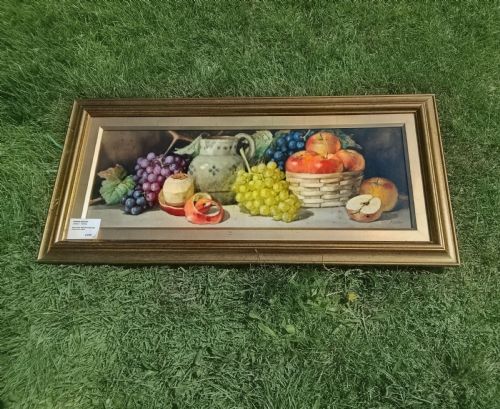
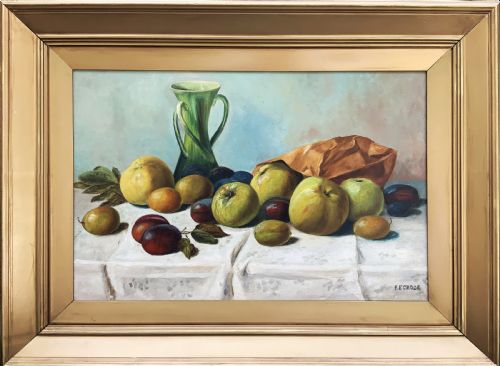
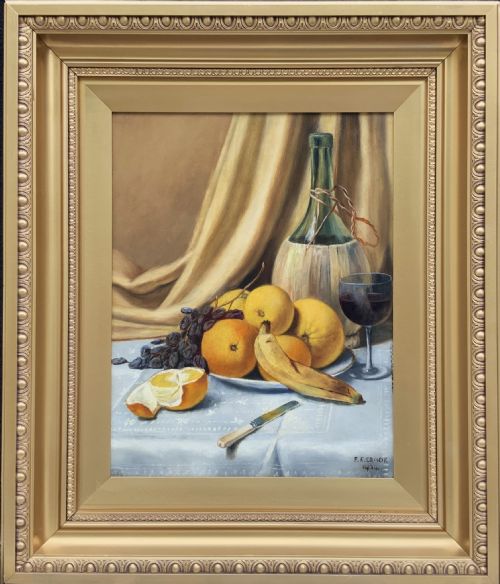
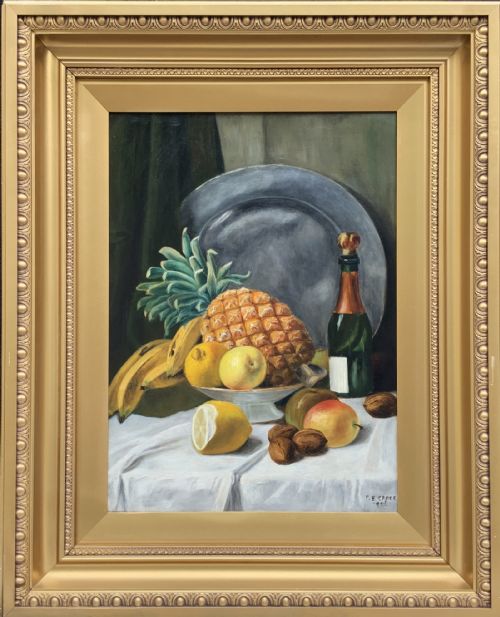
Traditional fruit painting framed compositions focus on detailed arrangements of apples, grapes, berries and baskets set against dark interiors or rustic tables. These works draw heavily from 19th century and Edwardian classical still life traditions, capturing the textures of seasonal produce with careful realism.
Buyers will encounter numerous oil on canvas pieces alongside occasional watercolours and tempera works, spanning periods from the 1850s through to the mid 20th century. Many examples arrive encased in period wood or gilt frames that complement the rich, earthy palettes of the subjects within.
The selections range from intimate cabinet studies of single fruit bowls to large, ambitious Dutch-inspired arrangements featuring porcelain jars and game. This variety allows collectors to find works matching specific interior scales, from small Victorian studies to expansive Edwardian canvases.
Materials and Technique
Painters relied principally on oil paint applied to stretched canvas or wooden panels, building rich layers of pigment to render the translucent skins of grapes and the dull sheen of apples. Artists utilised fine brushwork to catch highlights on glass jugs, ceramic bowls and polished wooden surfaces.
The supporting frames are predominantly fashioned from wood, frequently finished with gold leaf, gilt or gilded wood to project light outward from the dark, moody interiors of the painted subjects. These solid wood and oak surrounds were often constructed specifically to house the canvas securely.
Listings feature oil on canvas and tempera works framed in giltwood, oak and solid wood.
Factors of Quality
Quality rests significantly on the precision of botanical rendering and the structural integrity of the paint layer, where superior hands capture light refracting through glass or resting on soft fruit skins. Masterful depth is achieved through subtle tonal gradation rather than harsh outlines, distinguishing accomplished academic artists from routine decorative painters.
The condition and authenticity of the surrounding giltwood or carved frame heavily influence the overall standard of the piece, particularly when original to the canvas. Frames featuring intact, high relief gilding and sound wooden construction elevate the presentation of the artwork considerably.
Edward Ladell·William Henry Ward·Else Preußner·Arthur Dudley·Evelyn Chester·William Duffield·Thomas Hooper·John Robertson Reid·George Lance
The Traditional Fruit Painting Framed Glossary
- Oil on Canvas
- Pigment mixed with drying oil applied to a woven fabric support stretched across a wooden frame. This medium allowed artists to achieve deep tonal range and rich colour blending.
- Giltwood
- Wood carved and subsequently coated with a thin layer of gold leaf or metallic powder. It provides a reflective, warm border suited to dark academic paintings.
- Still Life
- An artwork depicting inanimate subject matter, typically commonplace objects such as fruit, flowers or tableware. These arrangements allowed artists to focus entirely on composition, light and texture.
- Classical Realism
- An artistic style rooted in traditional academic standards that prioritises accurate observation and lifelike representation. This approach ensures the fruit and vessels appear tangible and three dimensional.
Traditional Fruit Painting Framed: Frequently Asked Questions
How should I clean a framed oil painting?
Dust the canvas gently with a soft, dry brush without applying pressure to the paint surface. Avoid using water, household cleaners or chemical solvents on the paint or gilt frame.
For deeper cleaning or varnish removal, consult a professional art conservator to prevent permanent damage to the pigments.
Are these paintings signed by the artist?
Many examples feature signatures or monograms applied by the painter, often tucked into the lower corners near a table edge or basket. Unsigned works frequently emerge from European schools or anonymous studio practices of the period.
Signatures can sometimes be researched against historical records to identify regional 19th century painters.
How do I hang and light these works?
Position the piece away from direct sunlight and damp environments to protect both the canvas and the wooden frame from warping. Secure the weight using appropriate wall fixings rated for the heavy timber surrounds.
Pair the artwork with a dedicated picture light to illuminate the dark backgrounds and bring out the subtle details of the fruit.
What periods do these paintings come from?
The inventory spans the 19th century, Edwardian era, and extends into mid 20th century interpretations of classical realism. Victorian and Edwardian examples form a large portion of the available selection.
Earlier Baroque works from the 18th century also appear, offering grander and more complex compositional arrangements.