
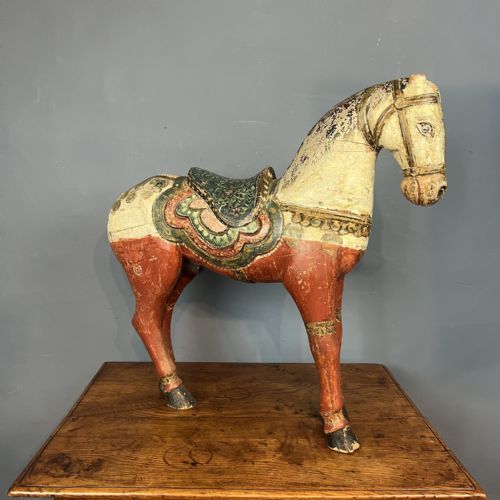


Traditional Folk Art Carvings
Traditional folk art carvings bring together centuries of vernacular expression, hand-carved in wood and finished with paint by regional makers.
Traditional Folk Art Carvings
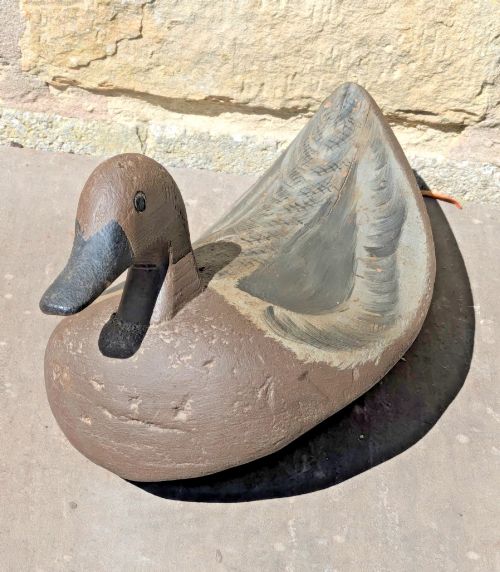
Traditional folk art carvings encompass a diverse range of vernacular objects created by regional makers, spanning functional domestic items and figurative sculptures. When exploring traditional folk art carvings, buyers encounter everything from painted wooden decoy ducks and love spoons to intricately carved panels, figures, and household tools.
The pieces originating from nineteenth-century workshops predominate on this page, alongside earlier seventeenth-century Dutch and Frisian examples and twentieth-century decorative pieces. These items reflect the domestic, ritual, and utilitarian needs of varied cultures, originating from British, European, Asian, and Russian traditions.
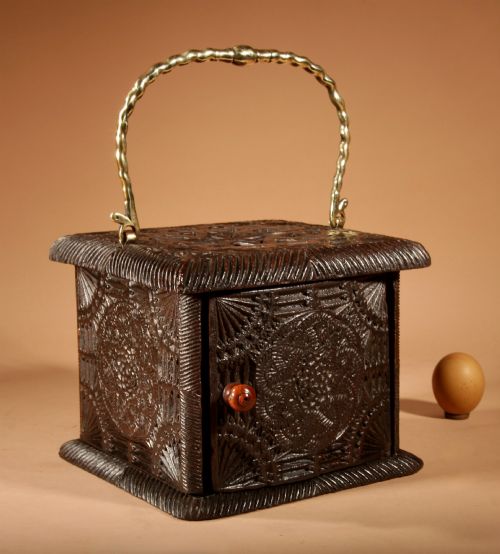
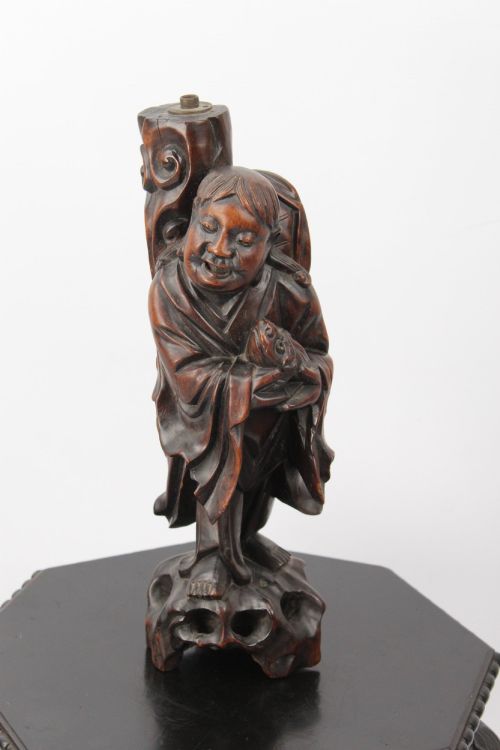
Domestic forms such as distaffs, mangle boards, and foot warmers appear alongside cultural figures like Daoist immortals, Japanese geishas, and Indian deities. This breadth demonstrates how ordinary makers applied sculptural skill to everyday objects across different centuries and communities.
Materials and construction methods
Makers utilised local timbers including oak, pine, fruitwood, and various hardwoods, shaping them with hand chisels and knives to create tactile surfaces. The reliance on available woods dictated the weight and grain pattern of each finished object.
Many items incorporate surface decoration such as polychrome paint, wax, or chip carving to enhance the visual appeal of the raw wood. This combination of structural carving and applied pigment characterises the regional vernacular aesthetic seen across the selection.
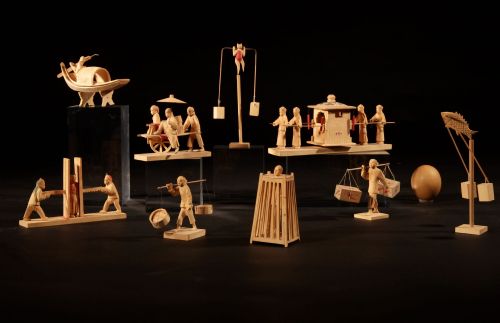
The listings span from seventeenth-century chip-carved Dutch boards to twentieth-century Russian troikas and Asian deities in carved wood.
Evaluating quality and execution
The survival of original polychrome paint or surface patination plays a central role in how these pieces hold their visual integrity. Items retaining their early pigment layers offer a clearer connection to the maker's original intent than stripped or heavily restored surfaces.
The Traditional Folk Art Carvings Glossary
- Chip carving
- A method of removing small triangles of wood from a flat surface to create geometric patterns. This technique appears frequently on seventeenth-century Dutch and Frisian boards.
- Polychrome
- Painted in several colours. Many wooden figures and decoy ducks utilise this technique to depict realistic plumage or traditional garments.
- Treen
- Small handmade wooden objects for domestic use. Lace folders and distaffs fall into this functional category of carved treed items.
- Mangle board
- A flat wooden board used with a roller to smooth linen. Examples from the seventeenth century often feature intricate relief carving and dates.
Traditional Folk Art Carvings: Frequently Asked Questions
What defines traditional folk art carvings?
These pieces are handmade wooden objects created by regional artisans for domestic, decorative, or ritual purposes rather than academic fine art production.
They encompass everything from utilitarian household tools to figurative sculptures and animal decoys, reflecting local cultural traditions across various centuries.
How were decoy ducks used?
Decoy ducks served as working lures on waterways to attract wildfowl for hunters during the nineteenth and early twentieth centuries.
Carvers shaped and painted the wood to mimic live birds, meaning many surviving examples show genuine field wear beneath their decorative paint layers.
How do I care for wooden carvings?
These items require stable indoor humidity levels away from direct sunlight and strong heat sources to prevent the wood from splitting.
Dusting gently with a dry, soft cloth is sufficient for maintenance, avoiding liquid cleaners that might damage painted or waxed surfaces.
How can I tell the age of a carving?
Dating relies on examining tool marks, timber shrinkage, style, and the natural patination built up through handling over the centuries.
Certain pieces carry explicit carved dates or initials, while others require comparison with documented regional design traditions and materials.