


Traditional Farmhouse Coffee Table
These traditional farmhouse coffee table pieces bring practical warmth and character to a room, formed from sturdy timber with decades of honest wear.
Traditional Farmhouse Coffee Table
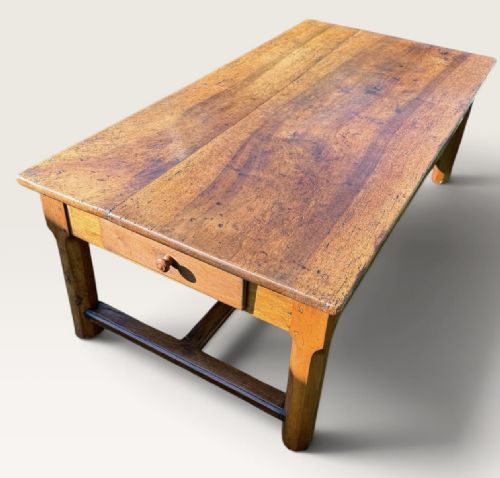
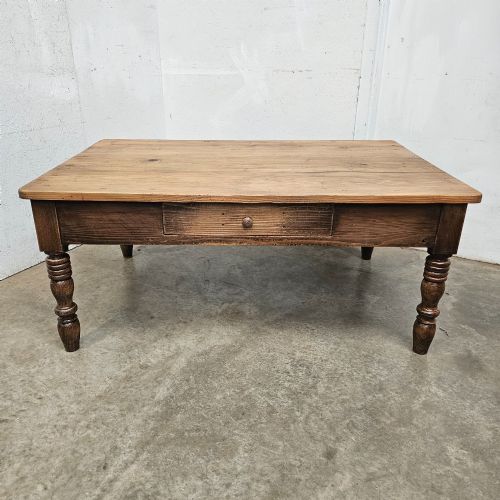
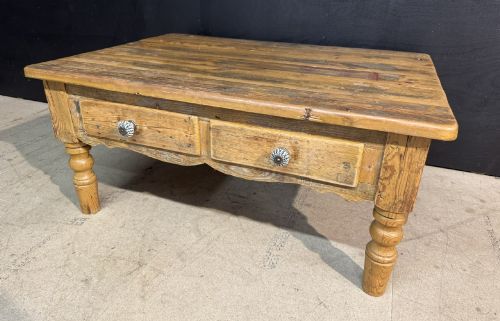
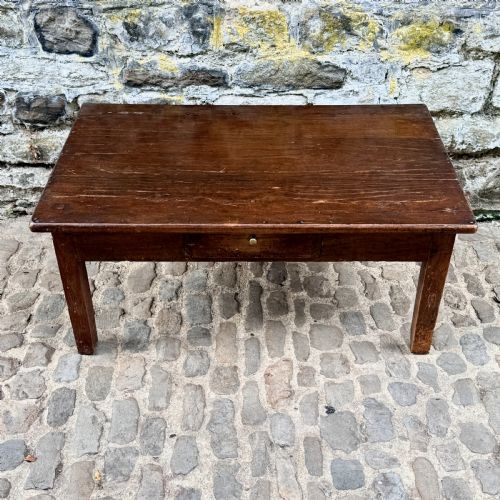
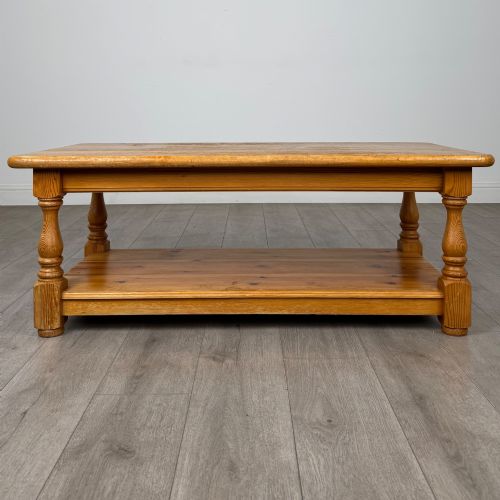
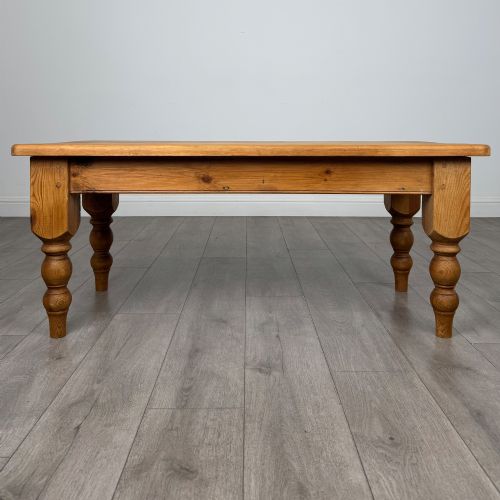
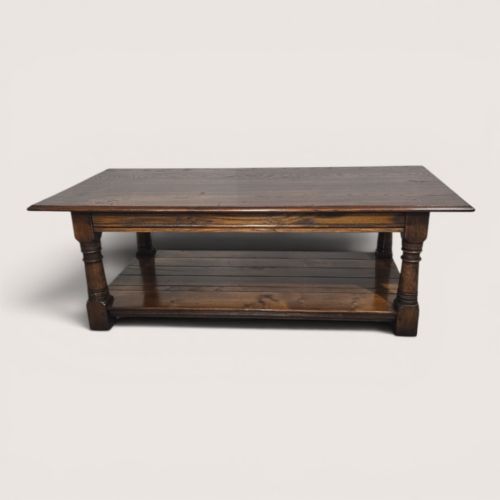
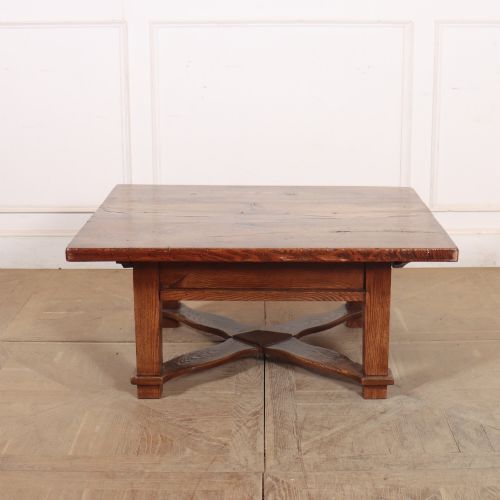
When you search for a traditional farmhouse coffee table, you are looking at low tables designed for daily service, often adapted from larger work tables, kitchen tables, or storage bins. The examples you are most likely to meet on this page span the eighteenth, nineteenth, and early twentieth centuries, sourced from English, French, and Austrian traditions.
Forms vary from straightforward plank tops on turned legs to low tables incorporating drawers or modified dough bins. They function as central anchors in a sitting room, offering a wide, robust surface built originally for hard domestic work rather than polite display.
The origins of these pieces reach across European country workshops, resulting in unpretentious proportions that suit both modern and traditional interiors. Their appeal lies in utility paired with the unhurried patina of age.
How they were made
Makers relied on honest solid timbers such as pine, oak, elm, walnut, cherry wood, and chestnut, selected for strength and local availability. Planks were joined simply and stoutly, often showing the visible grain and knots inherent to domestic hardwoods and softwoods.
Joinery techniques prioritize durability, utilising pegged joints, heavy turned legs, and thick floorboards rather than decorative veneering. Surfaces were left natural, scrubbed clean, or occasionally finished with early paint layers that wore down gradually through daily use.
Some tables began life kneading bread before settling down in the sitting room.
What varies in quality
The distinction between a standard utility piece and a finer example rests on the choice of timber and the harmony of proportion. Tables fashioned from dense hardwoods like oak, walnut, or cherry wood generally command greater attention than simple pine variations.
Construction integrity separates honest survivors from heavily altered pieces. Original untouched surfaces, intact turned legs, and period fixings such as wooden drawer pulls or pegged joints elevate the character and authenticity of the piece.
The Traditional Farmhouse Coffee Table Glossary
- Dough bin
- A deep wooden box with a lid, traditionally used for proving bread dough, which is sometimes converted into a low table. These pieces retain distinctive storage compartments beneath the surface.
- Turned leg
- A wooden leg shaped on a lathe to create cylindrical, baluster, or tapered profiles. This method adds decorative structure to otherwise utilitarian bases.
- Plank top
- A surface constructed from several wide boards joined edge to edge. This method provides a sturdy table top that shows the natural grain and age marks of the wood.
- Patina
- The surface sheen and softening of colour developed by wood over decades of handling, cleaning, and exposure to light. It serves as a visual record of age and use.
- Fruit wood
- Timber derived from fruit-bearing trees such as cherry or apple, valued for its fine grain and warm tone. It was frequently utilised in regional European cabinet making.
Traditional Farmhouse Coffee Table: Frequently Asked Questions
What is a traditional farmhouse coffee table?
A traditional farmhouse coffee table is a low, sturdy table built from solid timber such as pine, oak, or elm. Many examples originate from repurposed kitchen tables, work tables, or dough bins.
These pieces reflect regional European craftsmanship from the eighteenth and nineteenth centuries. They offer practical surface space combined with the distinct character of domestic utility.
How do I clean a wooden coffee table?
Clean timber surfaces using a soft, dry cloth to remove dust and daily debris. Avoid harsh chemical cleaners that can strip the historic finish or dry out the wood.
Applying a traditional beeswax occasionally helps nourish older timber and maintains the natural sheen. Keep the table away from direct heat sources to prevent the wood from splitting.
Are these tables original antiques?
The selection includes pieces dating from the eighteenth century through the early twentieth century. Materials and construction methods align with the domestic furniture production of those periods.
Many low tables were adapted from older work tables or kitchen furniture during subsequent decades. Each piece shows the wear and marks appropriate to its age and original function.
Which wood types are most common?
Pine appears frequently in these listings, offering a pale, serviceable surface suited to country interiors. Hardwoods such as oak, elm, walnut, and cherry wood also feature prominently.
Each timber brings different weight, grain patterns, and colour variations to the table. Regional preferences often dictated which wood the local maker chose to utilise.