
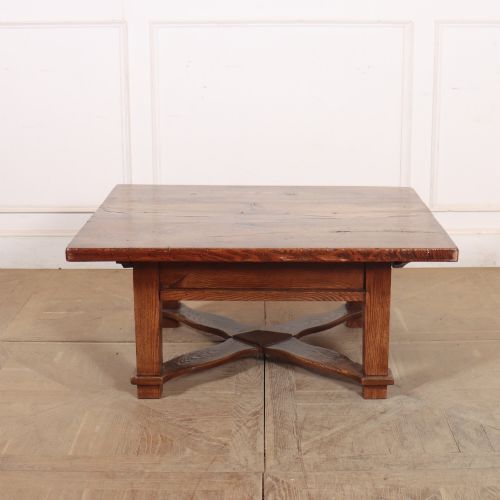


Rustic Timber Centre Table
A rustic timber centre table brings honest grain and sturdy construction into a room, offering a functional surface grounded in domestic history.
Rustic Timber Centre Table
A rustic timber centre table encompasses low tables, coffee tables, and prep tables shaped by utility across European and colonial traditions. Pieces range from Austrian elm and French cherrywood examples to Indian takhat and bullock cart low tables.
The versions most commonly met on this page span the eighteenth and nineteenth centuries, alongside pieces dated around nineteen hundred. They feature regional styles such as Alpine country, French provincial, and English country house.
The form functions as a heavy centrepiece or low surface, constructed from solid woods like oak, pine, elm, and fruitwood. These tables carry the marks of daily domestic use through patinated tops and pegged joints.
How they were made
Construction relies on robust domestic and exotic hardwoods such as oak, elm, pine, and cherrywood joined to form stable platforms. Makers utilised heavy planks for surfaces and substantial timber for legs and cross bases.
Surface finishes include natural wax, applied pigment on Scandinavian pine, and untreated fruitwood that developed depth over decades. Joinery follows traditional carpentry methods suited to heavy furniture subjected to frequent handling.
Materials recorded across the inventory include oak, elm, pine, fruitwood, teak, cherrywood, iron, and pigment.
What varies in quality
Quality rests in the integrity of the timber selection and the honesty of the construction, where dense grain and original surface patination elevate a piece. Tables retaining their early boards and structural fasteners show superior character compared to heavily restored examples.
The refinement of regional joinery, from cross bases to pegged aprons, distinguishes provincial workshop output from simpler utilitarian items. The depth of the timber's ageing and the proportion of the base determine the overall visual weight.
The Rustic Timber Centre Table Glossary
- Jogltisch
- A regional European table type often featuring sliding breadboard ends or characteristic frame construction. These pieces derive from traditional Alpine joinery methods.
- Takhat
- A low Indian seating or serving platform utilised as a table in contemporary interiors. They display dense hardwoods and traditional low joinery.
- Breadboard ends
- Horizontal pieces of timber fastened to the ends of a table top to prevent warping. This technique accommodates seasonal wood movement.
- Patina
- The surface sheen and colour acquired by wood through age, wear, and polishing. It serves as an indicator of a piece's history.
Rustic Timber Centre Table: Frequently Asked Questions
How do I style a low timber table?
These tables anchor a room when placed centrally, offering a low horizontal surface that balances taller seating.
Keep the arrangement simple to let the aged grain and natural timber patination remain the visual focus.
How do I date an antique wooden table?
Dating relies on observing tool marks, timber species, joinery techniques, and the natural wear accumulated across the centuries.
Eighteenth and nineteenth-century examples display hand-cut joints and distinct regional construction methods that evolved over time.
Are these tables suitable for daily use?
Solid timber construction and sturdy frames make these tables durable additions to everyday living spaces.
Their robust nature allows them to handle regular domestic activities while maintaining their historic character.