

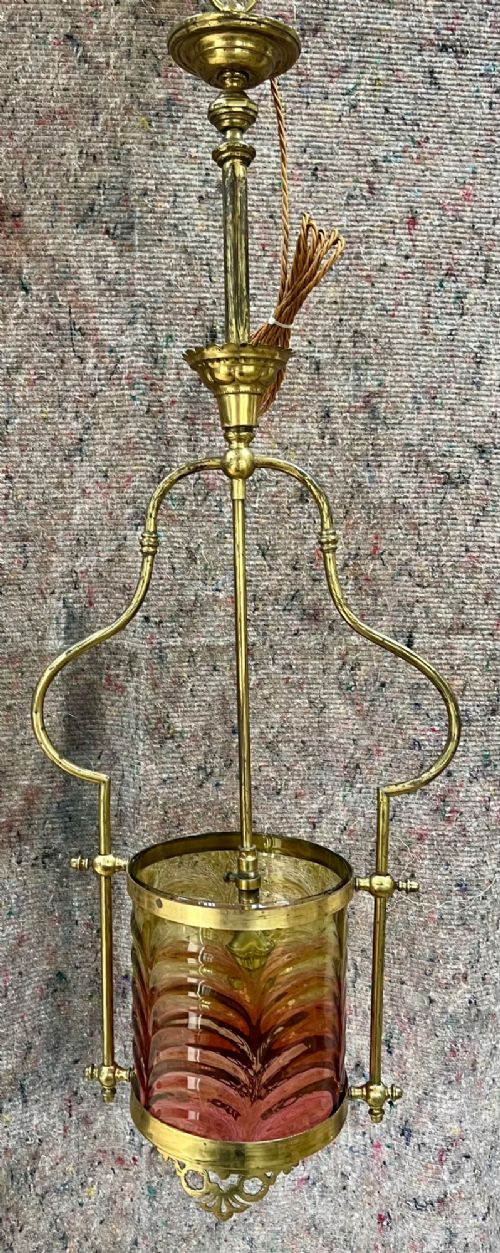
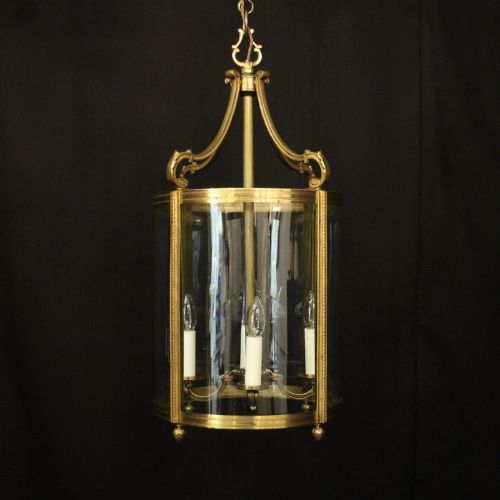
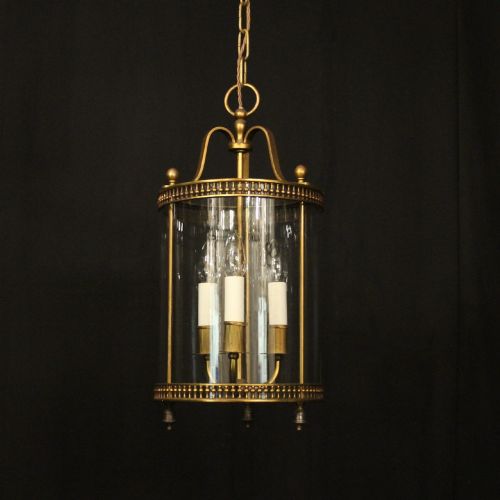
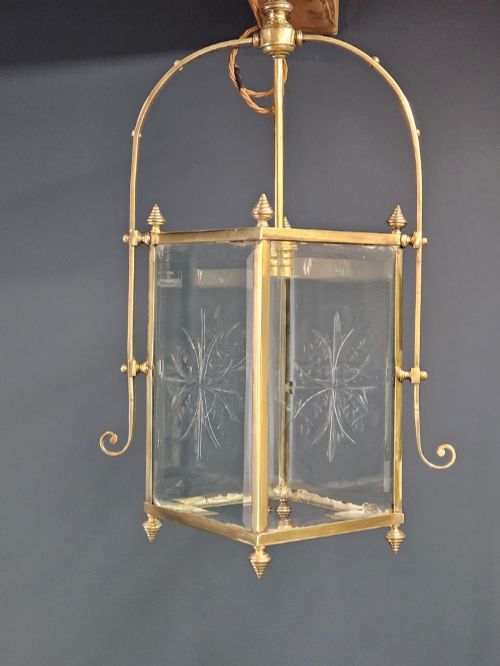


Traditional Entry Lantern
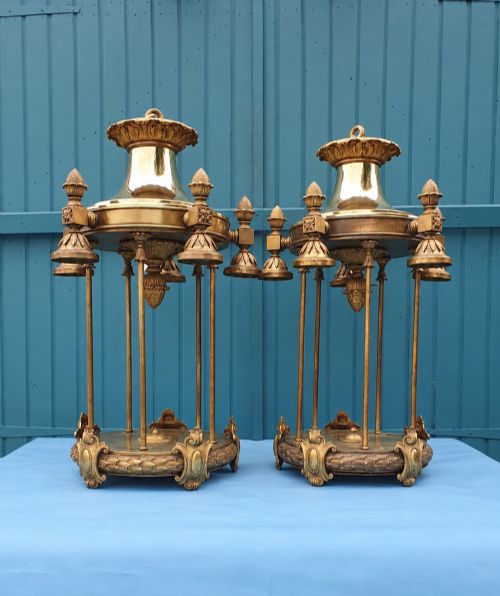
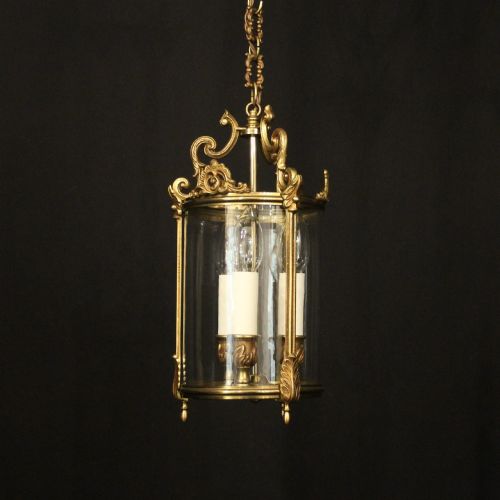
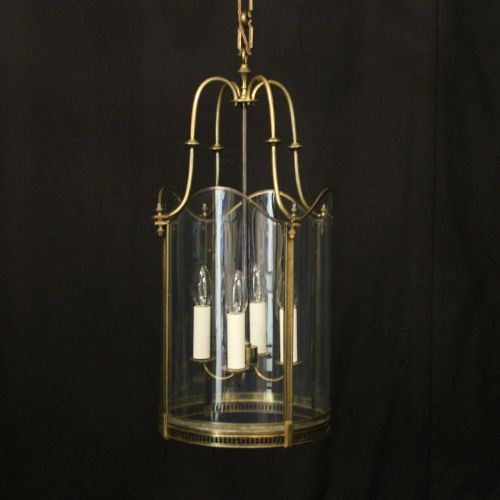
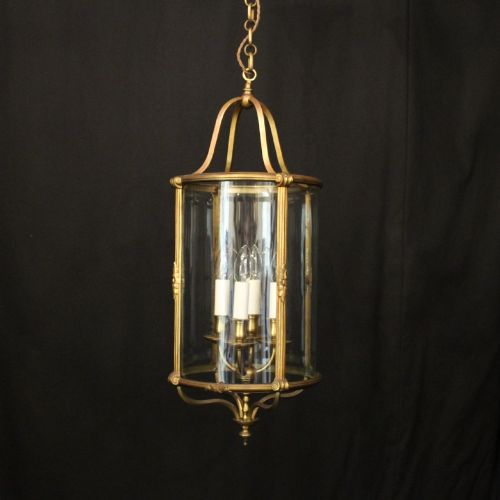
These traditional entry lantern fixtures are substantial hall and hanging lights that bring architectural weight and historical character to a hallway or entrance.
Traditional Entry Lantern
When you search for a traditional entry lantern, you are looking at overhead lighting designed principally for corridors, vestibules, and entrance halls. The selection on this page leans heavily towards French hall lanterns dating from the early twentieth century, alongside a smaller number of English and Italian examples.
Forms range from convex and octagonal hanging lanterns to multi-light ceiling fixtures and wall-mounted variants. Most pieces use visible glass panes secured within metal frames to distribute light evenly across a threshold.
Materials and construction methods
The physical build of a traditional entry lantern relies primarily on bronze, brass, and gilt metals combined with clear or bevelled glass panels. Workshops employed cast and wrought metalwork to create rigid structural frames that could support multiple internal bulb holders or candle arms.
Glass panels were individually cut and fitted into brass or bronze channels, sometimes utilising curved or convex plates to soften and refract the light. Gilt finishes and patinated bronze surfaces were applied to the metal frames to provide a decorative exterior that endures.
Traditional Entry Lantern Retail Price Guide 2026
Typical asking prices for traditional entry lantern among the pieces listed under this phrase on Sellingantiques today, from the lower quarter to the upper quarter. They describe what is for sale here now, not the wider market.
Several nineteen-twenties halls now glow thanks to French convex glass that was originally curved by hand to trick visitors into seeing a wider room.
What separates the finest examples
The distinction between average and exceptional lanterns rests in the precision of the metal casting and the complexity of the frame geometry. Superior pieces show crisp detailing in the mounts, heavier gauge metal work, and thick glass panels with bevelled edges that catch the light cleanly.
Proportion and scale also dictate quality, where larger multi-light configurations or convex shapes demonstrate more ambitious craftsmanship than simpler, smaller round or octagonal variants.
The Traditional Entry Lantern Glossary
- Convex glass
- Curved glass panels that project outward to diffuse light more broadly across an entrance hall. This shape adds visual depth to the silhouette of the fixture.
- Bevelled glass
- Glass with edges ground and polished at an angle to create a decorative framing effect. It refracts light into subtle prismatic colours when illuminated.
- Gilt bronze
- Bronze metal treated with a thin layer of gold leaf or gilt wash. This finish provides a warm, reflective surface suited to formal interior spaces.
- Hall lantern
- A ceiling-hung lighting fixture specifically scaled for narrow passageways and entrance spaces. These pieces are designed to be viewed from multiple angles.
- Arts and Crafts
- A design style prioritising honest construction and visible materials over excessive ornamentation. Pieces from this movement often feature simpler, more robust metal framing.
Traditional Entry Lantern: Frequently Asked Questions
How do I hang a heavy bronze lantern safely?
These metal and glass fixtures require secure anchorage directly into ceiling joists or structural nogging using appropriate steel fixings. A licensed electrician should verify that the junction box and wiring can support the combined weight of the bronze frame and glass panels.
Position the lantern at a height that clears household traffic while remaining proportional to the ceiling height of the entrance hall. Adequate clearance prevents accidental impacts from tall visitors or moving furniture.
Can I use these lanterns outside?
Most antique lanterns listed here were engineered for interior hall and vestibule use rather than exposed exterior placement. Indoor models lack the weatherproof seals and gaskets needed to protect internal wiring from persistent moisture.
Only fixtures explicitly described as outside wall lanterns are suited to external installation. Check the backplate and frame construction before exposing any historic metalwork to the elements.
How do I clean bevelled glass and gilt metal?
Dust the metal framework gently with a dry, soft brush to avoid disturbing the patinated or gilt surface. Harsh chemical polishes can strip historic gilding from brass and bronze components entirely.
Clean the glass panels using a mild glass cleaner applied to a cloth rather than sprayed directly onto the fixture, preventing liquid from seeping into aged lamp holders or wiring channels.
How do I date an Edwardian or 1920s lantern?
Dating relies on examining the assembly methods, screw types, and stylistic cues present in the metal frame. Edwardian and 1920s pieces often incorporate transitional neoclassical motifs alongside early electrical conversions or dedicated multi-light clusters.
Compare the weight of the bronze or brass components and the cut of the glass against documented examples from the same decade. Subtle shifts in French and English manufacturing tolerances help narrow the production era.