

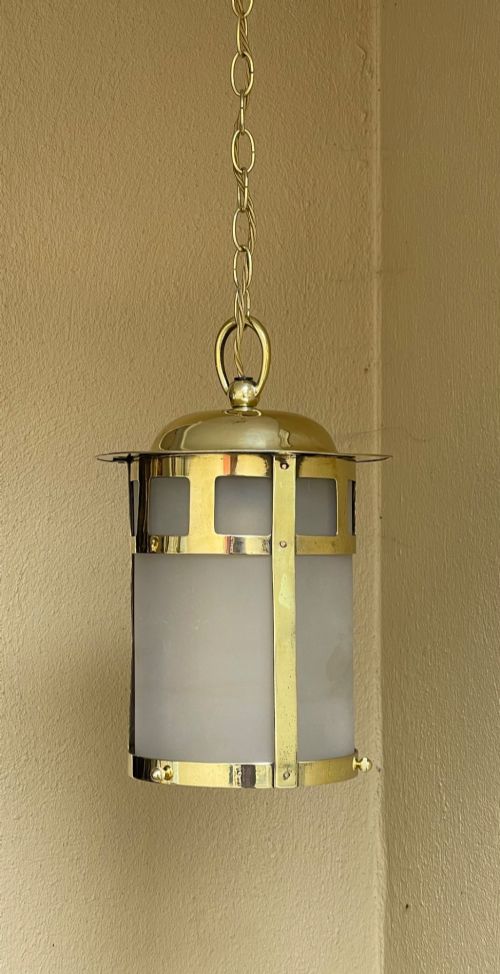


Period Hall Lantern
A period hall lantern sets the character of an entranceway, casting warm light through glass panels held in substantial metal frames.
Period Hall Lantern
A period hall lantern is a ceiling-suspended lighting fixture designed specifically for hallways, vestibules and entrance passages. These hanging lanterns provide illumination from high points, welcoming visitors with diffused light through glass walls.
Buyers browsing this selection meet a range of historical iterations spanning the Victorian, Edwardian and 1930s eras. The forms include hexagonal and multi-sided geometric shapes alongside simpler hanging lanterns.
Origins stretch from British workshops to French ateliers, incorporating regional design influences like Gothic Revival, Arts and Crafts, and French Empire styles. Brass, copper and wrought iron dominate the structural framing of these pieces.
How they were made
Metalworking forms the core of construction, utilising brass, copper, bronze and cast or wrought iron to build rigid structural frames. Artisans shaped these metals into structural ribs, decorative crests and suspension loops capable of supporting glass panels.
Glazing techniques involve fitted panes of clear, frosted or stained glass secured within the metal framework. Some examples incorporate curved or bevelled glass, held tightly by metal glazing bars and internal clips.
Period Hall Lantern Retail Price Guide 2026
Typical asking prices for period hall lantern among the pieces listed under this phrase on Sellingantiques today, from the lower quarter to the upper quarter. They describe what is for sale here now, not the wider market.
Keep an eye out for the green man copper lantern, bringing a touch of mythical woodland folklore straight into the hallway.
What varies in quality
The standard of metal casting and hand-finishing marks the division between ordinary production and finer examples. Heavy gauge brass and detailed bronze or copper work demonstrate superior workshop practices.
The complexity of the stylistic design influences the overall character of the lantern. Elaborate applications such as gilded brass rococo details or cast decorative motifs require advanced artisanal skill compared to plain geometric frames.
The Period Hall Lantern Glossary
- Hexagonal
- Having six sides. This shape is common in traditional hall lanterns to distribute light evenly across a space.
- Frosted glass
- Glass treated to create a cloudy or opaque surface. It softens the glare from internal bulbs.
- Wrought iron
- Iron beaten into shape by hand while hot. This material provides strong, fibrous structural frames for lanterns.
Period Hall Lantern: Frequently Asked Questions
Where should I hang a hall lantern?
These fixtures work best in high-ceilinged entrance halls, corridors and landings where they can hang freely as a focal point. Ensure there is adequate headroom below the lowest point of the glass or drop chain.
Position the lantern centrally in the space to allow light to spread evenly across doorways and stairwells.
How do I clean an antique lantern?
Dust the metal frame and glass panels regularly with a soft, dry cloth to prevent grime accumulation. Avoid harsh chemical cleaners that can strip patination from brass or copper surfaces.
Use mild soapy water on glass panes only, drying them thoroughly before turning the light back on.
How do I identify the period?
Examine the materials, manufacturing marks and stylistic clues such as Arts and Crafts hand-beating or Edwardian proportions. Comparing the construction methods of the metal frame helps place the piece within the nineteenth or early twentieth century.
Design motifs often reference earlier historical revivals like Gothic or Regency, so look closely at the primary build technique.