




Traditional English Village Painting
A traditional english village painting captures rural life through Victorian and Edwardian scenes of cottages, country lanes, and village inns.
Traditional English Village Painting
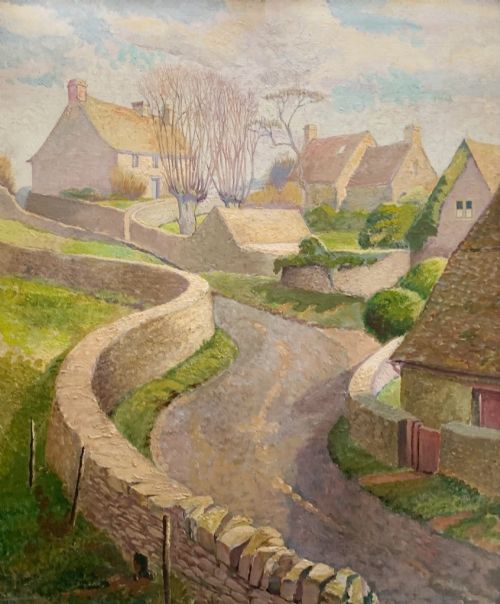
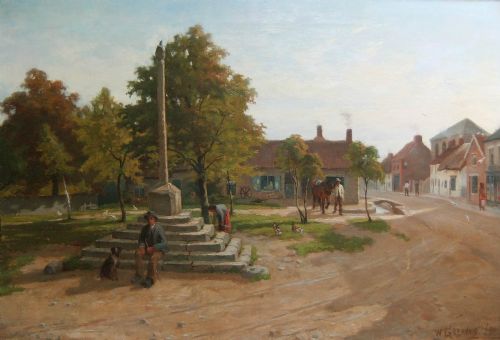
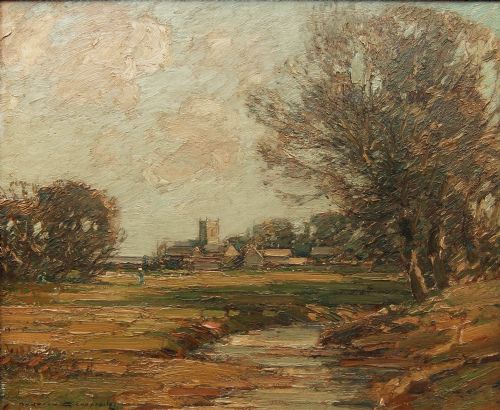
A traditional english village painting brings rural settlements, country lanes, and village inns directly onto paper and canvas. These works span from the nineteenth century through the mid-twentieth century, capturing recognizable regions such as Yorkshire, Devon, and Suffolk. Buyers find both intimate watercolours and larger oil paintings depicting everyday rural life, village churches, and agricultural landscapes.
The most common pieces on this page originate from the Victorian and Edwardian eras, extending into the nineteen-twenties and nineteen-thirties. Artists often focused on specific local landmarks like village taverns, thatched cottages, and rural street scenes. These paintings serve as historical records of changing English countryside communities across different decades.
Materials and Technique
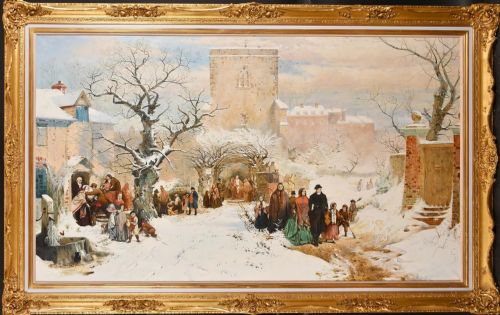
Artists relied primarily on oil paint applied to canvas or wood panels, alongside watercolour pigment worked onto paper. Oil paintings allowed for rich textures and deep tones, particularly in depictions of winter snow scenes and dark village taverns. Watercolours provided a lighter, more translucent medium suited for detailed architectural studies of stonework houses and country lanes.
Many surviving examples retain their original gilt frames, which complement the traditional subjects. The combination of oil on canvas or delicate watercolour on paper reflects standard academic and regional artistic practices of the nineteenth and twentieth centuries.
Listings feature works spanning the nineteenth and twentieth centuries, executed in oil on canvas, watercolour, and paper.
Judging Quality
Quality rests upon the artist's ability to handle perspective, light, and local architectural detail convincingly. Stronger works demonstrate careful observation of rural figures, livestock, and changing weather conditions rather than generic scenery. The handling of medium, whether the transparency of watercolour or the depth of oil paint, separates accomplished regional artists from amateur output.
William Greaves·Fred Lawson·Arthur Tucker·John Holland Snr·Alfred Leyman
The Traditional English Village Painting Glossary
- Watercolour pigment
- A water-based paint that uses finely ground colour suspended in a binder. It is applied in thin washes to paper to create luminous effects.
- Oil on canvas
- A traditional painting medium consisting of pigments mixed with drying oils applied to stretched fabric. This technique offers rich colour saturation and durability.
- Gilt frame
- A wooden picture surround coated with a thin layer of gold leaf or metallic gilt paint. These frames often accompany nineteenth-century landscape paintings.
- Genre painting
- Artwork depicting scenes from everyday life, ordinary people, and domestic activities. In village scenes, this includes figures outside inns or cottages.
Traditional English Village Painting: Frequently Asked Questions
What periods do these paintings cover?
The available artworks stretch from the nineteenth century into the mid-twentieth century, with strong representation from the Victorian and Edwardian eras. Painters worked across several decades, capturing changing rural architecture and community life.
Dates on the pieces range from the eighteen-sixties up to the nineteen-forties, showing distinct stylistic shifts from 19th Century British Realism to British Impressionism.
How should I hang a watercolour painting?
Watercolours require protection from direct sunlight to prevent the pigments from fading over time. Glazing with protective glass helps shield the paper from environmental moisture.
Mounting the painting away from direct heat sources ensures the paper and any framing materials remain stable for years.
How can I tell the difference between oil and watercolour?
Oil paintings feature textured brushstrokes and a heavier paint layer applied to canvas or wood. They often display a slight sheen from the oil binder.
Watercolours appear flat and smooth under glass, relying on the white of the paper to shine through translucent washes of pigment.
Where were these village scenes usually painted?
Artists travelled across various English counties, recording specific locations in Yorkshire, Devon, Suffolk, and Warwickshire. Popular subjects included local inns, village churches, and rural street scenes.
Many titles reference exact towns and villages, making it possible to trace the precise geographical settings depicted in the artwork.