


Traditional Dining Room Seats
Traditional dining room seats are sturdy wooden chairs designed for long meals, offering period character and solid construction.
Traditional Dining Room Seats
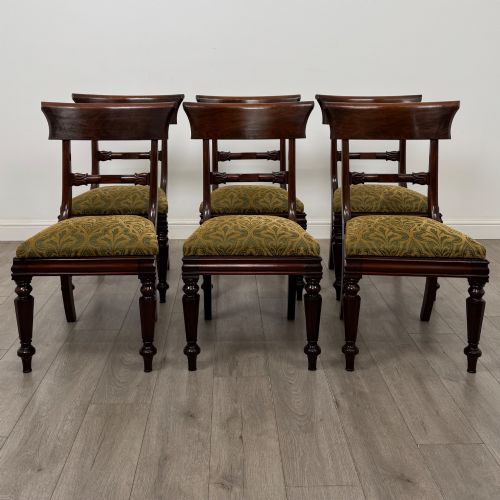
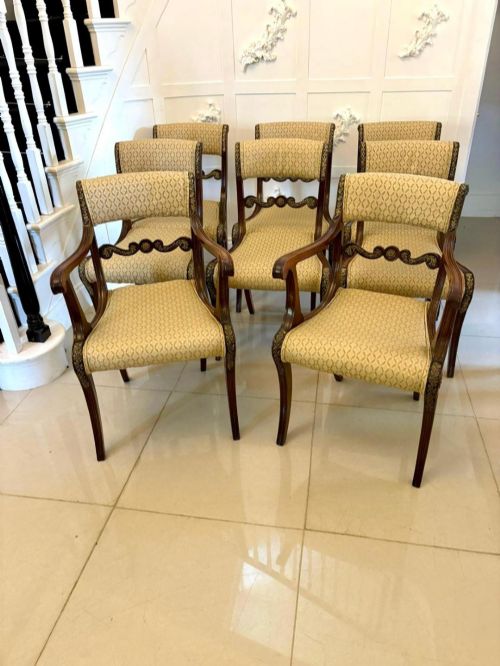
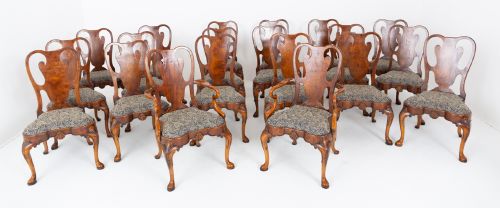
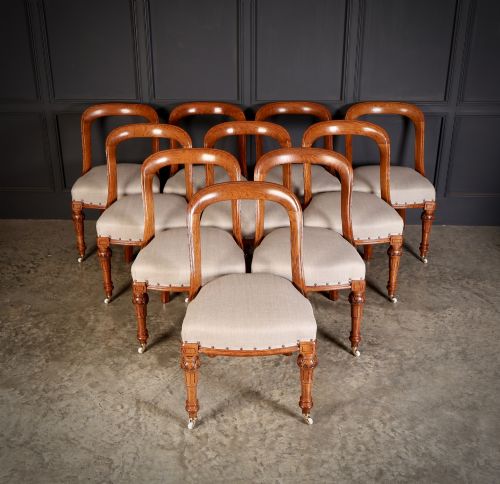
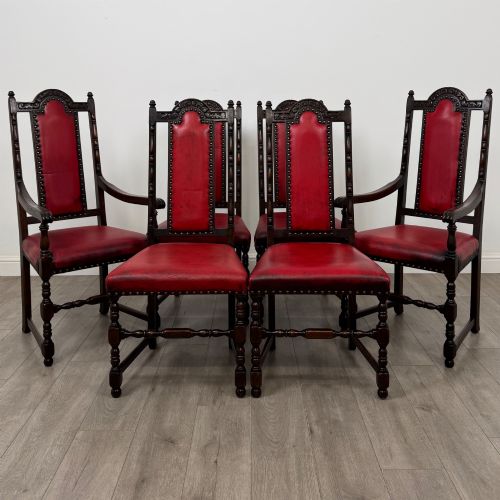
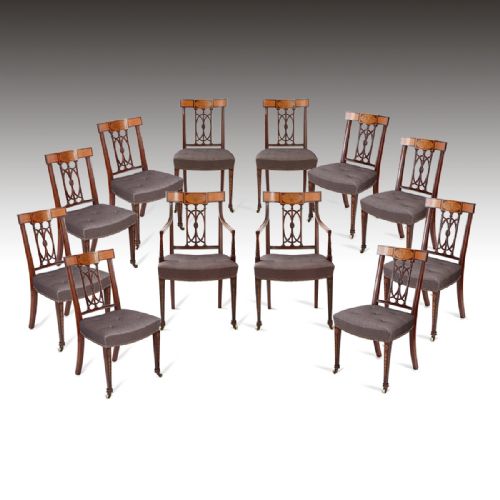
Traditional dining room seats encompass sets of wooden chairs produced during the eighteenth, nineteenth, and early twentieth centuries. These pieces appear primarily as dining chairs and side chairs, often grouped in sets ranging from pairs up to twenty items, including carvers with arms.
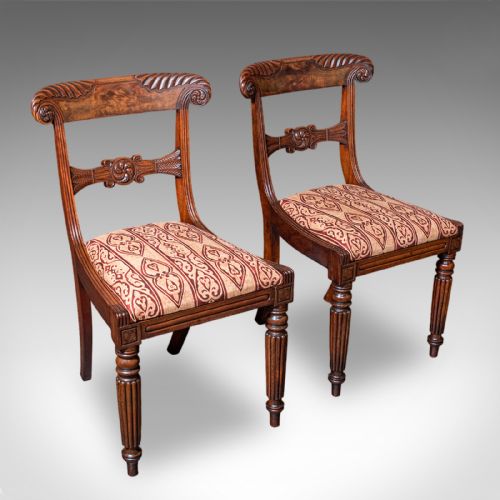
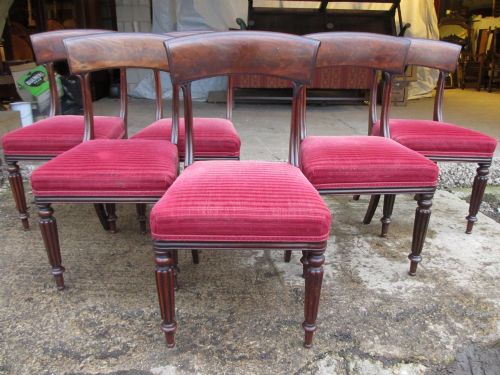
The material palette is dominated by mahogany and oak, alongside walnut, elm, and maple. Many examples incorporate upholstered pads or drop-in seats covered in fabric, leather, or velvet.
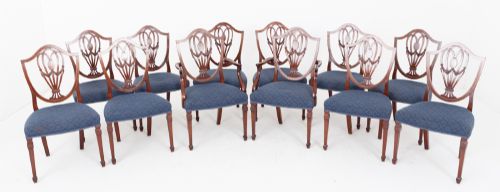
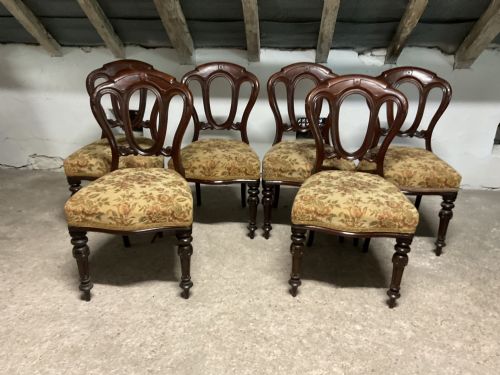
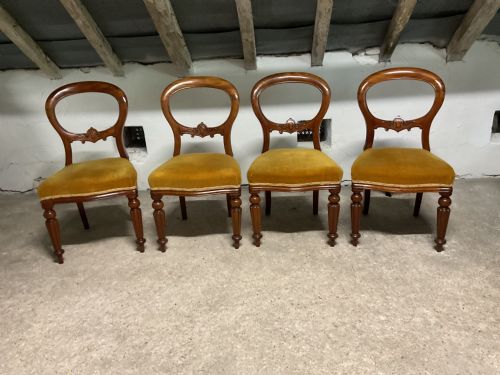
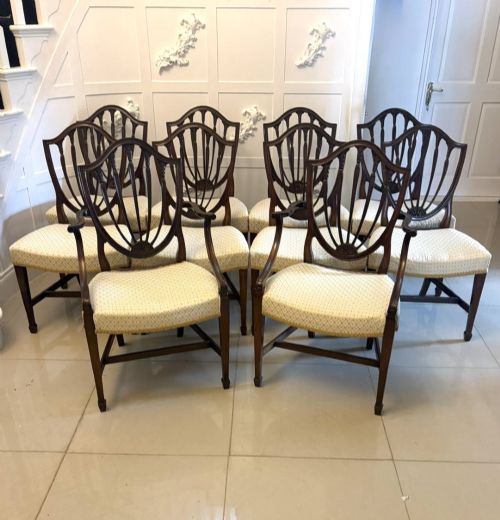
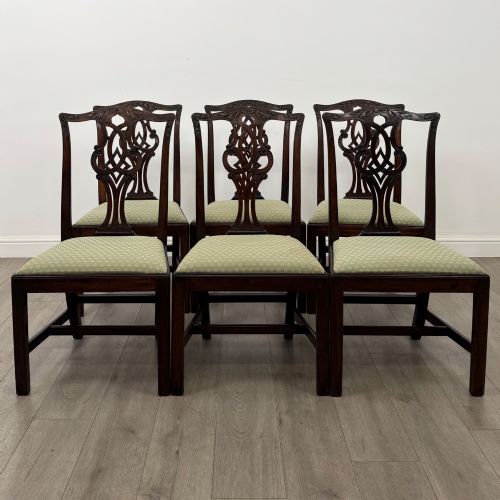
Design influences span Georgian, Regency, William IV, and Victorian periods, alongside later revivals of Hepplewhite, Chippendale, Queen Anne, and Jacobean styles. Shield backs and balloon backs recur frequently across the listings.
Materials and construction methods
Makers utilised solid timbers such as mahogany and oak for the primary frame construction, ensuring durability through substantial weight and dense grain structure. Turned and carved components reveal traditional joinery techniques.
Upholstery materials range from plain fabric to plush velvet and original tan leather, secured over supportive webbing or padded foundations within the seat frame.
Listings span mahogany, oak, walnut, elm, and maple across Georgian, Victorian, and Edwardian periods.
Distinctions in construction and design
The degree of hand carving, particularly on shield backs, balloon backs, and top rails, separates standard production from exhibition pieces. Crisp execution of period motifs indicates superior workshop output.
Larger matched sets demand greater consistency in timber selection and joinery execution across all chairs, influencing overall cohesion. The presence of original leather or period upholstery retains historical integrity.
Maple and Co
The Traditional Dining Room Seats Glossary
- Carver
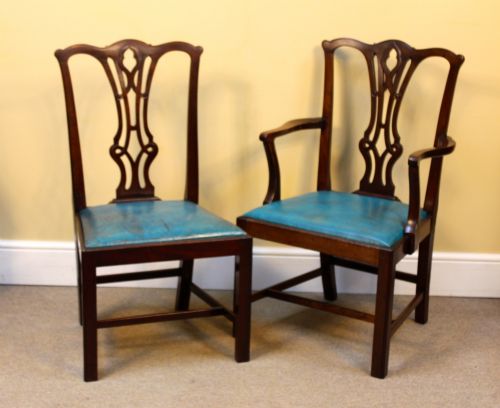
- An armchair designed with armrests, traditionally placed at the head of a dining table for the host.
- Shield back
- A chair back shaped like an upright shield, popular in late eighteenth-century designs.
- Balloon back
- An oval-shaped chair back resembling a rising balloon, common in mid-Victorian seating.
- Drop-in seat
- A removable wooden frame upholstered separately and dropped into the seat rail rebate.
- Hepplewhite style
- A light, elegant furniture style named after the Georgian designer George Hepplewhite.
Traditional Dining Room Seats: Frequently Asked Questions
What defines a carver chair?
A carver chair is an armchair intended for the head of the table, featuring supportive armrests alongside the standard seat frame.
These pieces match the design of the smaller side chairs in a dining set.
How are large dining sets structured?
Large sets typically combine a majority of single side chairs with a pair of carvers for the table ends.
Matching timber and carved details maintain visual consistency across the entire group.
Which woods appear most often?
Mahogany and oak form the foundation of most traditional seating, providing strong structural frames for daily use.
Walnut, elm, and maple also appear within specific period styles and regional workshops.