





Traditional Day Bed
Traditional day bed forms span centuries of woodworking and upholstery, offering versatile seating that converts effortlessly for daytime resting.
Traditional Day Bed
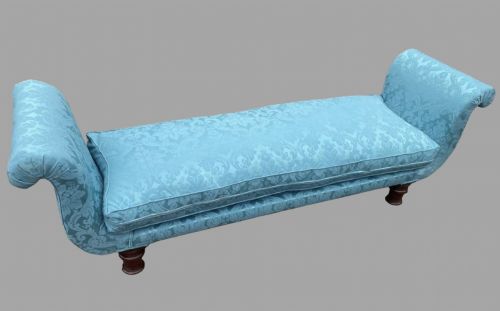
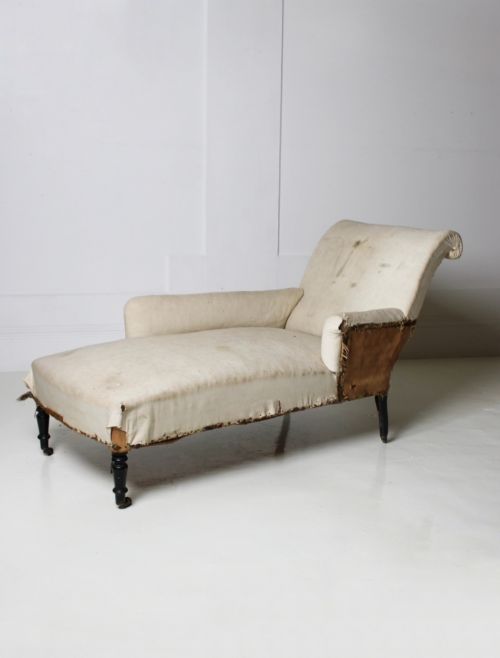
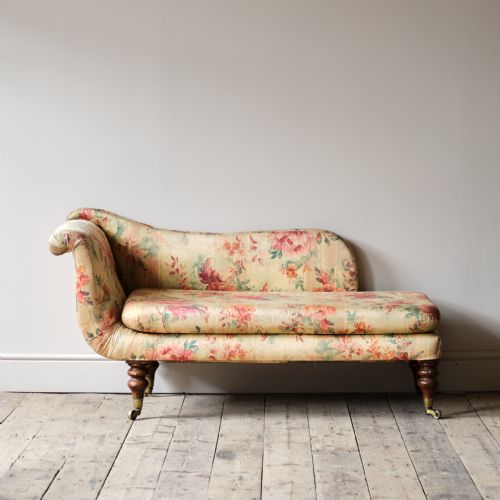
A traditional day bed sits between a chair and a bed, offering a practical hybrid for sitting and reclining in principal rooms. These pieces merge seating architecture with lounging comfort, often taking the form of chaise longues or low wooden frames.
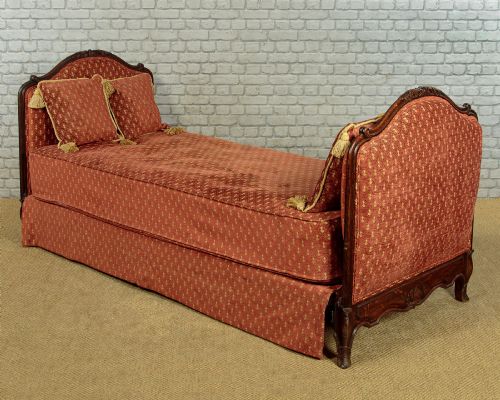
The selections here showcase distinct historical periods, running from Regency and Victorian eras through to early twentieth century pieces. You encounter everything from French lit bateau designs to Chinese hardwood frameworks and upholstered nineteenth century loungers.
Makers ranged from notable cabinet makers to country workshops, producing forms that served libraries, boudoirs and large country houses alike. Their adaptability remains the primary draw for modern interiors seeking period character without heavy proportions.
How they were made
Timbers dictate the primary structure, utilising rich mahogany, various hardwoods, and painted or polished woods shaped into bobbin turnings or sleek curves. These frames rely on traditional joinery techniques to support the weight of daily reclining.
Upholstery forms the other half of their construction, employing fabrics such as calico, damask, velvet, and standard upholstery fabric over sprung or padded foundations. Makers finished edges with careful tacking and stitching to endure regular use.
Traditional Day Bed Retail Price Guide 2026
Typical asking prices for traditional day bed among the pieces listed under this phrase on Sellingantiques today, from the lower quarter to the upper quarter. They describe what is for sale here now, not the wider market.
The listings span the nineteenth century, Regency, Edwardian eras, and the 1920s, featuring mahogany, hardwood, brass, and diverse upholstery fabrics.
What varies in quality
Timber selection and the crispness of carved detail separate standard workshop output from exceptional cabinet work. Finer examples display superior grain matching, elegant proportions, and precise turning on legs and arm supports.
The integrity of the frame construction and the quality of the underlying upholstery build determine longevity and comfort. Original upholstery details and branded maker stamps elevate historical significance and desirability among collectors.
Gillows·Hampton and Sons Pall Mall·Howard and Sons
The Traditional Day Bed Glossary
- Lit bateau
- A French bed style featuring curved head and footboards resembling a boat, often seen in nineteenth century day beds. This design creates an enclosed, cocooning shape suited for daytime lounging.
- Bobbin turning
- A form of woodturning consisting of repeated spherical or pill-shaped segments resembling bobbins on a thread. This decorative technique appears frequently on nineteenth century frames.
- Chaise longue
- An upholstered sofa in the shape of a chair that is long enough to support the legs. It functions as a close relative to the traditional day bed.
- Hardwood
- Timber derived from broad-leaved trees such as mahogany, offering dense and durable qualities for structural furniture frames. It resists warping and sustains intricate carving better than softwoods.
Traditional Day Bed: Frequently Asked Questions
Where did people put a traditional day bed?
Historically, these pieces occupied libraries, boudoirs, and principal reception rooms where residents could rest during the day without retiring to a bedroom. Their dual function made them ideal for reading and casual socialising.
Today, they suit similar multipurpose rooms like studies or guest bedrooms, providing a compact lounging space that leaves floor space visually open.
How do I identify a Regency day bed?
Regency pieces often display classical influences, drawing inspiration from ancient Greek and Roman furniture forms with saber legs and scroll ends. Makers utilised dark timbers like mahogany to achieve a refined architectural silhouette.
Comparing the proportions and decorative motifs against known pieces from the early nineteenth century helps confirm the period attribution.
Can I use a vintage day bed for sleeping?
Most antique day beds serve well for occasional sleeping or daytime resting, provided the underlying frame and webbing remain sound. Their dimensions often match single bed proportions.
Checking the stability of the side rails and consulting an upholsterer regarding the internal support ensures comfort for regular use.
What is the difference between Chinese and European day beds?
Chinese day beds typically feature solid hardwood construction with open architectural framing, sometimes doubling as seating akin to a stargazers chair. They rely on exposed woodwork rather than extensive fabric upholstery.
European examples, by contrast, frequently incorporate sprung upholstery, damask fabrics, and elaborate carved or turned wooden frames reflecting classical Western design movements.