

Traditional Dark Oak Desk
A traditional dark oak desk brings heavy timber and dependable writing space into a room, spanning centuries of British cabinet-making.
Traditional Dark Oak Desk
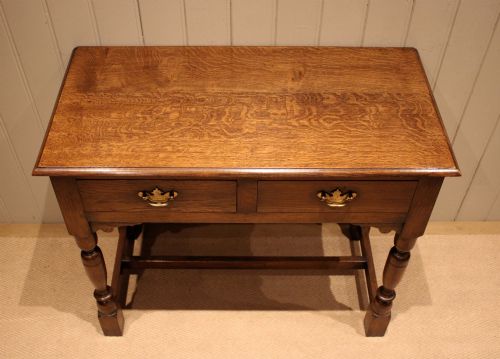
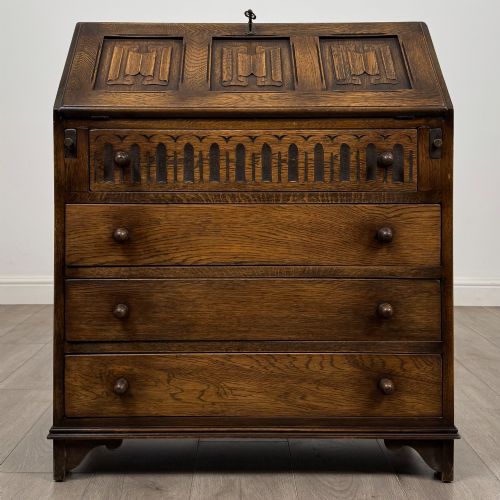
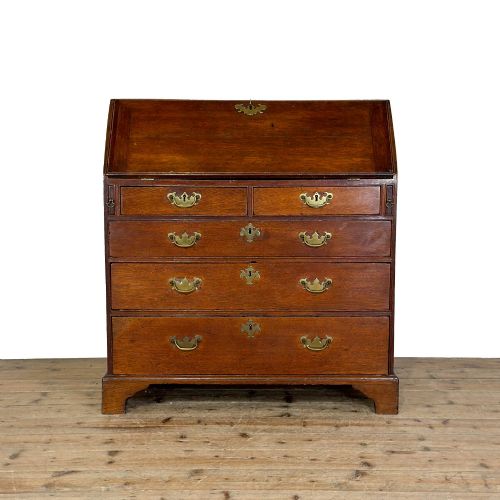
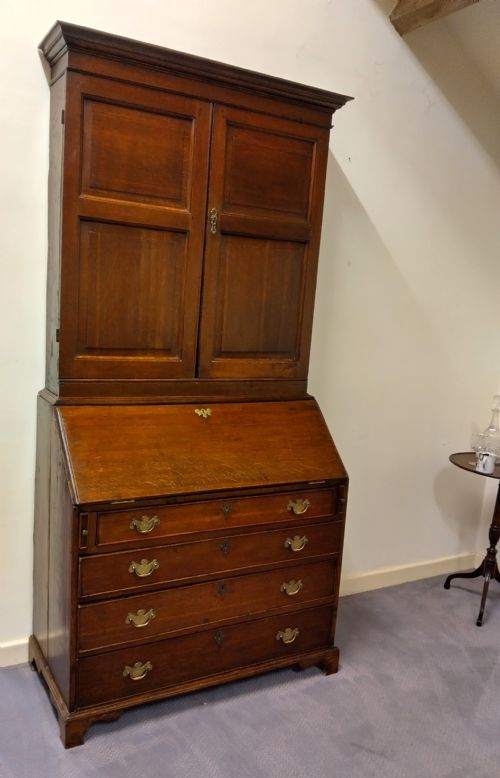
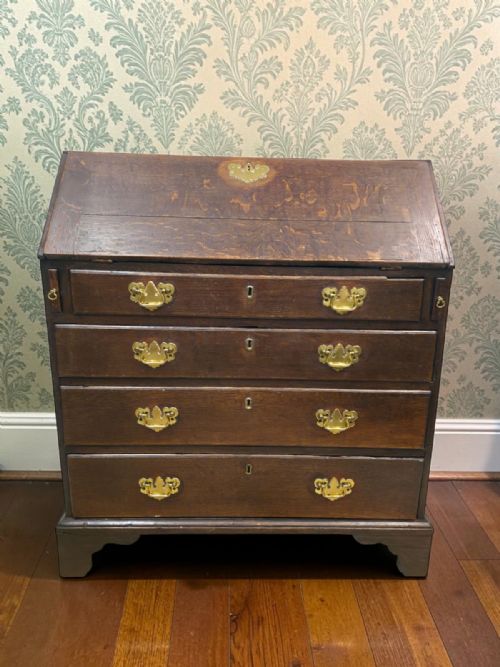
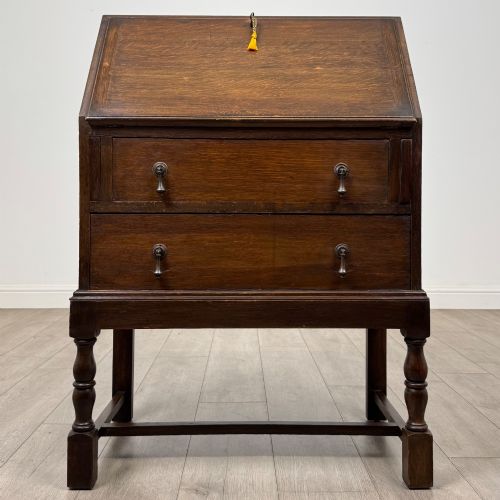
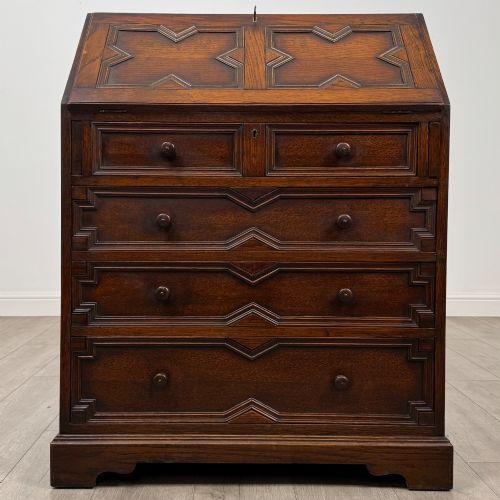
A traditional dark oak desk encompasses several distinct forms designed for storage and writing, appearing here primarily as drop-front bureaux, bureau bookcases and occasional writing tables. These pieces span periods from the Georgian era through to Edwardian interpretations and later twentieth-century revivals.
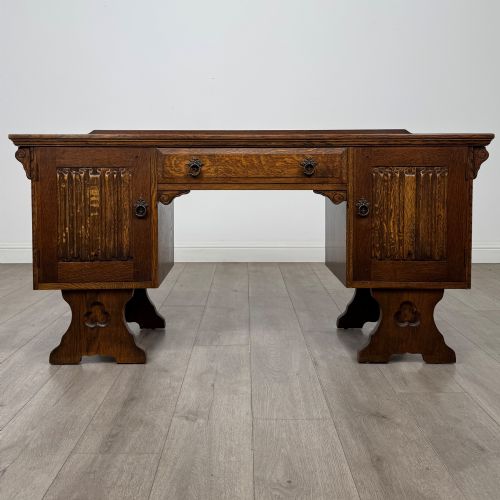
The heavier examples draw on earlier vernacular traditions, while Edwardian pieces often incorporate carved linenfold panels or Jacobean style details. Buyers seeking a traditional dark oak desk will encounter items ranging from simple fall-front writing surfaces to complex cabinetry fitted with internal compartments and drawers.
Judging Quality in Oak Furniture
Quality rests in the selection of timber and the integrity of the joinery, particularly in the dovetailing of drawers and the hanging of fall-front writing slopes. Pieces constructed from solid timber throughout demonstrate greater longevity than those utilising secondary veneers.
The crispness of carved details, such as linenfold panels or applied mouldings, distinguishes superior workshops from standard production. Original hardware and undisturbed surface patination add significantly to the integrity of a piece.
Listings feature oak alongside auxiliary materials including brass, leather, iron and elm across Georgian, Victorian and Edwardian periods.
The Traditional Dark Oak Desk Glossary
- Bureau
- A writing cabinet featuring a sloping fall-front that opens to reveal a fitted interior of small drawers and pigeonholes.
- Linenfold
- A style of carved wooden panelling resembling folded parchment or linen, common on Edwardian pieces.
- Fall-front
- The hinged writing flap of a bureau or desk that drops down to provide a horizontal working surface.
- Jacobean Revival
- A nineteenth and twentieth century design movement reinterpreting the heavy, carved styles of the early seventeenth century.
- Dovetail
- A traditional interlocking joint used in drawer construction to ensure durable, tension-resisting corners.
Traditional Dark Oak Desk: Frequently Asked Questions
Are these desks suitable for daily work?
Many traditional writing desks accommodate modern laptops and paperwork within their historic drawers and writing surfaces. Fall-front bureaux conceal technology when closed.
Working heights vary on older pieces, so checking kneehole clearance and writing surface dimensions ensures practical daily use.
How should I care for dark oak?
Maintenance requires regular dusting with a soft, dry cloth and occasional application of traditional beeswax to nourish the timber. Avoiding direct sunlight and intense heat sources prevents the wood from drying out or splitting.
Spills should be blotted immediately to protect polished or waxed surfaces from water marks.
What is a bureau bookcase?
A bureau bookcase combines a lower writing desk with an upper shelving or cabinet section enclosed by doors. This form maximises vertical storage while providing a fold-down writing surface.
Such pieces often feature adjustable shelving in the upper compartment and multiple small drawers concealed behind the fall-front.