




Traditional Copper Boiler
These traditional copper boiler items bring warm metallic character and utilitarian utility into modern spaces.
Traditional Copper Boiler
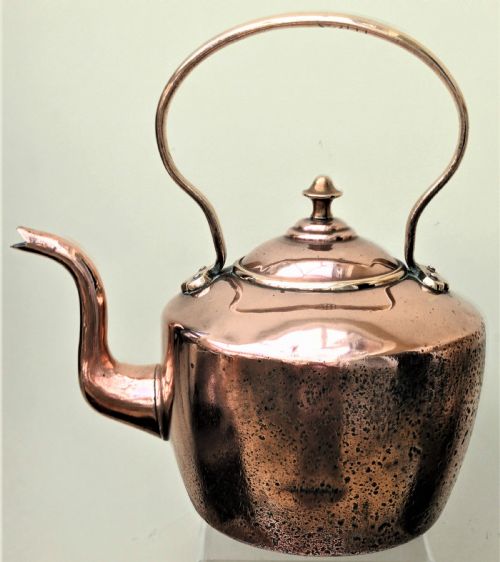
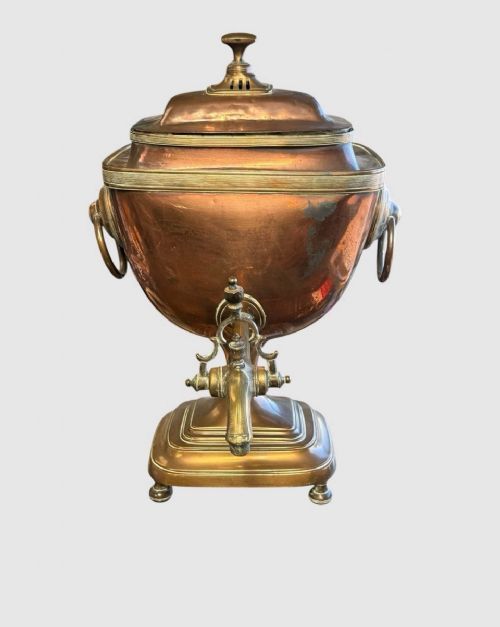
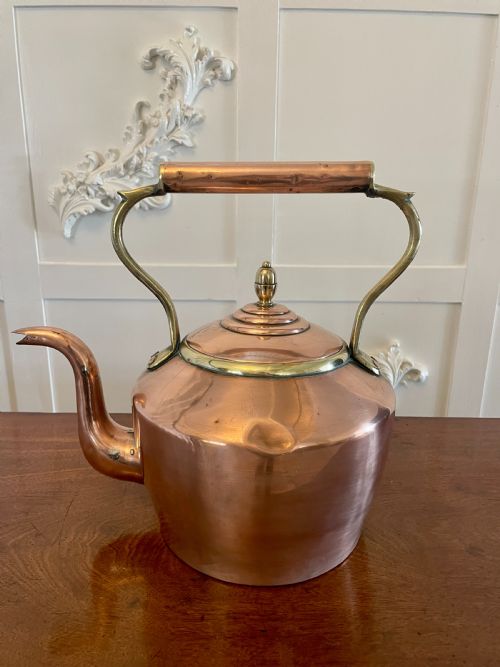
When you search for traditional copper boiler items, you encounter functional vessels from the Georgian and Victorian eras, including kettles, samovars, and tea urns. These heavy domestic objects were built for heating water in past households, displaying the robust utility of their period.
The versions you are most likely to meet on this page span the nineteenth century, with Victorian examples appearing alongside George III pieces. They typically take the form of large kettles or tea urns designed for practical service.
Makers shaped these utilitarian containers from heavy metal sheets to withstand daily kitchen fires. Their forms reflect the straightforward requirements of nineteenth-century domestic life before electric heating changed the kitchen.
How they were made
Artisans hammered and joined sheet copper to form the main bodies of these vessels, creating durable containers designed for heavy use. Brass fittings and cast iron components added structural strength where handles and taps attached.
Workers utilised ebonised wood and bone for insulating handles, protecting hands from hot metal during use. Paint occasionally surfaces on specific parts of these utilitarian pieces, though the exposed metal remains the dominant finish.
Traditional Copper Boiler Retail Price Guide 2026
Typical asking prices for traditional copper boiler among the pieces listed under this phrase on Sellingantiques today, from the lower quarter to the upper quarter. They describe what is for sale here now, not the wider market.
Listings span the nineteenth century, featuring Victorian and George III periods alongside materials like copper, brass, and cast iron.
What varies in quality
The distinction between standard domestic items and finer examples rests on the weight of the metal and the precision of the construction. Heavier gauge copper and well-fitted brass mounts indicate superior manufacture.
Refinement in the shaping of spouts and handles separates ordinary vessels from those showing greater attention to detail. The integration of materials like bone and ebonised wood also marks the level of craftsmanship in a piece.
The Traditional Copper Boiler Glossary
- Samovar
- A heated metal container traditionally used to boil water for tea. These large vessels often feature a central internal pipe and a spigot near the base.
- George III
- The historical period spanning from 1760 to 1820. Pieces from this era display early manufacturing techniques and distinct Georgian proportions.
- Victorian
- The period of Queen Victoria's reign from 1837 to 1901. Domestic metalwork from this time reflects industrial expansion and robust kitchen utility.
- Ebonised wood
- Timber treated to resemble ebony, providing a dark, durable finish. This material frequently appears on the insulated handles of kettles and urns.
Traditional Copper Boiler: Frequently Asked Questions
How were these copper vessels originally used?
These vessels were placed near hearths or fires to heat and boil water for household tea and washing routines. Their heavy construction allowed them to withstand constant exposure to direct heat.
Larger samovars and urns served communal gatherings, keeping water hot for extended periods in domestic settings.
How do I clean and polish copper?
Maintenance involves applying gentle metal cleaners specifically formulated for copper surfaces to remove tarnish. Avoid harsh abrasives that can scratch the soft metal.
Many collectors prefer leaving a natural aged patina on nineteenth-century pieces rather than polishing them to a bright shine.
How can I tell George III from Victorian pieces?
George III items generally date around 1800 and show earlier Georgian hand-hammered construction methods. Their silhouettes often differ slightly from later Victorian designs.
Victorian pieces, dated from the mid to late nineteenth century, reflect industrial manufacturing advances of that era while retaining traditional forms.
Can I use these antique kettles today?
Most antique kettles and samovars function primarily as decorative objects or planters rather than working kitchen equipment. Internal wear from centuries past makes them better suited for display.
Placing them in living spaces or hearths highlights their historical character without risking damage to the old metal.