
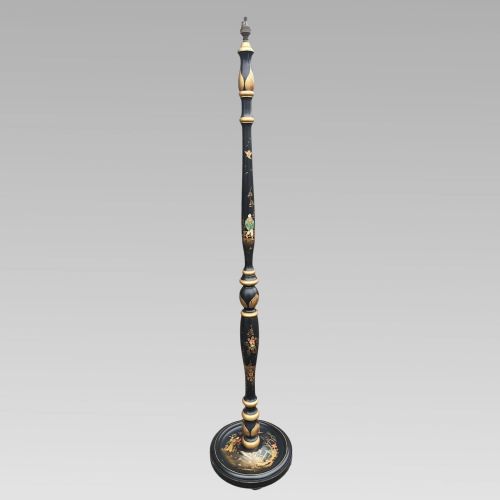


Traditional Chinoiserie Lamp
These traditional chinoiserie lamps bring painted oriental motifs and rich lacquered finishes into a room, offering warm lighting paired with historic decorative art.
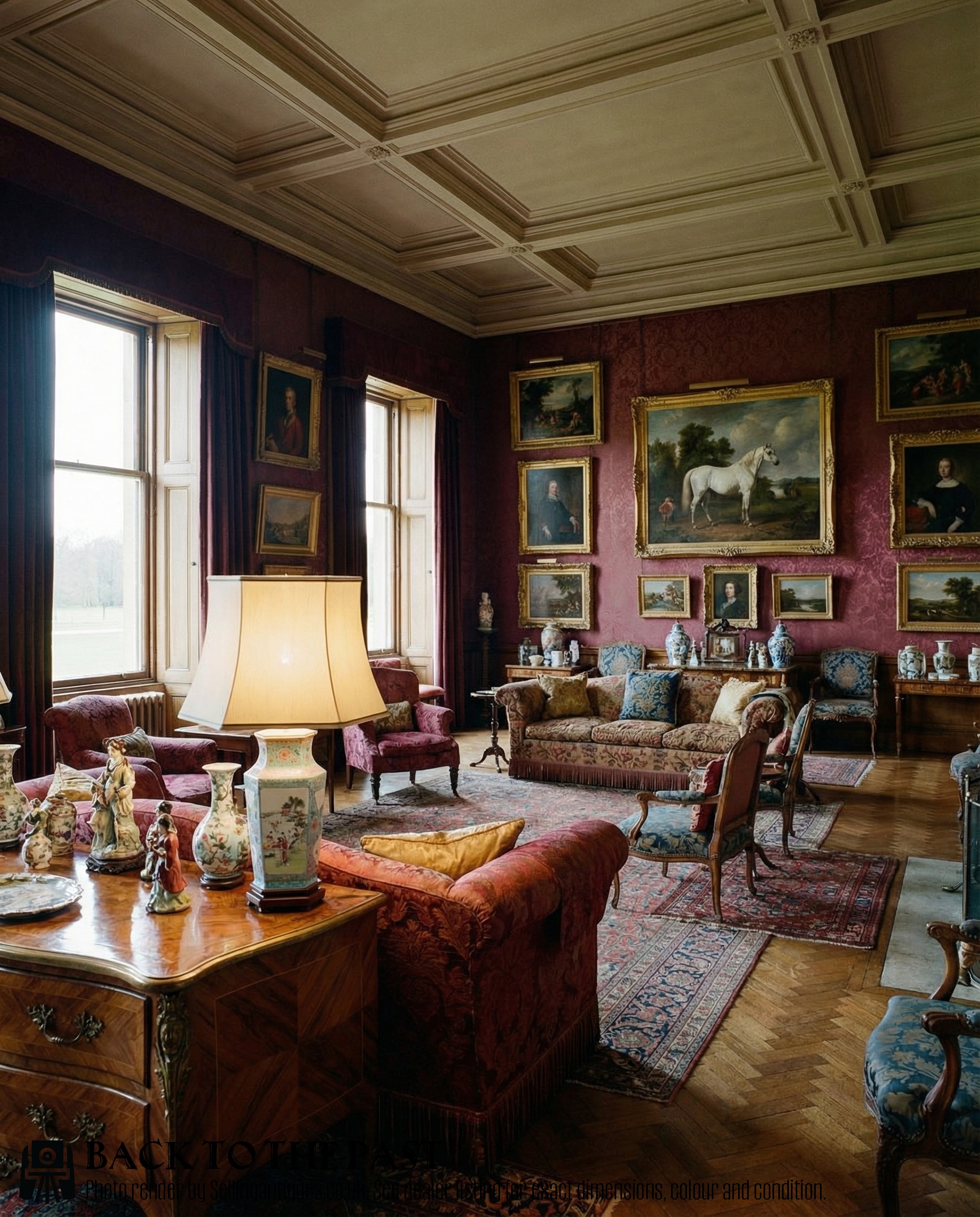
Traditional Chinoiserie Lamp
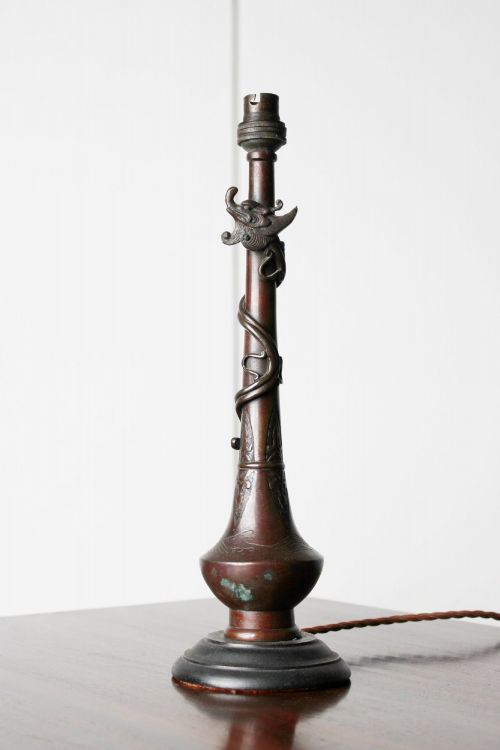
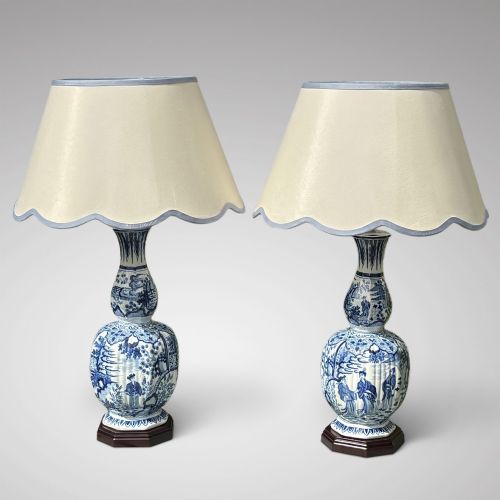
When searching for a traditional chinoiserie lamp, buyers encounter pieces that adapt antique Asian porcelain jars, vases, and lacquered woodwork into functional household lighting. These fixtures span multiple decades and centuries, ranging from early examples utilising Dutch Delftware and Japanese Imari to later creations from the Edwardian era and the 1930s.
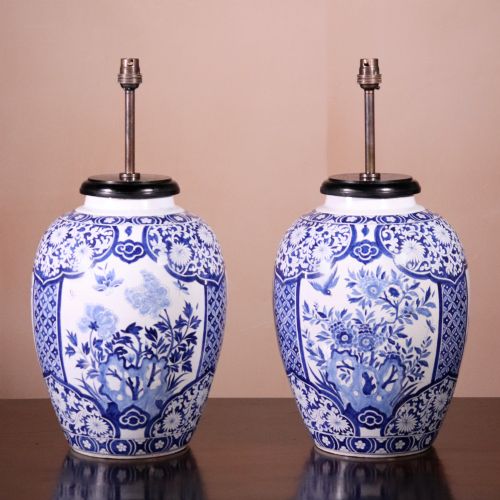
The selection here encompasses both table lamps and taller standard or floor-standing variants. Many pieces originate from older porcelain vessels, including blue and white ginger jars, Famille Rose, and crackle ware vases, mounted to serve as lamp bases.
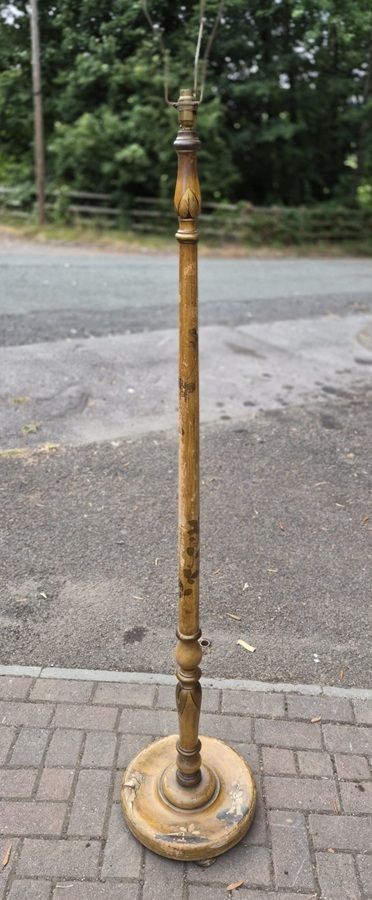
Stylistic variations include Edwardian chinoiserie, Georgian-influenced designs, and Anglo-Indian work alongside Qing Dynasty pieces. Buyers will find both black and red lacquered wood standards alongside hand-painted ceramic bodies paired with fabric or silk shades.
How they were made
Makers constructed these lamps by combining decorative arts from different traditions, frequently turning imported or domestic porcelain vases into wired bases using brass fittings. Ceramic bodies feature hand-painted underglaze blue, Famille Rose enamel palettes, or cloisonné metalwork.
Wooden examples rely on traditional joinery and surface finishes, utilising lacquered wood treated with gilt highlights and painted oriental scenes. Standard floor lamps and table bases incorporate solid wood and turned elements, often accompanied by fabric and silk shades.
Structural adaptation for modern use involves wiring through the centre of vase forms or running cords down wooden standards. Many surviving examples show evidence of later re-wiring to meet electrical standards while retaining their historic outer shells.
Listings here span from the 18th century through to the 1930s, incorporating porcelain, brass, fabric, silk, and lacquered wood.
What varies in quality
Quality in these lamps rests primarily on the age and artistic merit of the underlying vessel or standard. Hand-painted porcelain featuring crisp blue and white detailing or intricate Famille Rose enamel work sits higher in the scale than simpler painted substitutes.
The condition of the lacquer surface on wooden standards dictates much of the visual depth. Pieces retaining original black or red lacquer with well-preserved gilt chinoiserie motifs demonstrate superior craftsmanship compared to later, simpler repainted surfaces.
Proportion and balance also separate standard floor lamps and table bases. Well-turned wooden columns and properly weighted ceramic vase bases ensure stability when supporting fabric or silk shades.
The Traditional Chinoiserie Lamp Glossary
- Famille Rose
- A major palette of Chinese porcelain ceramics introduced in the 18th century, distinguished by an opaque pink or rose enamel colour. Pieces often feature elaborate floral and figurative compositions.
- Standard Lamp
- A tall floor-standing lamp designed to illuminate a room from a corner or beside seating. These often feature turned wooden shafts in lacquered finishes.
- Delftware
- Tin-glazed earthenware originating from the Netherlands, frequently decorated in blue and white. 18th century examples often form the ceramic bodies of antique vase lamps.
- Imari
- Japanese export porcelain decorated in underglaze blue, iron red, and gilt. These colourful vases frequently appear adapted into table lamps.
Traditional Chinoiserie Lamp: Frequently Asked Questions
How do I date a chinoiserie lamp?
Dating relies on examining the materials of the base, such as the ceramic body style, the type of porcelain glaze, or the characteristics of the lacquered wood. Pieces marked as 18th century or 19th century usually feature period-appropriate hand-painted decoration on the ceramic components.
Wooden standard lamps often display stylistic traits specific to the Edwardian era or the 1920s and 1930s. Rewiring and modern electrical fittings are common additions that do not detract from the age of the structural antique base.
What is the difference between standard and table lamps?
Standard lamps refer to tall, floor-standing lighting fixtures designed to stand directly on the floor beside furniture. Table lamps are smaller versions intended to sit upon sideboards, desks, or tables.
Both categories incorporate chinoiserie design elements, with standard lamps often utilising tall lacquered wooden columns and table lamps employing porcelain vases.
Do these lamps come with shades?
Some listings include fabric or silk shades paired with the lamp base, while others offer the base alone so buyers can select their own shade. Fabric and silk shades complement the painted motifs on the ceramic and lacquered surfaces.
When a shade is included, it is often chosen to match the proportions of the tall standard or table lamp base.