




Traditional Chiming Shelf Clock
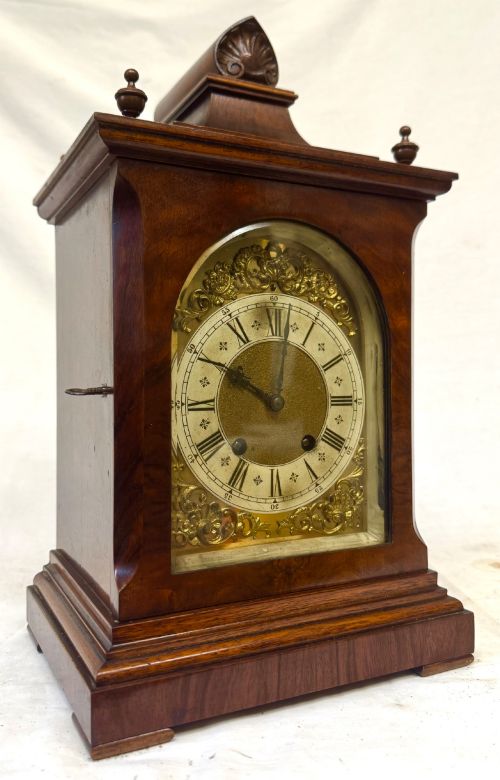
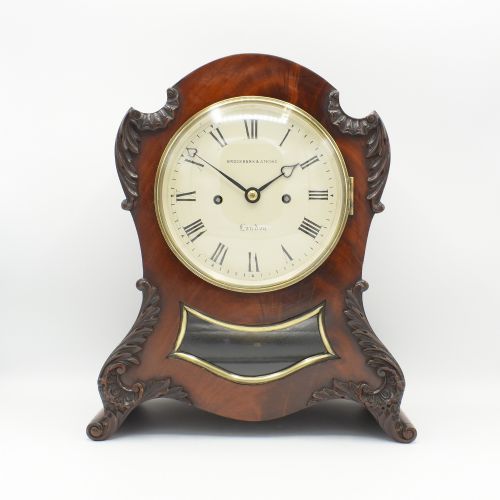
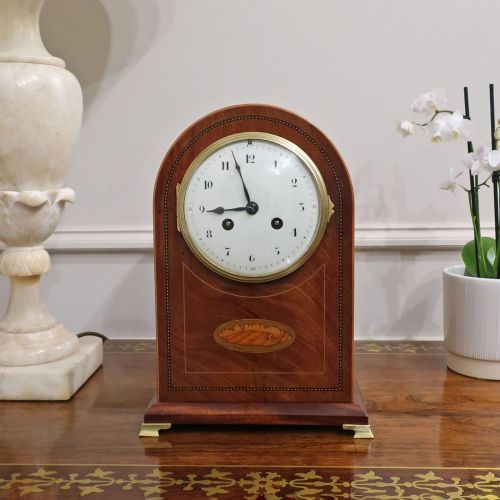
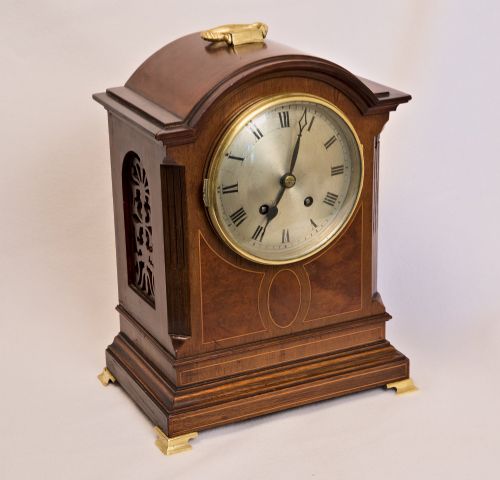
These traditional chiming shelf clock pieces range from nineteenth-century walnut and mahogany bracket designs to Edwardian inlaid examples that bring mechanical presence to a mantelpiece.
Traditional Chiming Shelf Clock
A traditional chiming shelf clock functions as a domestic timekeeper designed to sit securely upon a bracket, mantel, or table while sounding the hours and quarters. The selection here spans compact Regency table pieces, ornate Victorian Gothic bronze models, and robust Edwardian or early twentieth-century wooden cases.
Makers housed these movements in varied architectural silhouettes, including dome top, lancet top, and bracket configurations. Walnut, mahogany, and oak form the primary bodies, frequently enriched with string inlay or ebonised finishes.
Most examples originate from the nineteenth and early twentieth centuries, drawing on English, French, and German workshop traditions. Buyers encounter everything from simple striking mechanisms to complex Westminster-chime configurations.
Differentiating quality across pieces
Quality rests in the precision of the cabinetwork and the refinement of the interior mechanism rather than superficial ornamentation. Dense timbers, clean veneer work, and crisp carving distinguish superior cases from plain production models.
On the technical side, intricate double fusee movements or complex multi-rod chimes indicate higher production standards by skilled horologists. The integration of high-grade brass dials and undamaged enamel chapter rings further separates standard pieces from finer specimens.
Some models hide their complex mechanical melodies behind tiny glass doors just waiting to be opened.
Brockbanks and Atkins·Malecot of Paris·Lenzkirch
The Traditional Chiming Shelf Clock Glossary
- Bracket clock
- A portable table or mantel clock originally designed to sit upon a wall bracket to improve sound projection. These compact pieces often feature substantial brass handles on top for transport.
- Fusee
- A conical pulley connected to the mainspring by a chain or cord, designed to equalise the torque as the spring unwinds. This mechanism ensures consistent timekeeping power throughout the running cycle.
- Westminster chime
- A four-note melody played by the clock mechanism on multiple gongs or bells to mark the quarters of the hour. It originates from the quarters chime of the clock tower at the Palace of Westminster.
- Ebonised
- Wood treated with a dark stain or finish to imitate the appearance of genuine ebony. This technique was popular for nineteenth-century cases seeking a formal, dramatic contrast against brass mounts.
- Lancet top
- A case silhouette featuring a pointed, Gothic arch shape at the apex resembling a lancet window. This architectural form defines many Edwardian and Victorian wooden shelf clocks.
Traditional Chiming Shelf Clock: Frequently Asked Questions
Where should I place a traditional chiming shelf clock?
These clocks sit comfortably on any stable horizontal surface, such as a mantelpiece, sideboard, or sturdy table where the sound can resonate clearly through the room.
Avoid positions near direct heat sources or damp exterior walls to protect the delicate wooden case and internal metal springs from environmental stress.
How do I wind a mechanical shelf clock?
Winding requires inserting the appropriate key into the winding holes on the dial face and turning it gently until resistance indicates the mainspring is fully tensioned. Care must be taken not to overwind the mechanism.
Different movements require attention at different intervals, ranging from standard eight-day runs to fourteen-day German mechanisms.
What is the difference between striking and chiming?
A striking clock sounds a single bell or gong to count the exact hour, whereas a chiming clock plays a multi-note melody such as the Westminster sequence at the quarter hours before sounding the hour.
Both systems rely on internal gear trains and hammers, but chiming movements require additional complexity and multiple gongs within the case.
How do I identify the period of a shelf clock?
Dating relies on stylistic clues in the case design, such as Regency proportions, Victorian Gothic brass work, Belle Epoque curves, or Edwardian string inlay.
Signatures on the brass dial or backplate, along with the construction methods of the wooden housing, often point directly to the maker and era of manufacture.