


Traditional Childs Armchair
A traditional childs armchair is a miniature vernacular seat scaled for the nursery, offering a direct tangible link to domestic history.
Traditional Childs Armchair
A traditional childs armchair is a small-scale seat built for domestic use, spanning periods from the eighteenth century through the Victorian era and into the early twentieth century. These pieces mirror adult furniture styles of their respective eras, adapted in dimension for younger occupants.
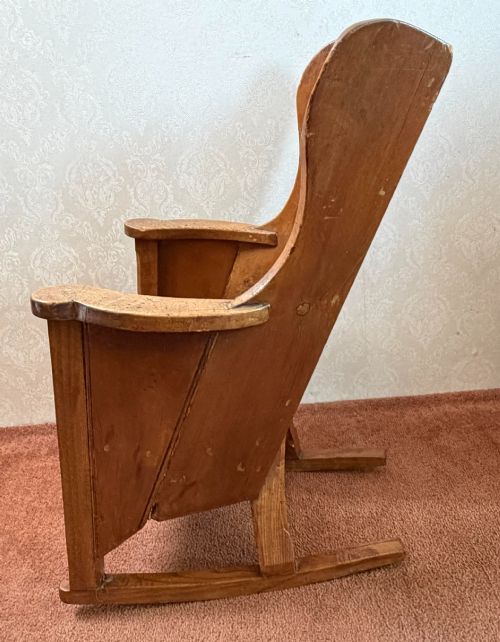
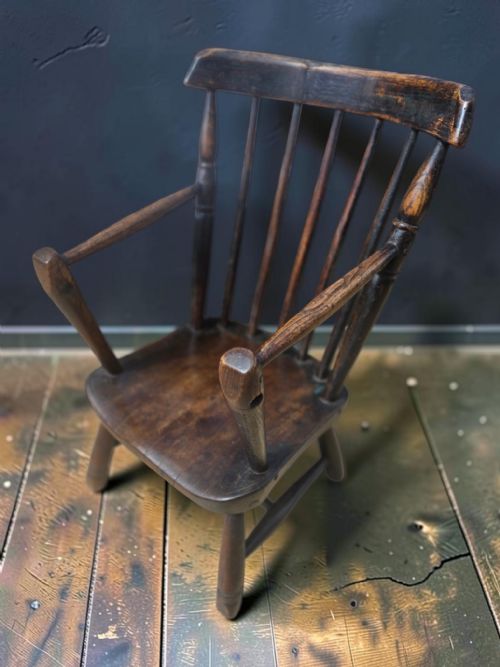
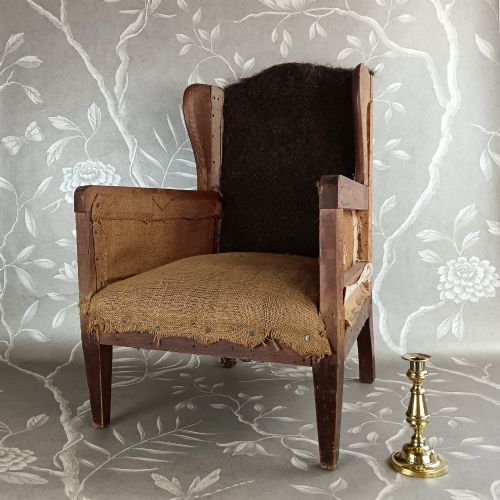
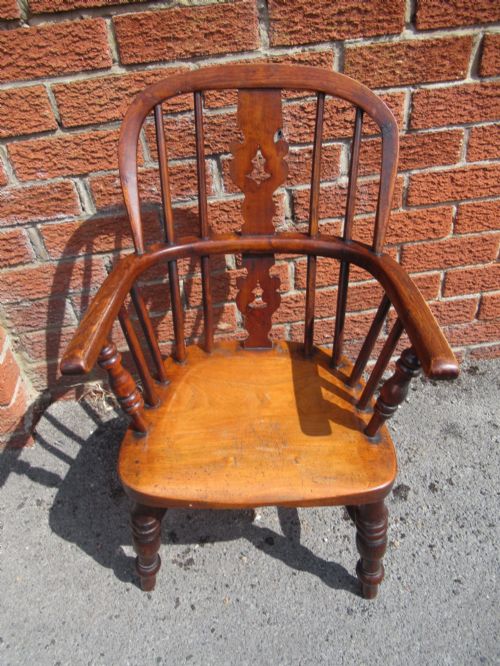
The versions most commonly met on this page include Windsor armchairs, stick backs, ladderbacks, and rocking chairs. Regional country vernacular forms predominate, alongside occasional upholstered examples and Wainscot or splat back designs.
Origins trace across English country workshops, with regional makers applying traditional joinery and turning techniques to local hardwoods. Buyers encounter everything from simple elm rush-seated chairs to high-status yew wood Windsors.
How they were made
Makers constructed these chairs primarily using solid native timbers such as elm, ash, yew, oak, beech, and mahogany. Construction frequently involved steam-bending wood for hoops and armbows, alongside traditional mortise and tenon joinery.
Seat bases were typically carved from solid elm or constructed with rush seating woven across ladderback frames. Spindles and legs were shaped on pole lathes with bobbin-turned or plain tapered profiles.
Surface finishes relied on natural waxing and polishing that developed patinas over centuries of handling and use. Upholstered variations incorporated fabric or leather coverings over padded frames.
Some tiny Victorians apparently enjoyed rocking sessions just as much as their parents did.
What varies in quality
The selection of timber dictates much of the inherent quality, with figured yew wood and well-grained elm commanding greater appreciation than utility woods. Timber choice often reflects the ambition of the original maker and the intended destination of the piece.
Construction rigour separates robust survivors from fragile examples, particularly in the wedging of leg tenons and the stability of armbow joints. The retention of original components, uncompromised by later alterations, preserves the integrity of the design.
Proportion and execution distinguish regional vernacular pieces, where balanced spindle placement and sympathetic scaling elevate simple materials. The depth of patina on the wood surfaces registers the passage of time and the care taken by generations.
The Traditional Childs Armchair Glossary
- Windsor chair
- A chair built with a solid wooden seat into which the legs and back-spindles are directly inserted. This construction method provides considerable structural strength.
- Vernacular
- Everyday domestic furniture made by regional craftsmen rather than metropolitan workshops. These pieces utilise locally available timbers and traditional local methods.
- Rush seating
- Woven seating material made from dried marsh grasses twisted into cords. It forms a resilient and pliable surface for ladderback chairs.
- Potty chair
- A specialised childs chair featuring a perforated seat designed to hold a chamber pot underneath. They combine nursery utility with standard seating forms.
Traditional Childs Armchair: Frequently Asked Questions
How were childs armchairs actually used?
These miniature seats served everyday functions in domestic nurseries, dining rooms, and parlours. They provided secure seating for children during meals or fireside quiet hours.
Rocking variants were specifically designed to soothe infants or young children. Some specialised forms, such as potty chairs, served practical sanitation needs within the household.
How do I tell an 18th-century chair from a Victorian one?
Eighteenth-century examples often display simpler, heavier timber scantlings and deep patination accumulated over long periods. Construction details like hand-carved saddle seats and pegged joints point toward earlier manufacturing methods.
Victorian and later pieces frequently introduce machine-turned components, brighter hardwoods, or contrasting timbers. Stylistic revivals also become apparent in nineteenth-century interpretations.
Are these chairs safe for daily use by children?
While many retain structural integrity, antique childs armchairs are primarily historic artefacts rather than modern nursery equipment. Their historical joinery requires careful appraisal before permitting active use by children.
Many collectors prefer to display them as decorative objects that record historical woodworking traditions. Gentle handling ensures these fragile survivors remain undamaged.