




Traditional Cattle Artwork
Traditional cattle artwork captures the pastoral harmony of British and European countryside life through pastoral oil paintings and watercolours from the nineteenth and early twentieth centuries.
Traditional Cattle Artwork
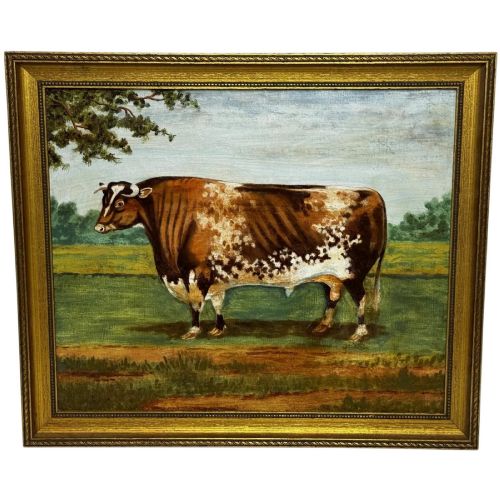
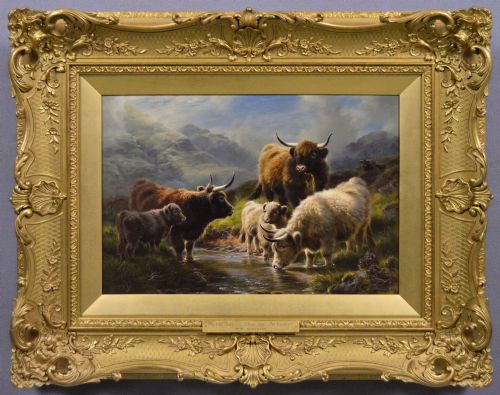
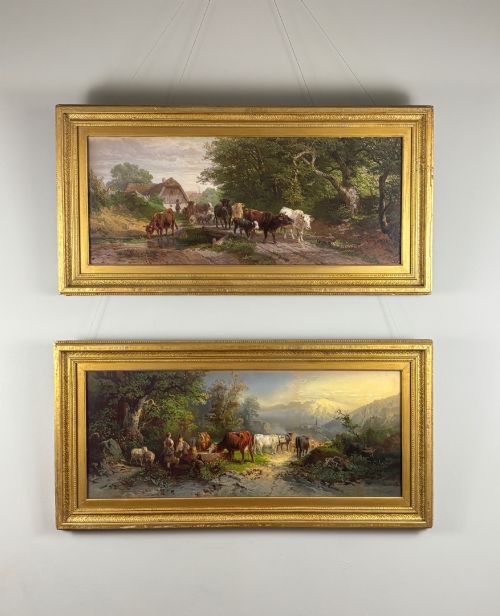
Traditional cattle artwork encompasses framed paintings depicting cows, bulls, and calves within detailed British and European landscapes. These pieces record rural scenes, from prized shorthorns in pastures to Highland cattle beside lochs.
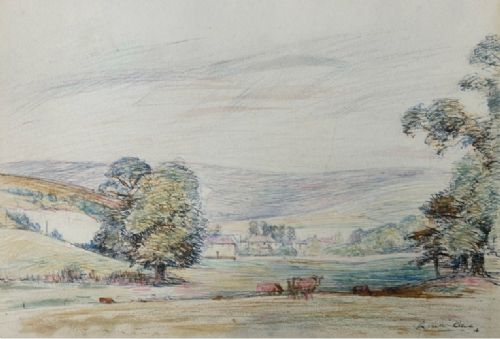
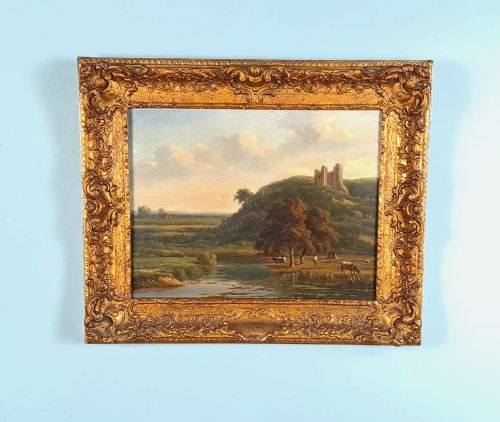
The selections available here lean heavily towards Victorian and Edwardian periods. Works range from intimate watercolours to large oil paintings on canvas, often housed in original giltwood and gesso frames.
How they were made
Artists relied primarily on oil paint applied to canvas or board, alongside watercolour on paper, capturing rural light with layered pigments. Canvases were stretched and secured into wooden frames, frequently accented with elaborate moulded gesso and gold leaf.
Framing played an integral role in the presentation of these pastoral scenes, utilising deep wooden moulding and gilt finishes to enhance the depth of the painted landscape.
Several canvases squeeze goats, pigs, and poultry into the farmyard alongside the cattle.
What varies in quality
Quality rests in the anatomical precision of the animals and the atmospheric depth of the surrounding landscape. Skilled brushwork brings texture to coats, hides, and natural terrain, distinguishing master animal portraits from standard topographical records.
The preservation of the original canvas, pigment vibrancy, and the integrity of the period giltwood frame also determine the standing of an individual piece.
Thomas Sidney Cooper·William Watson Jnr·Sidney Richard Percy·Alfred de Breanski Snr·John Frederick Herring Jnr
The Traditional Cattle Artwork Glossary
- Oil on Canvas
- A painting medium where pigments suspended in drying oils are applied to stretched woven fabric. This technique allows for rich colour blending and textured brushwork.
- Giltwood
- Wood that has been treated with a thin layer of gold leaf or gilt powder. It provides a luminous border for traditional paintings.
- Gesso
- A plaster-like mixture applied to wooden frames as a base for moulding and gilding. It allows for intricate decorative relief work.
- Watercolour Painting
- Artworks created using water-soluble pigments on paper. They offer translucent washes of colour well suited to delicate rural scenes.
Traditional Cattle Artwork: Frequently Asked Questions
What periods do these paintings date from?
The available artworks span primarily from the nineteenth century through the early twentieth century. This era encompasses the Victorian and Edwardian periods when pastoral and animal painting enjoyed widespread popularity.
Dates are established through artist signatures, historical records, and framing styles characteristic of the 1800s and early 1900s.
How should I care for an oil painting?
Oil paintings on canvas require stable indoor environments away from direct sunlight and excessive humidity. Regular gentle dusting with a soft, dry brush keeps the surface clear.
Avoid using liquid cleaners or touching the painted surface directly to preserve the original pigments and varnish.
Are watercolours framed differently than oils?
Watercolour paintings on paper are traditionally displayed behind glass to protect the delicate medium from moisture and airborne dust. Oil paintings on canvas are left unglazed to allow the textured paint surface to be viewed directly.
Both types frequently retain their period wooden or giltwood frames.
What subjects appear alongside cattle?
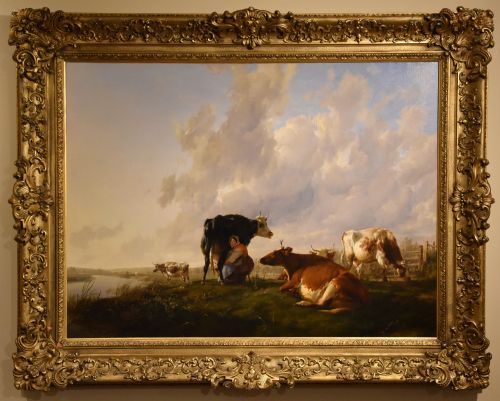
Cattle paintings frequently incorporate drovers, milkmaids, and farm workers tending to livestock in rural settings. Surrounding scenery includes Scottish lochs, Welsh river valleys, farmyards, and snowy winter landscapes.
Other farm animals such as sheep, horses, and poultry also feature in broader pastoral compositions.