




Pastoral Livestock Scene
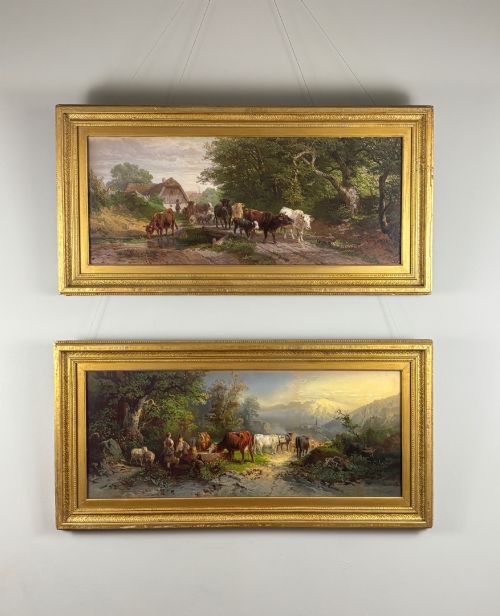
A pastoral livestock scene brings the quiet hum of the countryside into a room through oil and watercolour depictions of cattle, sheep and rural life.
Pastoral Livestock Scene
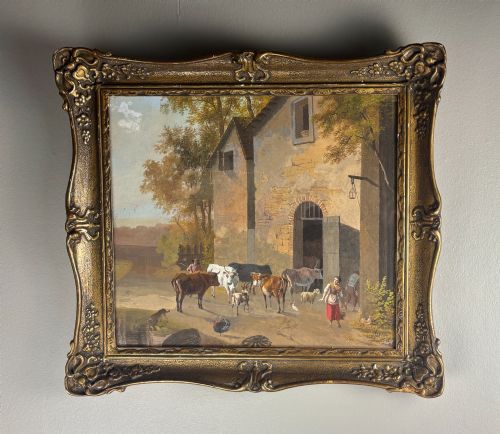
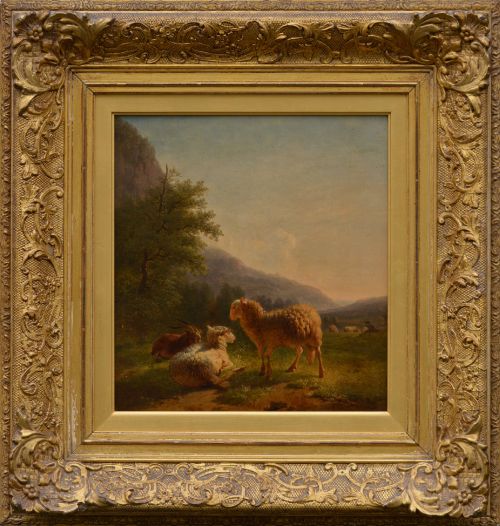
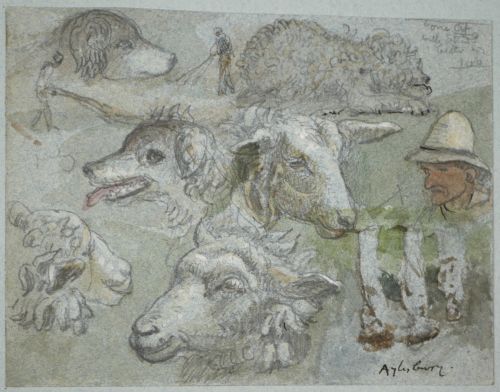
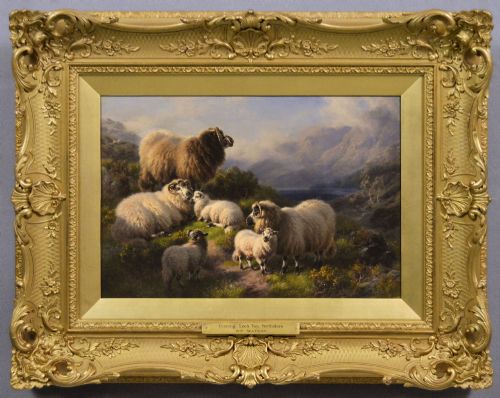
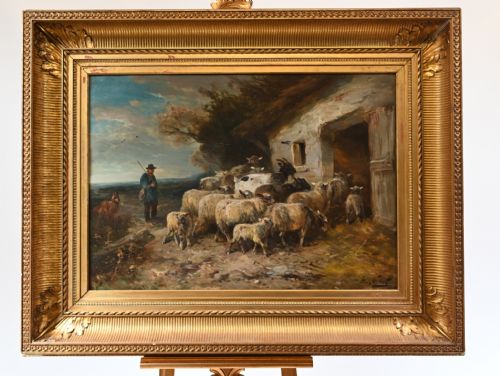
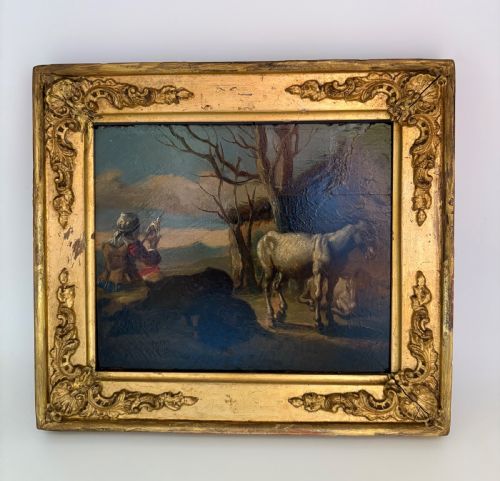
A pastoral livestock scene captures the rural life of past centuries, focusing on cattle, sheep and horses tended by shepherds or farmers in British and European landscapes. These works range from intimate watercolours to large oil paintings housed in ornate frames.
Buyers browsing this selection will most frequently encounter nineteenth century canvases and watercolours depicting placid animals gathered near rivers, streams or inside rustic barns. The pieces reflect periods such as the Victorian era and the Georgian period, often showcasing traditional agricultural life.
Subjects stretch from Scottish highlands with Highland cattle to quiet Kentish marshes and Welsh valleys. The artworks vary from detailed animal portraits to broader landscape compositions featuring figures alongside their livestock.
Materials and technique
The primary medium for these works is oil paint applied to canvas, wood panels or paper, alongside delicate watercolour paintings created on paper supports. Artists built up texture using oil paint and gesso, often finishing the works with giltwood frames or burr frames.
Canvas and oak panels serve as the foundation for the heavier oil paintings, while watercolours rely on paper mounted beneath glass and original framing. Gilding and gesso mouldings add architectural weight to the presentation of the oil paintings.
Listings span from the eighteenth century through the twentieth century, utilising oil on canvas, watercolour, and gesso-prepared giltwood frames.
Assessing quality
Quality in a pastoral livestock scene rests upon the artist's ability to render the anatomy and texture of animals with anatomical precision, alongside the atmospheric depth of the surrounding landscape. Stronger examples display careful handling of light, particularly in evening scenes or river reflections.
The integrity of the original frame, whether giltwood or burr, contributes significantly to the overall presence of the artwork. Works attributed to recognised artists or their direct followers tend to exhibit superior brushwork and compositional balance.
Eugène Verboeckhoven·James Smetham·William Watson Jnr·Johann Friedrich Voltz·Henry Schouten·Thomas Sidney Cooper·J. C Grey·Philipp Peter Roos·Frederick Septimus Lewis·Ernest Pile Bucknall·Andre de Moller·Julius Caesar Ibbetson·Basil Bradley·Arthur Charles Dodd·Claude Cardon·John W Morris·Frederick Richard Lee·Henry Brittan Willis·Henry Cheadle·William Sidney Cooper·Owen Bowen·Charles Jones·Thomas Baker
The Pastoral Livestock Scene Glossary
- Giltwood
- Wood carved and covered with a thin layer of gold leaf. It forms the ornate borders common on nineteenth century oil paintings.
- Gesso
- A paint mixture consisting of a binder mixed with chalk, gypsum or pigment. It prepares wooden panels and frames before gilding.
- Watercolour painting
- Artworks created using water-soluble pigments on paper. They offer a lighter, more transparent quality than oil on canvas.
- Oil on canvas
- Pigments bound in a drying oil applied to stretched fabric. This medium dominates the larger landscape and animal compositions.
- Oak panel
- A rigid wooden support used for early oil paintings. Panels predating canvas provide a stable surface for detailed brushwork.
Pastoral Livestock Scene: Frequently Asked Questions
What defines a pastoral livestock scene?
These artworks depict domesticated animals such as cattle, sheep and horses within natural or agricultural settings. They often include figures of farmers or shepherds tending to the flock or herd.
The genre grew in popularity during the nineteenth century, reflecting a romanticised view of rural labour and British or European countryside topography.
How should I hang an oil painting?
Oil paintings on canvas or panel require stable indoor environments away from direct sunlight and dramatic humidity shifts. Proper wall fixings should match the substantial weight of the giltwood frames.
Keep the artwork at eye level in a room with moderate temperature to preserve both the canvas and the original wooden frame.
How can I tell the period of a painting?
Dating relies on stylistic clues, framing techniques, and materials such as oak panels or nineteenth century canvas supports. Signatures, inscriptions on the reverse, and artist records also clarify the age.
Victorian and Georgian works often exhibit specific approaches to lighting and brushwork that distinguish them from later twentieth century interpretations.
Were these paintings always framed?
Most finished oil paintings and watercolours received contemporary frames to protect the edges and complete the presentation. Giltwood and burr frames were chosen to complement the tones of the landscape.
Original frames remain an important part of the piece's history, though some works have been reframed over the decades.