
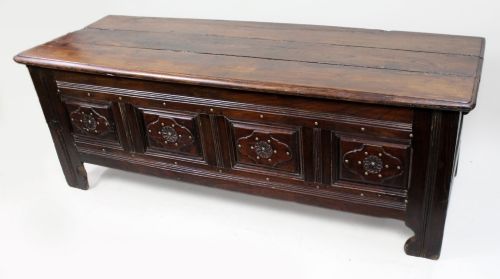
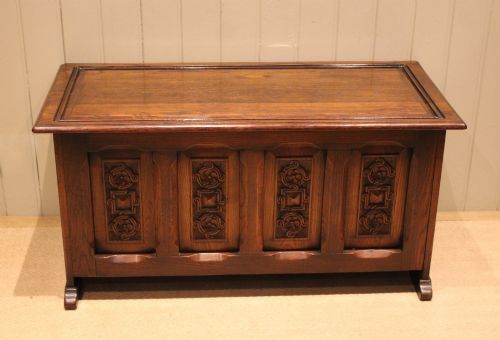
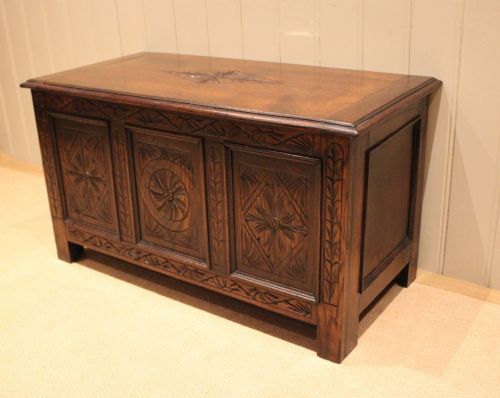
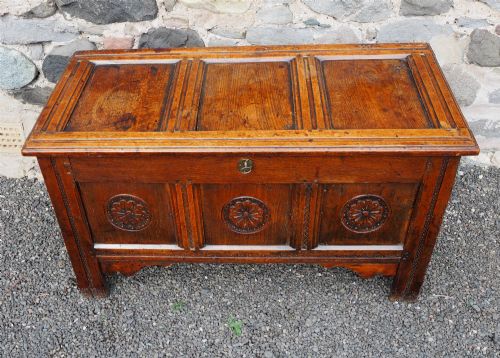

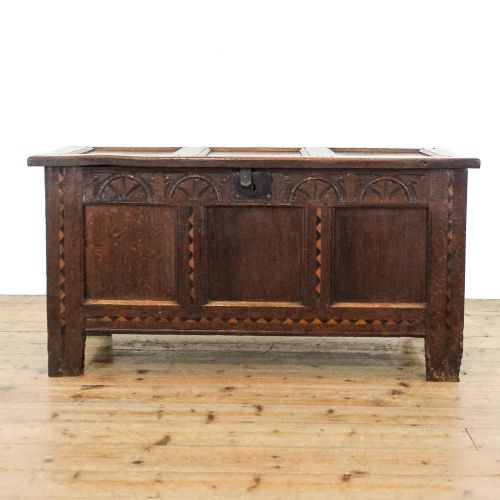
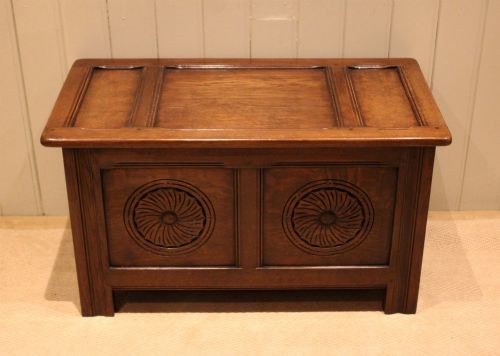
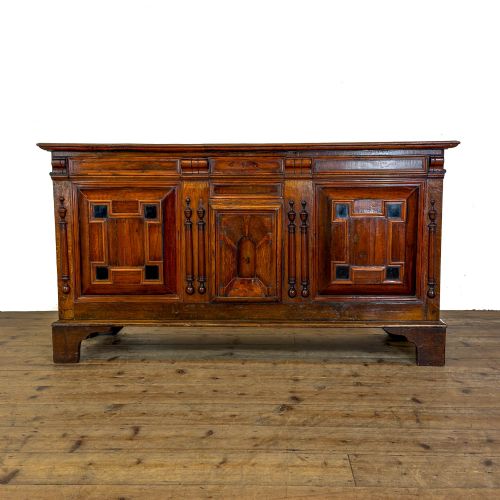
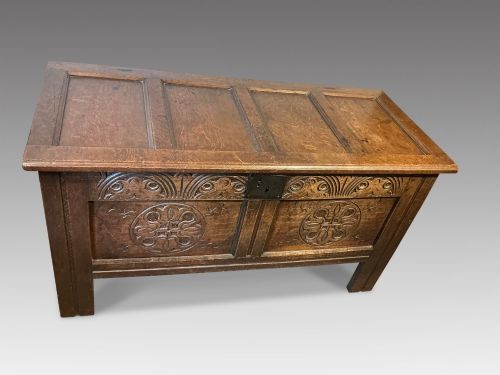
Traditional Carved Storage Trunk
A traditional carved storage trunk offers heavy timber construction and deep interior volume to hold household linens and possessions.
Traditional Carved Storage Trunk
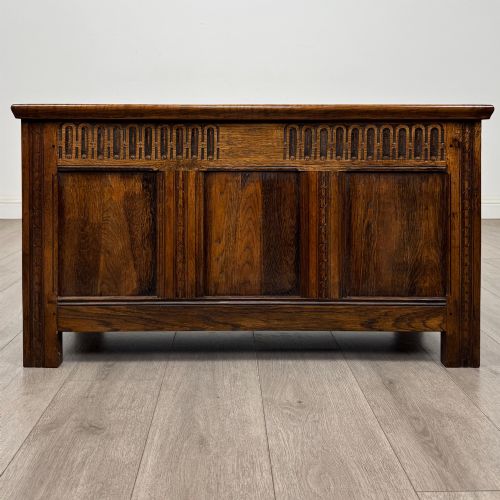
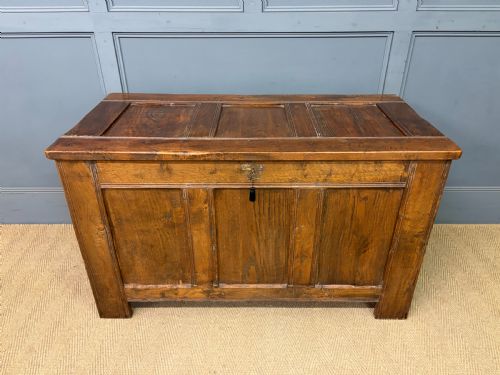
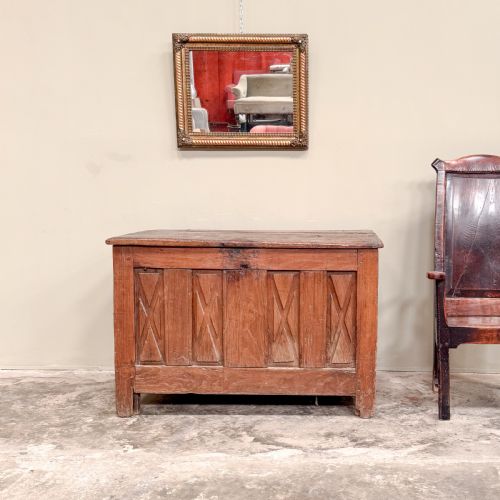
A traditional carved storage trunk encompasses heavy wooden coffers, blanket chests and mule chests originating primarily from the seventeenth and eighteenth centuries, alongside later revivals from the nineteenth and twentieth centuries. These pieces function as robust domestic receptacles designed for holding textiles and valuables within domestic interiors.
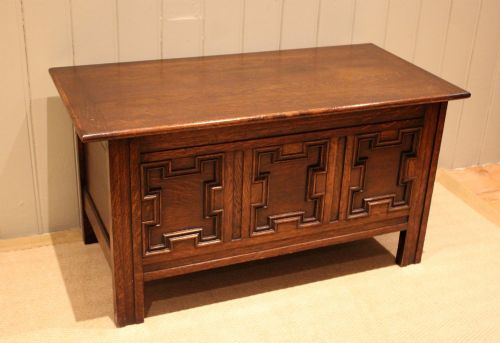
Construction spans centuries of cabinet-making, beginning with joined and framed solid oak panels and extending through to later Jacobean revival pieces and Edwardian blanket chests. Each iteration relies on substantial wooden boards assembled to withstand generations of daily domestic use.
Materials and construction
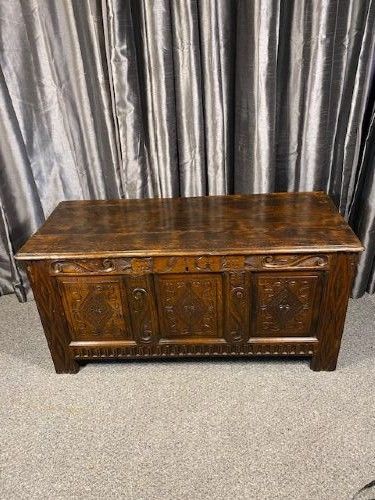
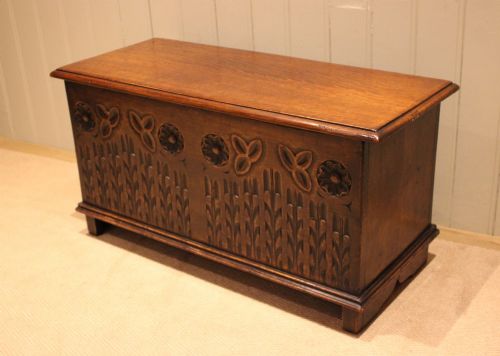
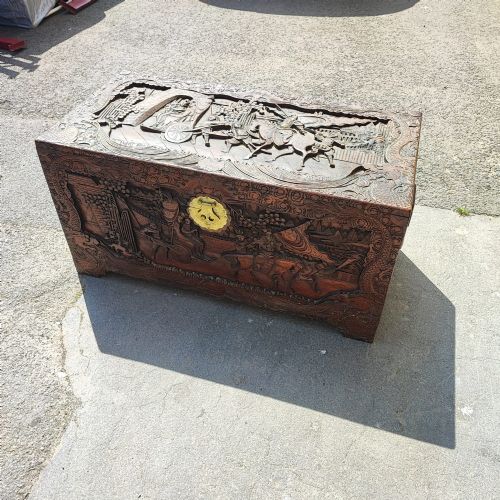
Makers utilised solid timber, predominantly heavy oak alongside regional alternatives such as camphor wood, cedar wood and pine, reinforced with iron and brass hardware for hinges and locks. The wood was frequently hand-carved with geometric motifs, floral patterns or panelled designs directly into the structural grain.
Joinery methods relied upon mortise and tenon joints to secure the heavy frame panels, ensuring structural stability without relying on modern adhesives. Surfaces were often finished with wax or left in their natural state, occasionally utilising ebonised wood details or burr elm panels for decorative contrast.
Listings span centuries of cabinet-making, featuring solid oak, camphor wood, cedar wood and ebonised wood across English, French and Oriental origins.
Distinctions in construction and ornament
The standard of a traditional carved storage trunk rests upon the depth and crispness of the hand-carved ornamentation cut directly into the timber rather than applied superficially. Pieces featuring deeply articulated panels and integrated joined framing demonstrate superior workshop execution compared to later mechanical reproductions.
The choice and stability of the primary timber dictate longevity, with dense solid oak and seasoned camphor wood providing superior structural integrity. Original iron or brass hardware that remains intact without modern replacement parts further elevates the integrity of an antique chest.
Thomas Dennis
The Traditional Carved Storage Trunk Glossary
- Mule chest
- A storage chest featuring one or more drawers built into the base beneath the main compartment. This form emerged in regional workshops during the eighteenth century.
- Joined oak
- Furniture constructed using interlocking mortise and tenon joints held together with wooden pegs rather than metal nails. This technique defines seventeenth-century cabinet-making.
- Camphor wood
- An aromatic hardwood utilised for oriental trunks to deter insects and protect stored textiles. It is characterised by its distinct fragrance and warm grain.
Traditional Carved Storage Trunk: Frequently Asked Questions
What is a traditional carved storage trunk used for?
These pieces served historically to store household textiles, blankets, clothing and personal valuables securely within the home.
Today, they function similarly in modern interiors as practical furniture that doubles as coffee tables or blanket storage at the foot of a bed.
How do I date a wooden coffer?
Dating relies upon examining the construction methods, such as joined frame-and-panel assembly versus later machine-sawn boards, alongside the style of the hand-carving.
Early seventeenth-century examples typically show peg joinery and geometric strapwork, while eighteenth and nineteenth-century pieces display evolving regional carving traditions.
Are camphor wood trunks heavy?
Solid camphor wood trunks possess a dense composition that gives them substantial weight, though they are generally lighter than equivalent volumes of solid oak.
Their substantial timber construction ensures they remain stable and durable when placed at the foot of a bed or along a hallway wall.
What is the difference between a coffer and a mule chest?
A standard coffer consists of a single top-opening compartment enclosed by solid wooden sides and a hinged lid.
A mule chest incorporates one or more functional drawers beneath the main storage well, offering easier access to smaller items without lifting the primary lid.