


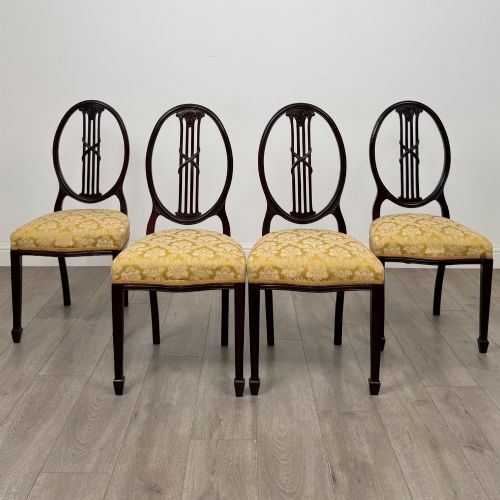
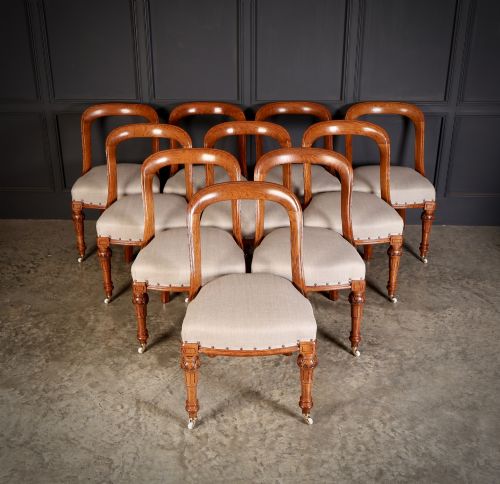
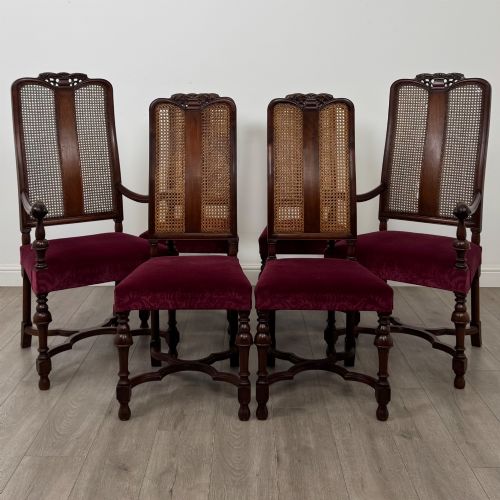
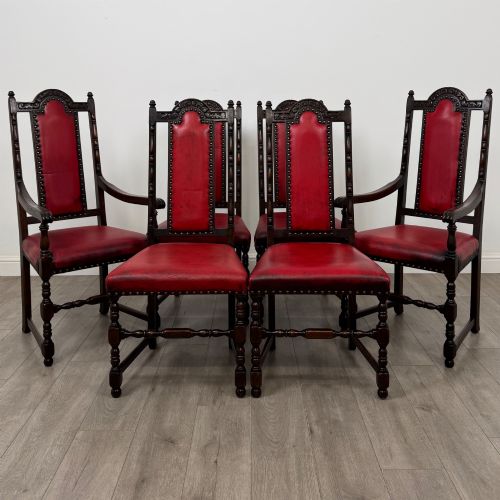
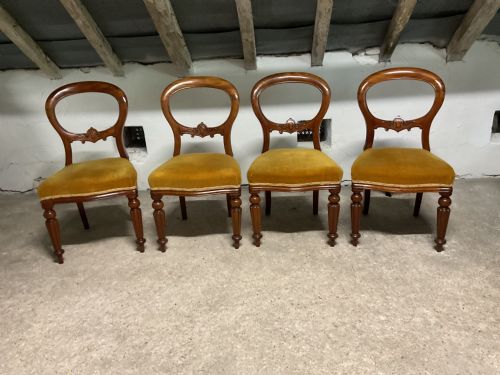
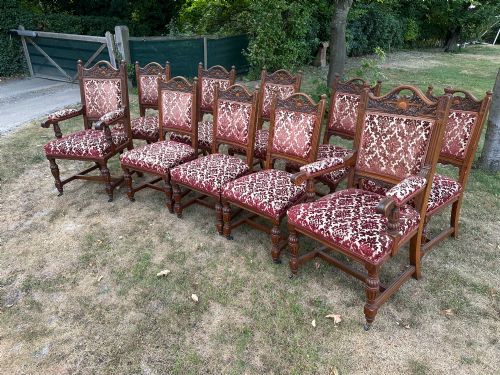
Traditional Carved Seating Set
A traditional carved seating set brings matched historical presence to a room, offering grouped dining chairs and suites shaped from timber.
Traditional Carved Seating Set
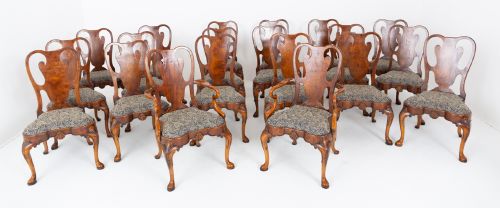
A traditional carved seating set comprises coordinated groupings of dining chairs, armchairs, hall chairs, and larger seating suites sourced from historical periods. Buyers examining this category encounter matched sets ranging from four to twenty chairs, designed around shared stylistic lineages.
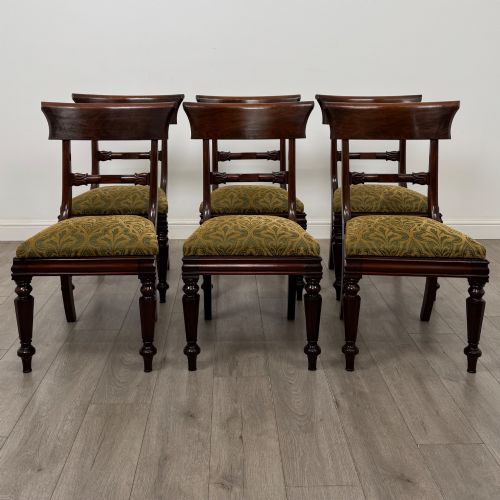
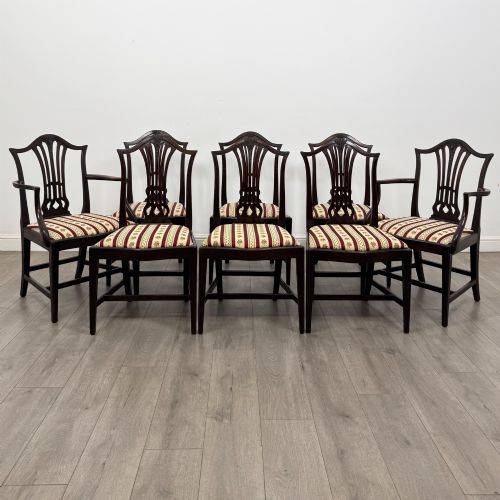
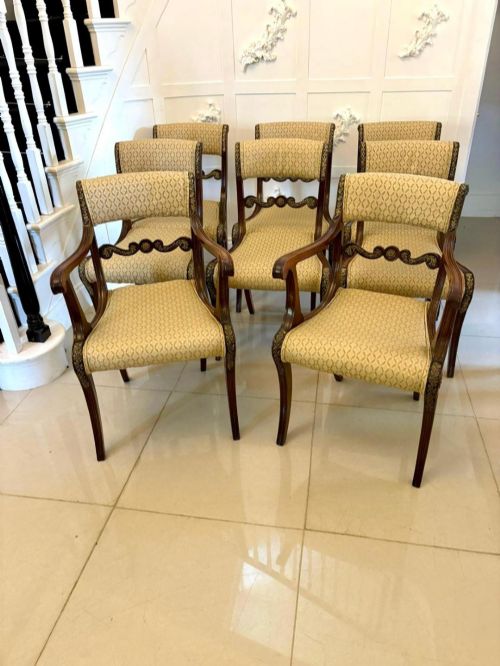
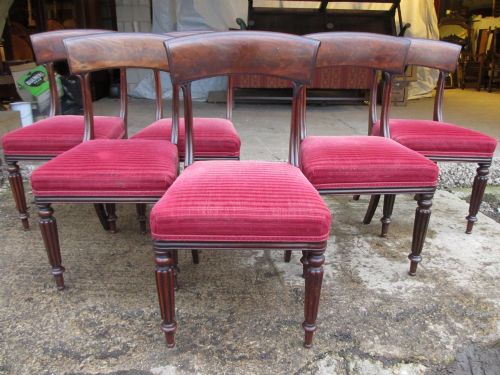
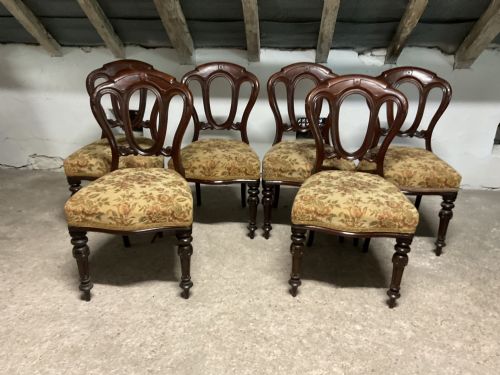
The most frequent examples appearing on this page span the Victorian, Edwardian, and Georgian eras, alongside various twentieth-century revivals. Common configurations include mahogany shield back dining chairs, bar back designs, and oak sets intended for formal dining spaces.
Materials and construction methods
Cabinetmakers constructed these seating sets primarily using dense hardwoods such as mahogany and oak, occasionally incorporating walnut, maple, elm, and brass details. These timbers provided the structural integrity required for intricate hand-carved motifs along the splats and frames.
Upholstered elements rely upon traditional textile applications, featuring period fabrics, velvet, leather, and fabric upholstery secured to the seats. Joinery techniques varied across eras, uniting solid wood components to withstand daily dining use.
Six mid-nineteenth-century smokers bow Windsor or Captain's chairs provide a stout alternative to formal dining sets.
Assessing craftsmanship and proportion
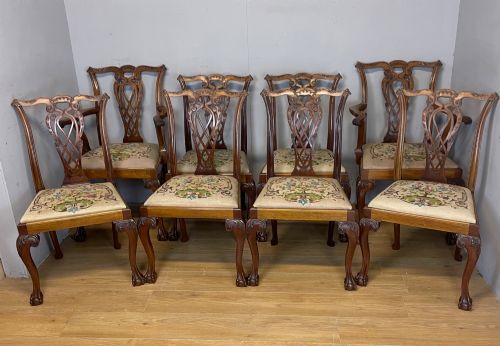
Superior sets demonstrate crisp execution in their carved details, whether rendering ribbon backs, shield designs, or classical revival motifs. The depth and precision of the hand-carving distinguish master workshop production from simpler commercial outputs.
Cohesion across the entire group dictates overall merit, ensuring that wood grain, colour, and proportions remain uniform from the primary dining chairs down to any matching carvers. Original surface patination and structural consistency across all pieces elevate the standing of a suite.
Warings·Maple and Co
The Traditional Carved Seating Set Glossary
- Shield back
- A chair back shaped like a heraldic shield, popular in eighteenth-century and revival dining chair designs. This silhouette often incorporates pierced carved splats.
- Carver
- An armchair designed to match a set of smaller side chairs, typically placed at the head of a dining table. These pieces include supportive armrests alongside the standard back design.
- Bar back
- A horizontal cross-rail spanning the uprights of a chair back, frequently moulded or carved. This structural feature gained prominence during the William IV period.
- Regency style
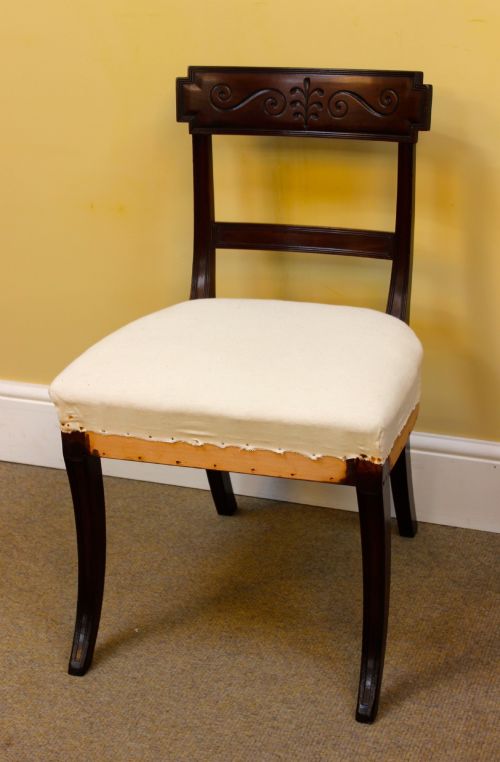
- A design movement drawing inspiration from classical Greek, Roman, and Egyptian forms. Pieces from this tradition display clean lines paired with restrained ornamental carving.
- Splat
- The vertical central strip of wood within a chair back connecting the seat to the top rail. Carvers frequently pierced or shaped this component to define the chair style.
Traditional Carved Seating Set: Frequently Asked Questions
How many chairs come in a typical set?
Listings commonly present matching groups containing four, six, eight, ten, or twelve chairs, occasionally including matching carvers for the table ends.
Larger configurations of sixteen or twenty chairs also appear for extended dining settings.
What is the difference between side chairs and carvers?
Side chairs lack armrests and fit compactly along the sides of a dining table.
Carvers feature integrated armrests and occupy the head positions.
How do I identify a revival style?
Revival sets reproduce earlier aesthetic movements, such as Chippendale or Queen Anne, using the construction methods of their actual manufacturing date.
Details like wood ageing and joinery assist in dating these pieces accurately.
Which woods were most commonly used?
Mahogany and oak dominate the historical seating records across Georgian, Victorian, and Edwardian periods.
Walnut, elm, and maple appear less frequently in specific revival forms.