

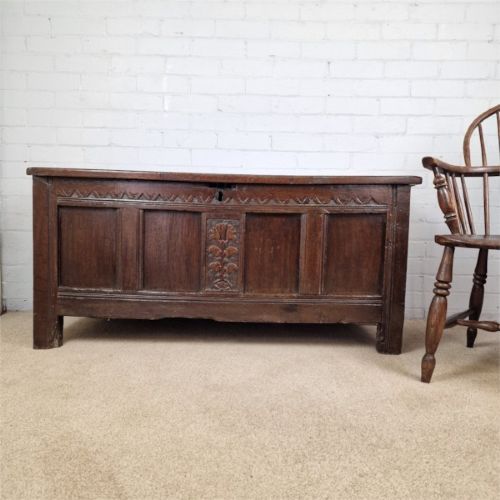
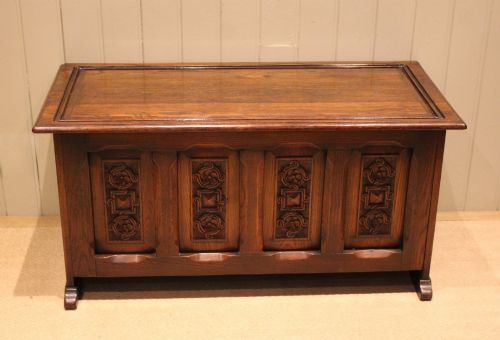
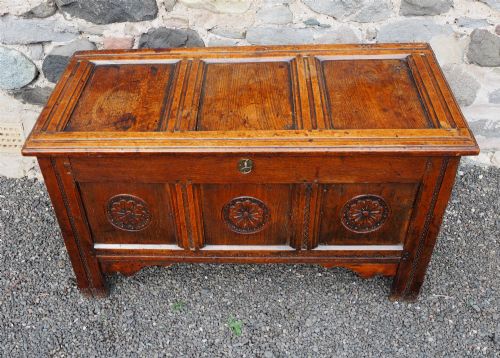
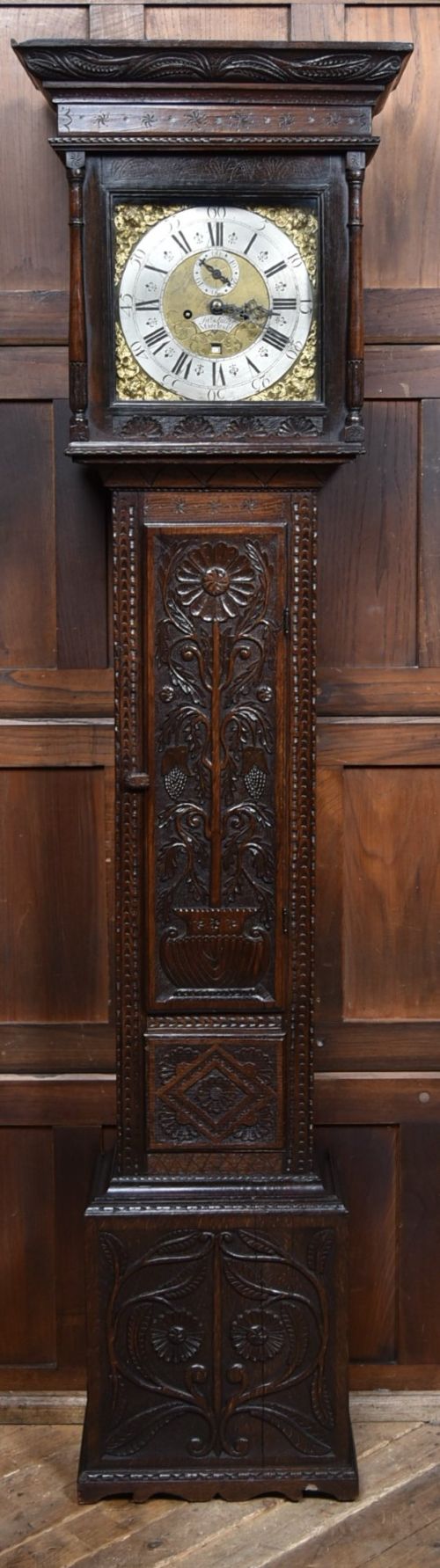
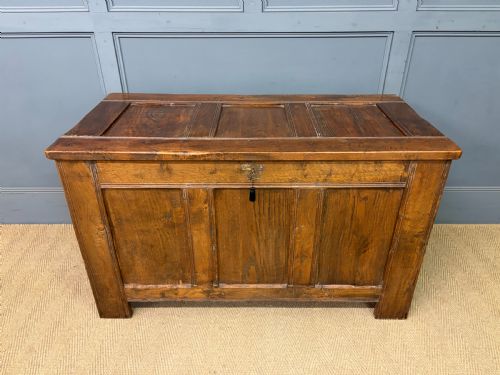
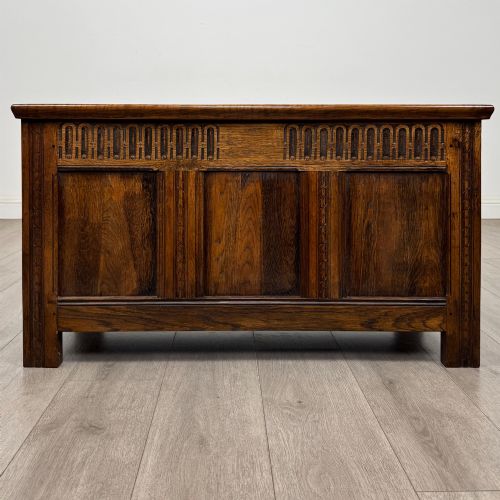
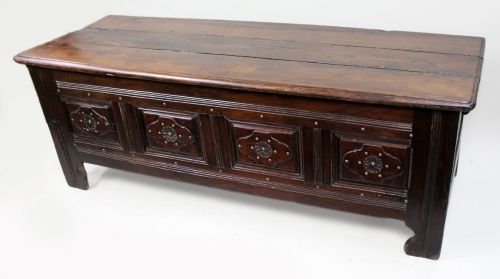
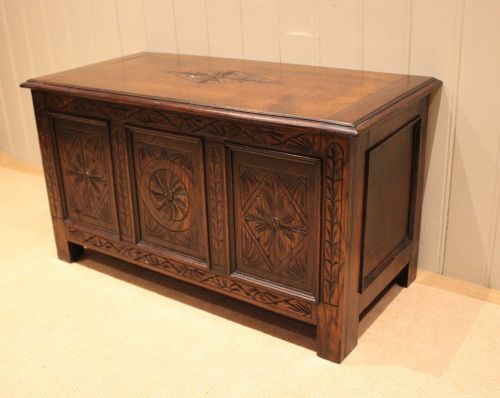
Traditional Carved Oak Trunk
A traditional carved oak trunk brings architectural timber and generations of domestic storage into a modern room with direct, honest weight.
Traditional Carved Oak Trunk
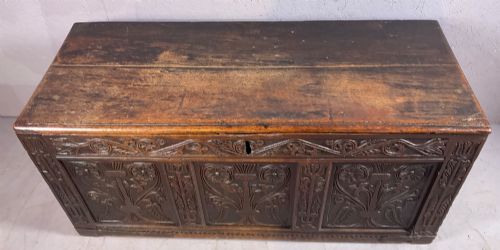
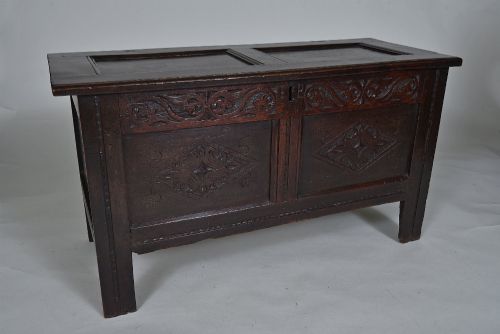
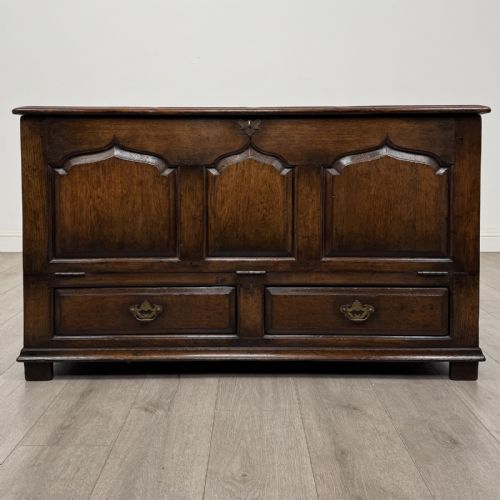
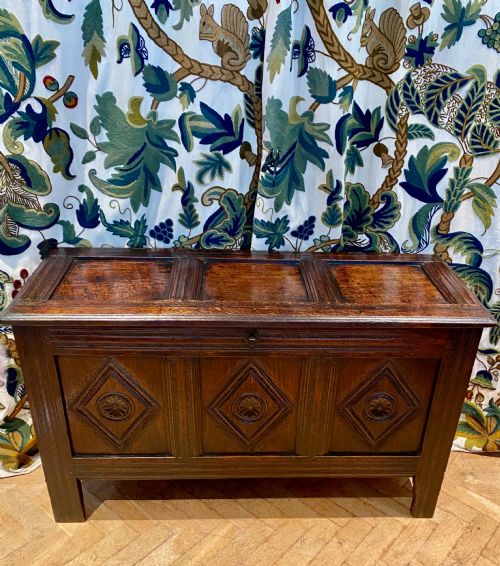
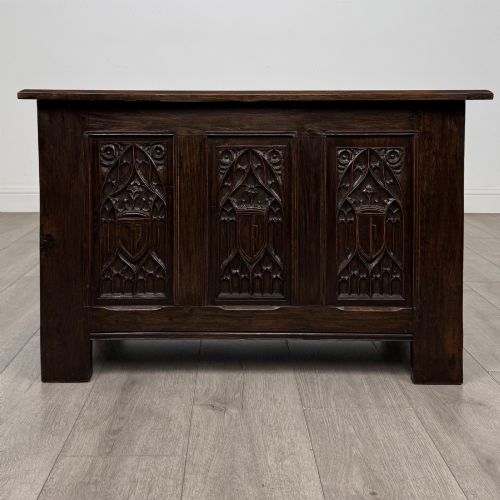
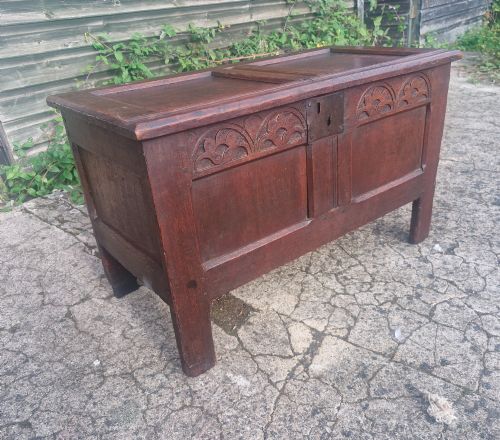
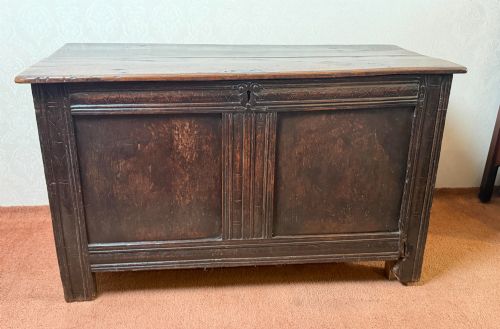
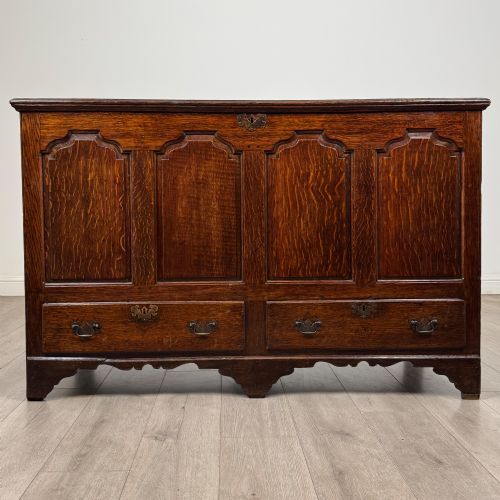
A traditional carved oak trunk serves as the foundational storage piece for linens, blankets, and household valuables across centuries of domestic life. Buyers exploring this selection encounter heavy timber coffers, blanket chests, and mule chests spanning the seventeenth through the twentieth centuries.
The pieces appearing most frequently on this page date from the eighteenth and seventeenth centuries, alongside revival interpretations from the Edwardian era and the nineteen-thirties. Formats range from plain joined panel construction to richly carved provincial and regional English or French examples.
Makers constructed these storage pieces to withstand heavy domestic demands, resulting in deep internal wells and robust lids designed to double as seating surfaces. Many retain their original boarded tops and heavy iron or brass hinges, showing decades of utilitarian service.
Materials and construction
Cabinet makers built these chests predominantly from solid oak, sometimes accented with burr elm panels, pine linings, or subtle wood inlay. Iron and brass hardware, including strap hinges and lock plates, secured the heavy timber lids and body panels.
Joinery methods relied on traditional mortise and tenon frames fitted with pegged joints, holding sturdy panelled walls together without modern adhesives. Workshops applied hand-carved decorative motifs directly to the solid oak surfaces, incorporating geometric patterns and foliate designs.
Traditional Carved Oak Trunk Retail Price Guide 2026
Typical asking prices for traditional carved oak trunk among the pieces listed under this phrase on Sellingantiques today, from the lower quarter to the upper quarter. They describe what is for sale here now, not the wider market.
Listings feature solid oak, burr elm, and pine materials spanning periods from the sixteenth century through the nineteen-thirties.
Distinctions in quality
The standard of carving sets the finer examples apart from utilitarian workshop pieces, distinguishing deep, crisp hand-chiselling from flat or later mechanical decoration. Well-executed pieces display proportional balance across the front facade and harmonious integration between the stiles and rails.
Originality of surface timber and structural integrity dictate the standing of a trunk within its period. Examples retaining their untouched boarded lids, original ironwork, and unthinned timber panels carry greater authenticity than heavily restored or altered equivalents.
The Traditional Carved Oak Trunk Glossary
- Coffer
- A heavy wooden chest traditionally used for storing valuables, documents, or clothes. These pieces often feature hinged lids and sturdy boarded or panelled construction.
- Mule chest
- A storage chest featuring one or more functional drawers built into the base beneath the primary internal well. They bridge the design gap between traditional coffers and modern chests of drawers.
- Joined oak
- Furniture constructed using interlocking mortise and tenon joints secured with wooden pegs rather than simpler nailed boards. This technique defined seventeenth-century cabinet making.
- Stile
- The vertical upright member in a panelled frame construction. Stiles provide the primary structural support at the corners of a traditional chest.
- Rail
- The horizontal framing member fitted between stiles to hold central panels in place. Together they form the characteristic grid pattern of period oak furniture.
Traditional Carved Oak Trunk: Frequently Asked Questions
What did people store in traditional carved oak trunks?
Households utilised these deep chests primarily for storing valuable textiles, heavy woolen blankets, table linen, and personal documents. Their robust construction and secure locks protected contents from damp conditions and theft.
Over generations, families also kept winter clothing, legal deeds, and household silver inside these large wooden receptacles. Their sealed interiors helped preserve fabrics before the advent of modern domestic wardrobes.
How do I care for a solid oak trunk?
Maintain the timber by keeping the trunk away from direct heat sources, radiators, and strong sunlight that can dry out and split the oak. Apply a traditional beeswax polish sparingly to nourish the wood surface.
Avoid using modern liquid cleaners or silicone sprays which can damage the historic patina. Gentle dusting with a dry cloth keeps the carved details clear of debris.
How can I tell a seventeenth-century trunk from a later revival piece?
Examine the construction methods, tool marks, and timber shrinkage visible on the interior and underside of the chest. Seventeenth-century pieces typically exhibit hand-riven oak, pegged joints, and uneven hand-planed boards.
Revival pieces from the Edwardian period or the nineteen-thirties often feature standardised machine-cut timber, uniform patination, and modern hardware fixings. Examining the backboards and internal floor panels reveals the age of the materials used.
Where were regional oak chests made?
Regional workshops operated across rural England, Wales, and provincial France, utilising locally available timber and distinct local carving traditions. Welsh mule chests and West Country coffers often display unique regional moulding profiles.
French provincial pieces frequently incorporate local stylistic preferences, differing slightly in proportion and timber selection from English counterparts. These regional variations reflect the specific handcraft traditions of individual European woodworking centres.