
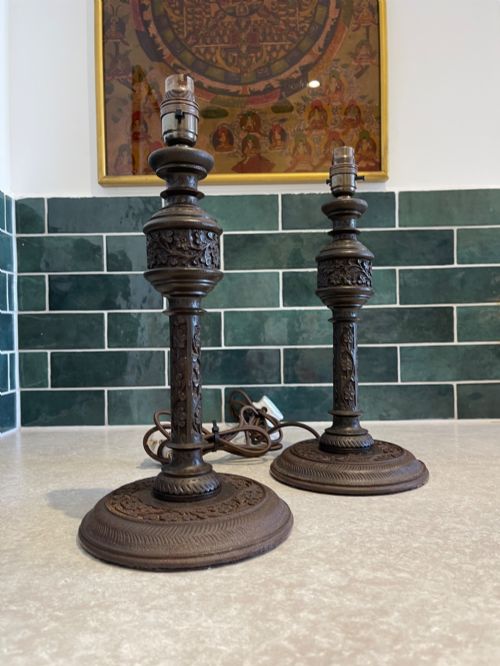
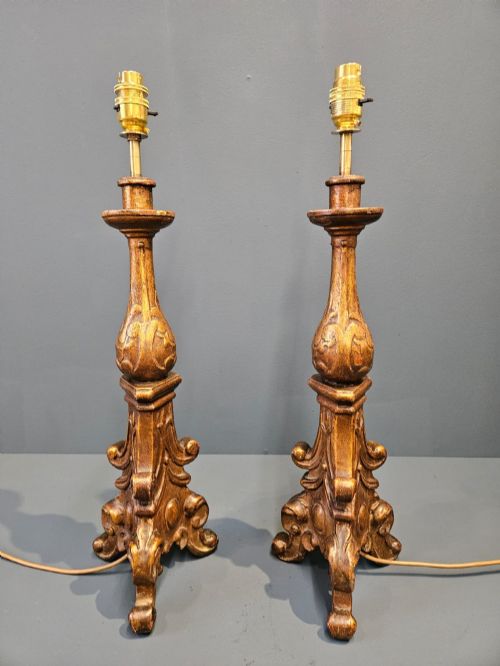
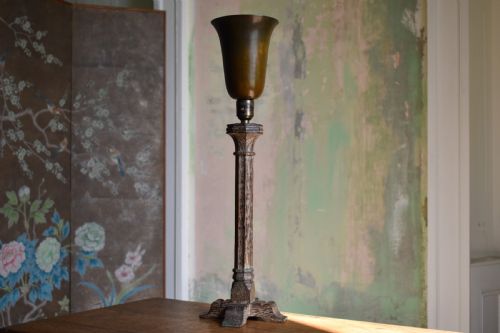
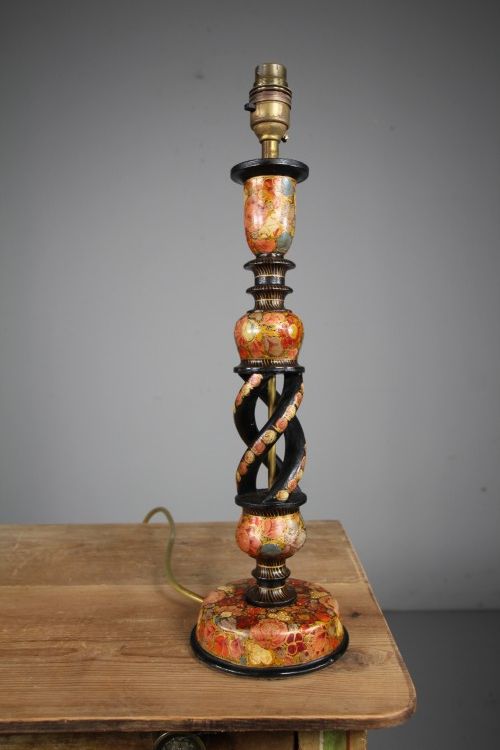


Traditional Carved Lamp Base
These traditional carved lamp base examples bring warm illumination and rich historic texture to an interior, drawing on centuries of craftsmanship across various global styles.
Traditional Carved Lamp Base
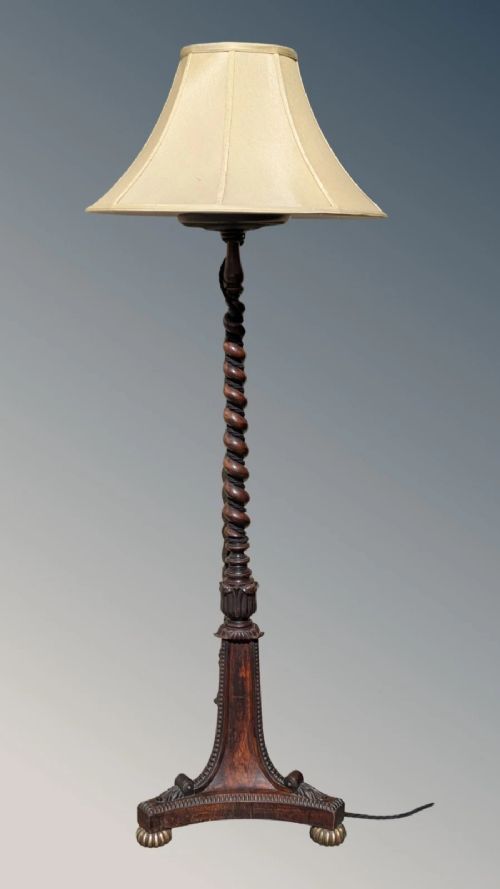
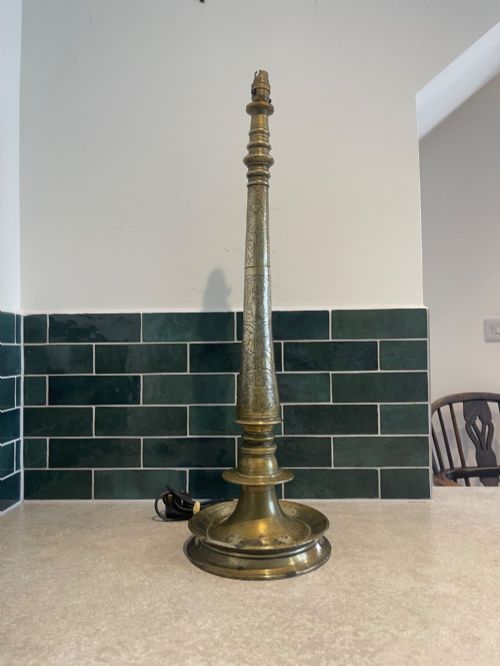
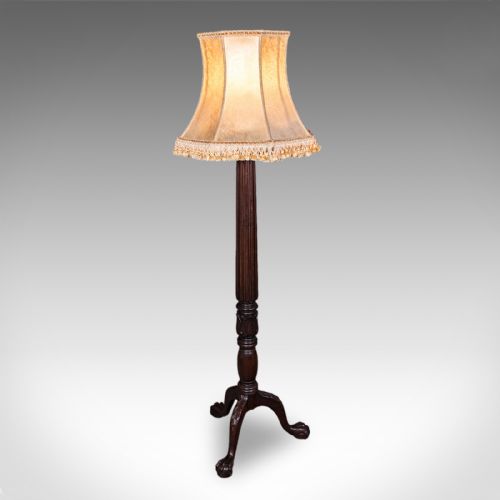
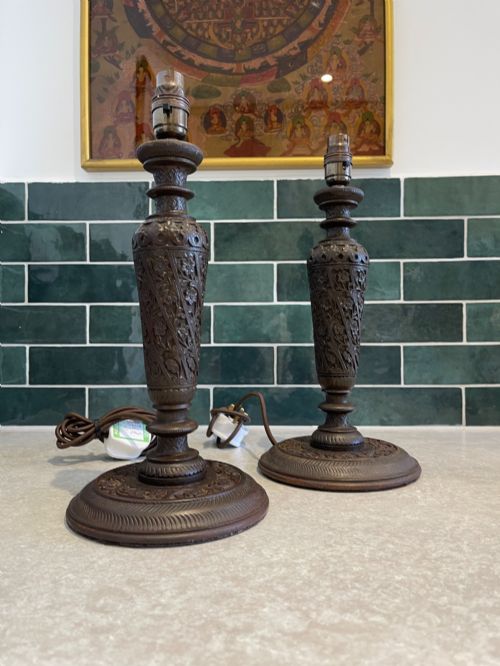
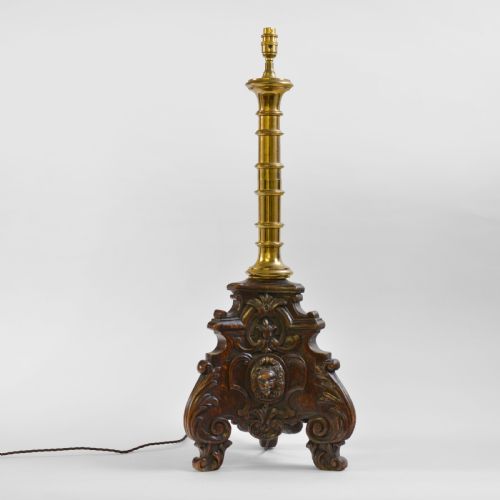
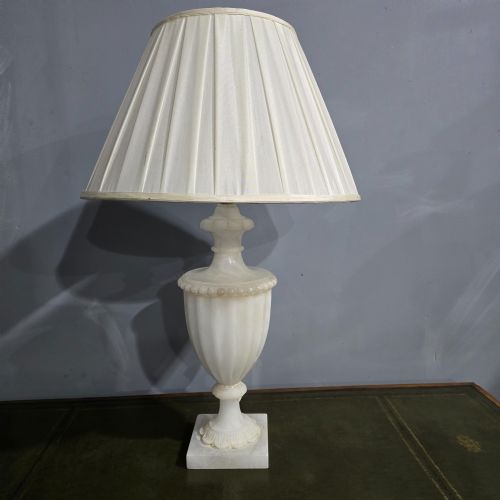
A traditional carved lamp base is a functional lighting fixture shaped from timber, metal, or stone, taking forms such as table lamps, standard lamps, and converted candlesticks. The examples gathered here span from the seventeenth century through to the early decades of the twentieth century, encompassing both floor-standing and table-top designs.
Buyers encountering this selection will find standard lamps alongside compact table options, originating from English workshops, continental Europe, and international sources like Kashmir and Japan. The physical forms range from architectural columns and tripod supports to figurative carvings and turned wooden standards.
Many of these lighting pieces originate from historical periods including the Victorian era, the William IV revival, and the Arts and Crafts movement, often utilising converted candlesticks or purpose-built lamp standards. Each piece reflects the decorative taste of its period, whether through Flemish baroque flourishes or Japanese Meiji ornamentation.
Materials and construction methods
Makers shaped these bases primarily from hardwoods such as oak and mahogany, alongside softer or more decorative mediums like gesso, giltwood, alabaster, and brass. Timber elements were frequently turned on a lathe, hand-carved with floral or architectural motifs, or painted and limed to achieve specific surface finishes.
Surface treatments play a significant role in the construction of these items, with giltwood and gesso pieces requiring careful application of gold leaf over plaster grounds. Metal components, particularly in brass and bronze, involve traditional casting techniques, while wooden structures rely on mortise and tenon joints or sturdy central spindles.
A bronze Japanese elephant from the Meiji period patiently holds the light.
Factors determining quality
The distinction between standard and superior pieces rests on the crispness and depth of the hand-carving, whether executed in dense oak, rich mahogany, or delicate gesso. Finer examples display meticulous attention to proportion and anatomical or botanical detail, whereas lesser pieces show softer, more mechanical execution.
Material selection and surface preservation further differentiate the range, with original gilt surfaces, patinated bronzes, and untouched timber finishes holding greater integrity than heavily restored or later painted variants. The structural stability of the central shaft and the quality of any applied decorative metalwork also dictate the overall standard of the object.
The Traditional Carved Lamp Base Glossary
- Standard Lamp
- A tall floor-standing lighting fixture designed to illuminate a room from standing height. These often feature heavy weighted bases to support extended carved wooden shafts.
- Giltwood
- Timber that has been coated with a thin layer of gold leaf. This technique provides a reflective, opulent surface common on decorative bases from the eighteenth and nineteenth centuries.
- Gesso
- A plaster-like mixture applied to wood surfaces as a preparation for painting or gilding. It allows for intricate moulded relief details before the application of gold leaf.
- Meiji Period
- The era in Japanese history spanning from 1868 to 1912, known for highly detailed metalwork and naturalistic motifs. Pieces from this time often incorporate complex bronze castings.
- William IV Revival
- A nineteenth-century architectural and decorative style that reinterprets the robust, scrolling forms of the 1830s. Furniture and lighting from this movement typically feature heavy mahogany and bold classical proportions.
Traditional Carved Lamp Base: Frequently Asked Questions
What is a traditional carved lamp base?
A traditional carved lamp base is an antique or vintage lighting support shaped from materials like oak, mahogany, brass, or giltwood. These pieces often repurpose historical forms such as candlesticks or architectural columns to hold modern electrical fittings.
They serve as focal points in period interiors, combining practical illumination with sculptural woodwork or metalcasting from eras spanning the seventeenth to the early twentieth century.
How do I date a carved lamp base?
Dating relies on examining the timber species, carving style, turning techniques, and any accompanying metal components. Stylistic clues such as Flemish baroque motifs, William IV proportions, or Arts and Crafts simplicity point directly to specific historical periods.
Wear patterns on the base, the method of wiring integration, and the composition of surface finishes like gesso or original paint further clarify the age of the object.
Can I use floor lamps in modern rooms?
Standard lamps and tall floor-standing bases fit comfortably into contemporary spaces by adding height, warmth, and texture to empty corners. Their historical designs contrast effectively with minimalist modern furnishings.
Placing a tall wooden or brass standard beside seating areas provides ambient lighting without requiring permanent structural changes to the room.
What maintenance do antique lamp bases need?
Maintenance involves gentle dusting with a soft dry cloth and protecting wooden surfaces from excessive heat or direct sunlight. Waxes suited to antique timber help preserve the natural finish of oak and mahogany over time.
Electrical components should be checked periodically by a qualified professional to ensure safety, particularly when dealing with older converted candlesticks or rewired standards.