
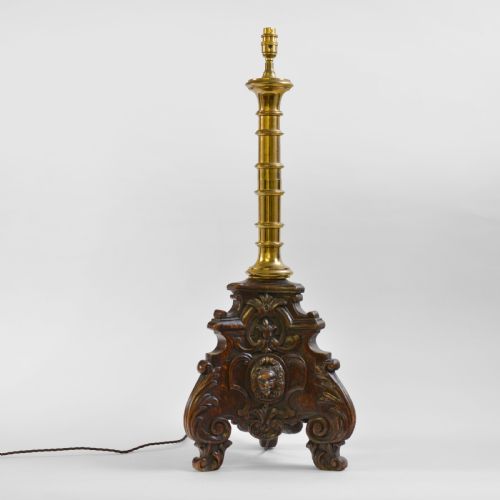


Baroque Carved Table Lamps
Baroque carved table lamps bring dramatic continental presence to a room through carved timber, giltwood, and rich historical forms.
Baroque Carved Table Lamps
When buyers search for baroque carved table lamps, they encounter a range of forms derived from seventeenth-century pillars, eighteenth-century altar candlesticks, and later revival interpretations. These pieces combine substantial timber structures with ornate continental styling, drawing heavily on Italian, Flemish, and Spanish traditions.
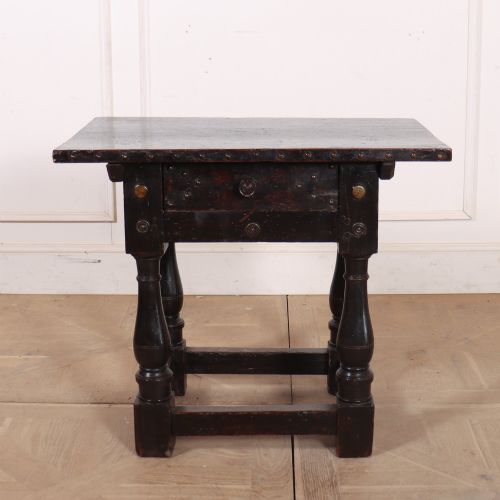
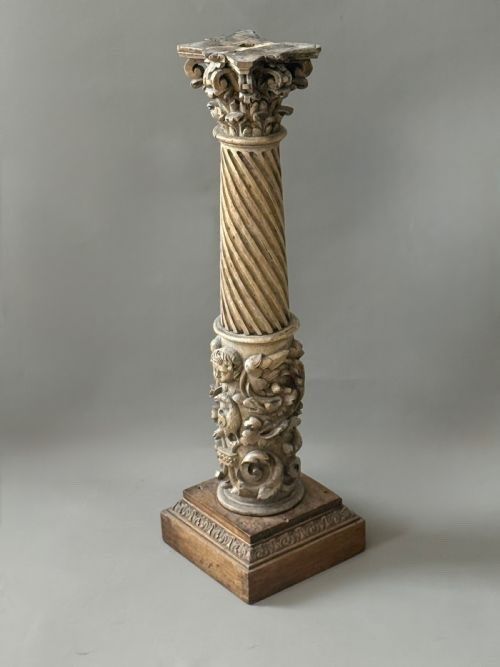
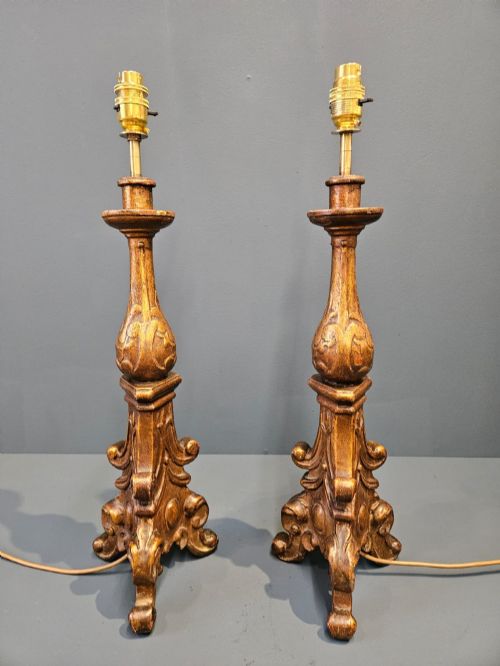
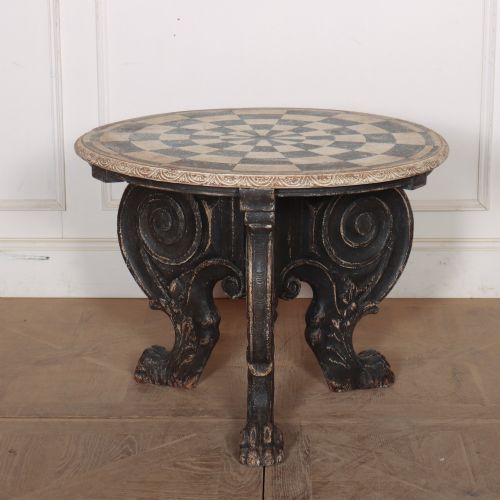
The examples most commonly met on this page span the seventeenth, eighteenth, and nineteenth centuries, alongside early twentieth-century interpretations. Forms vary from monumental carved wooden pillars and caryatids to converted altar candlesticks and walnut lamp tables.
Continental workshops dominate the selection, bringing distinct regional ornament to each base. Oak, walnut, and gessoed timber appear frequently, often retaining traces of historic gilding or silver leaf.
Materials and construction
Makers relied on dense hardwoods such as oak, walnut, and pine as the structural core for these lamps and candle stands. Timber was hand-carved with deep relief, utilising traditional chisels to achieve the characteristic scrollwork, figures, and foliage.
Giltwood and gesso surfaces required meticulous preparation, applying layers of chalk or plaster over the carved wood before gilding with gold leaf. Many pieces demonstrate the application of silver leaf or historic polychrome finishes to enhance their dramatic visual weight.
Watch for carved cherubs and mythical dolphins holding up the room.
Evaluating craftsmanship and survival
The distinction between ordinary and exceptional pieces rests upon the crispness of the hand carving and the depth of the relief work. Finer examples display confident proportions and anatomical precision in figures like caryatids or cherubs, whereas simpler versions show more schematic execution.
Surface preservation significantly dictates quality, particularly the survival of original giltwood, gesso, and historic patination on the timber. Pieces that retain their genuine aged finish without heavy modern intervention hold greater integrity.
The Baroque Carved Table Lamps Glossary
- Giltwood
- Wood that has been coated with gold leaf or gold paint over a prepared gesso base. This technique creates a luminous surface that catches candlelight or ambient room illumination.
- Gesso
- A plaster-like mixture applied to wood surfaces as a smooth foundation for gilding and painting. It allows intricate carved details to remain sharp beneath metal leaf applications.
- Caryatid
- A sculpted female figure serving as an architectural support column. In lighting fixtures, these figures form the main upright shaft of the lamp base.
- Altar candlestick
- A tall wooden candlestick originally used in religious settings. Many surviving examples are later adapted to function as table lamps while retaining their ecclesiastical proportions.
Baroque Carved Table Lamps: Frequently Asked Questions
Are these original antique lamps?
The evidence shows bases originating from the seventeenth century onwards, encompassing period altar candlesticks, timber pillars, and architectural elements.
Many of these historical objects were converted to electricity during later periods to serve as functional domestic lighting.
How do I place them in a modern room?
Their substantial height and ornate carving make them suitable as focal points on side tables, piers, or large credenzas.
Pairing them with simple fabric shades helps balance the visual weight of the heavily carved timber and gilt surfaces.
How do I tell Italian pieces from Flemish ones?
Italian examples frequently employ giltwood, walnut, and dynamic figural motifs such as dolphins or caryatids reflecting Southern European grandeur.
Flemish and German pieces tend to utilise carved oak with robust architectural mouldings and traditional Northern structural forms.
What maintenance do giltwood bases need?
Giltwood and gesso surfaces require gentle dusting with a soft dry brush to protect the delicate metallic leaf from abrasion.
Keeping them away from direct moisture and strong heat sources preserves the historic ground and prevents the timber from splitting.