

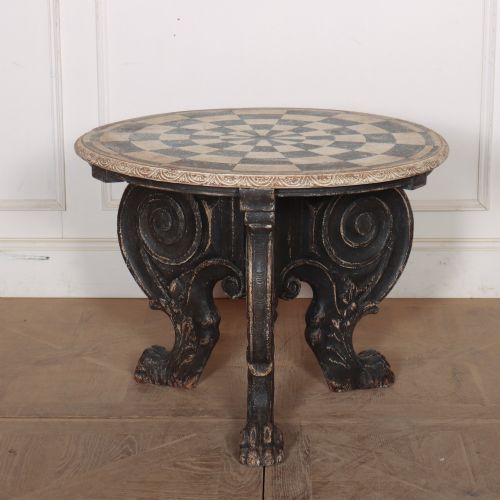
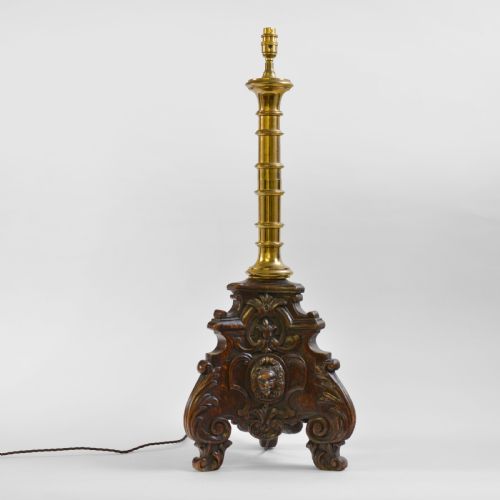


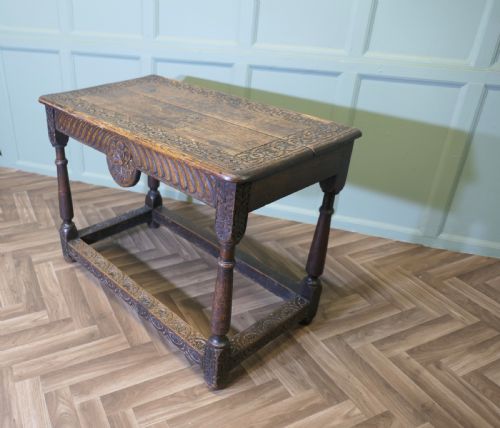

Gothic Oak Table Lamp
These gothic oak table lamp and related pieces bring heavy timber grain and ecclesiastical forms straight into a domestic room.
Gothic Oak Table Lamp
A gothic oak table lamp search brings up a tight selection of timber lighting fixtures alongside heavy occasional and side tables sharing the same vocabulary. Most examples draw on nineteenth century revivals, deploying the vernacular of medieval architecture within domestic settings.
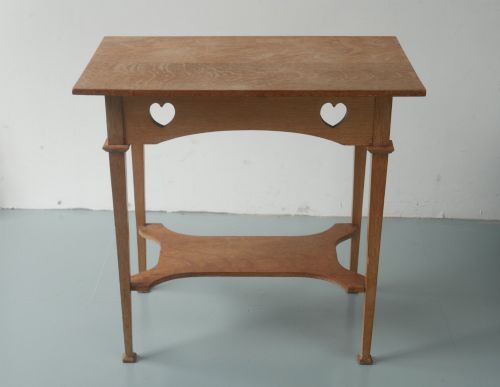
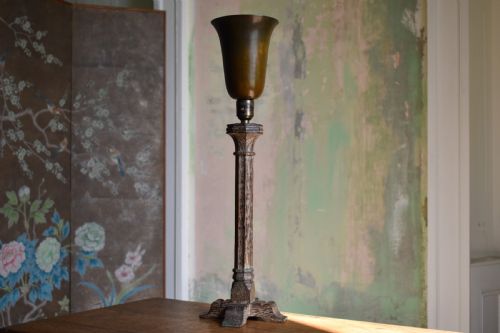
The listings here mix dedicated lamp bases with small tables suited to hold a light, spanning side, centre, and occasional forms. Pieces range from Victorian interpretations up to limed oak and ebonised variations from the early twentieth century.
Makers and designers working in this sphere borrow heavily from Celtic, Flemish Baroque, and Arts and Crafts idioms. The core material remains oak, sometimes paired with brass or ceramic tile to build up the heavy, dark surface texture.
Materials and construction
Construction relies heavily on solid oak, selected for its strong grain and capability to take deep carving. Workshops also utilise walnut, painted wood, and ebonised wood to achieve dark, weighty surfaces.
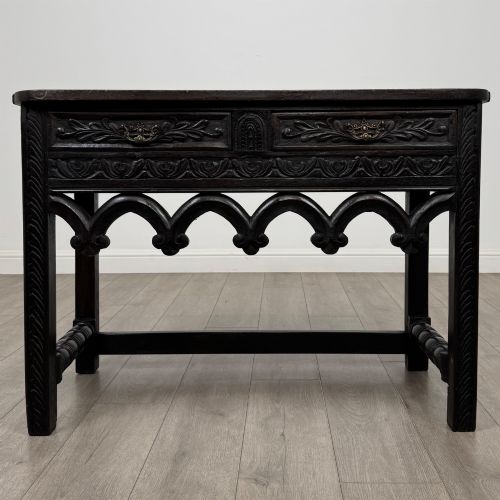
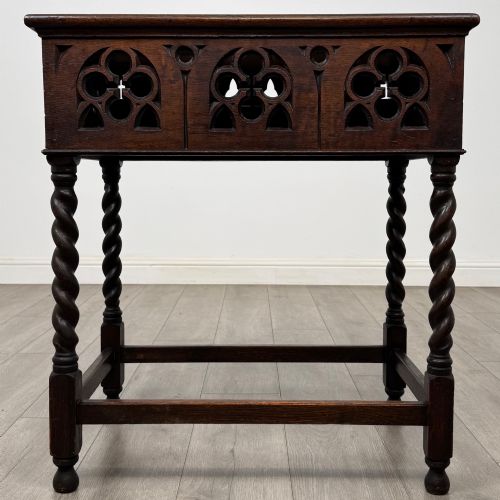
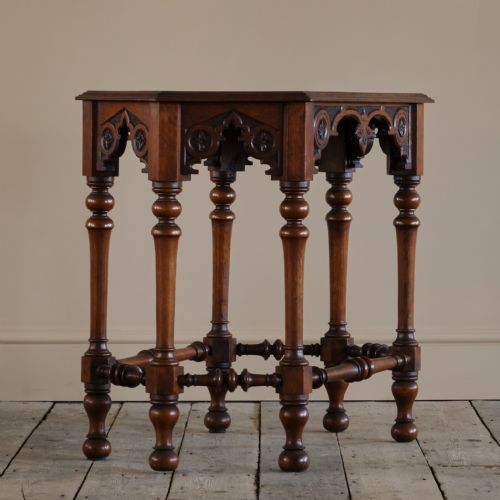
Carving defines the style, with makers cutting tracery, linenfold, and geometric strapwork directly into the timber. Elements like brass fittings or ceramic tiles are integrated into table tops and lamp bodies to break up the sombre expanse of wood.
Current listings span the seventeenth century through to the nineteen twenties, uniting oak, walnut, and ceramic tile.
Judging the execution
Quality rests on the crispness of the timber carving and the architectural proportion of the piece. Stronger examples show deeply undercut mouldings and confident handling of Gothic Revival motifs rather than shallow, mechanical scoring.
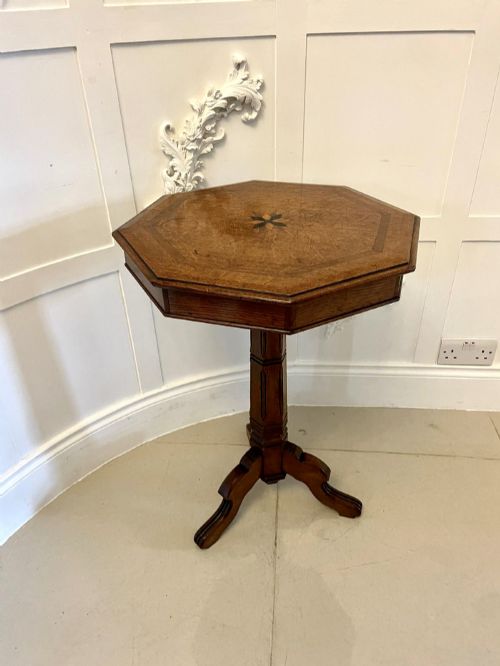
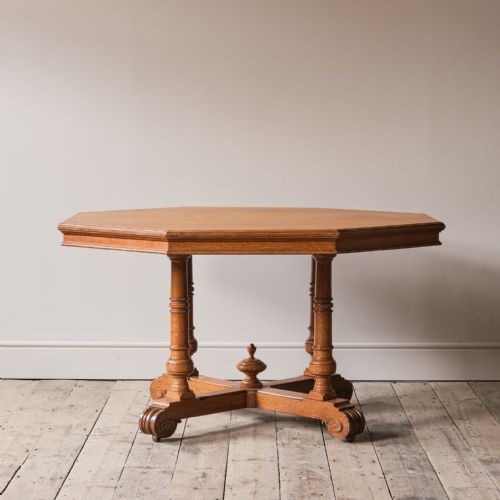
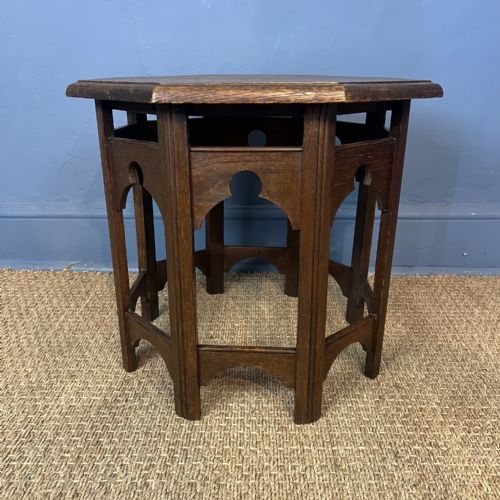
The choice of timber grain and the integrity of the joints dictate longevity. Finer items display thoughtful selection of quarter-sawn oak, allowing the medullary rays to catch the light across octagonal tops and heavy pedestals.
Baillie Scott
The Gothic Oak Table Lamp Glossary
- Gothic Revival
- An architectural and decorative style drawing on medieval ecclesiastical forms, prominent during the Victorian period. It introduces pointed arches, trefoils, and heavy timber into furniture design.
- Arts and Crafts
- A design movement valuing honest construction and traditional handcraft, often seen in simple yet robust oak furnishings. It reacts against industrial mass production by highlighting natural material textures.
- Limed Oak
- Timber treated with a specialised finish that leaves a white pigment in the grain pores. This technique lightens the overall tone while accentuating the natural pattern of the oak.
- Ebonised Wood
- Timber stained or treated to imitate ebony, producing a dense black finish. Makers applied this to create stark, dramatic contrast in nineteenth-century revival pieces.
- Octagonal Table
- A piece featuring an eight-sided top, frequently utilised in lamp and centre tables to break away from standard rectangular formats. This geometry permits complex edge moulding and balanced decorative panels.
Gothic Oak Table Lamp: Frequently Asked Questions
How do I identify a genuine period piece?
Examine the timber shrinkage, tool marks, and joint construction to gauge age. Nineteenth-century revival items show authentic patina and hand-cut detailing rather than modern routing.
Check for consistency in the oak grain and ensure the secondary woods match the period of manufacture. Genuine examples display wear patterns appropriate to their age.
What is a gothic oak table lamp?
These items are lighting fixtures or small support surfaces carved with medieval architectural motifs. They translate stone church details into domestic timber furniture.
Many pieces double as small lamp tables or adapt historic occasional tables to hold lighting. The aesthetic relies on dark oak, pointed arches, and robust proportions.
Where should I place one in my home?
Position these substantial oak pieces where their rich grain and heavy carving can anchor a room. They suit studies, hallways, or living spaces alongside neutral walls.
Ensure adequate clearance around octagonal or hexagonal tops so the geometric shape remains visible. Pair them with simple textiles to let the dark timber stand out.
How do I care for antique oak?
Maintain the timber by dusting regularly with a dry cloth and avoiding excessive moisture. Apply a quality wax periodically to nourish the dry oak grain.
Keep pieces away from direct heat sources and strong sunlight to prevent the timber from splitting. Gentle maintenance preserves the historic surface finish and patina.