
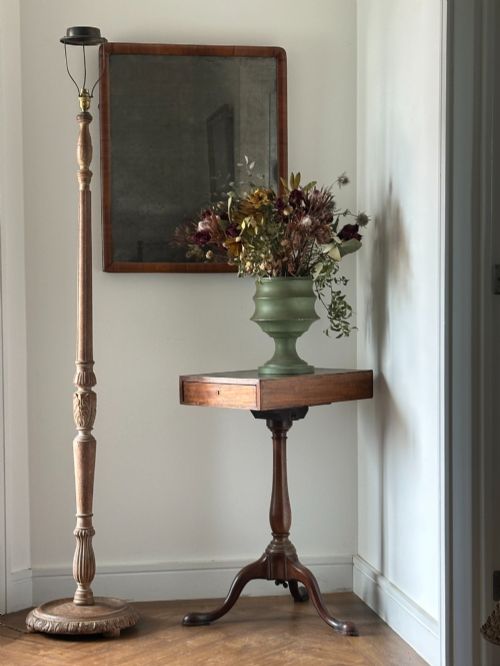
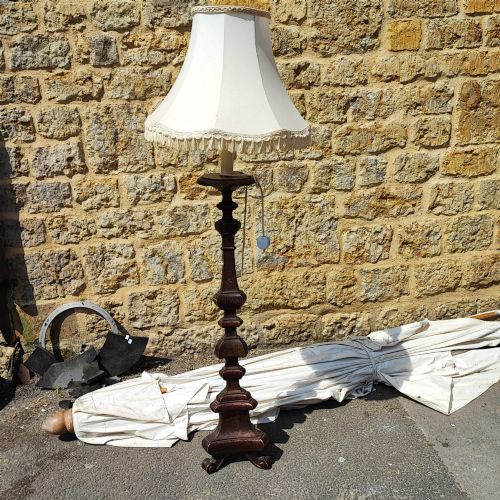
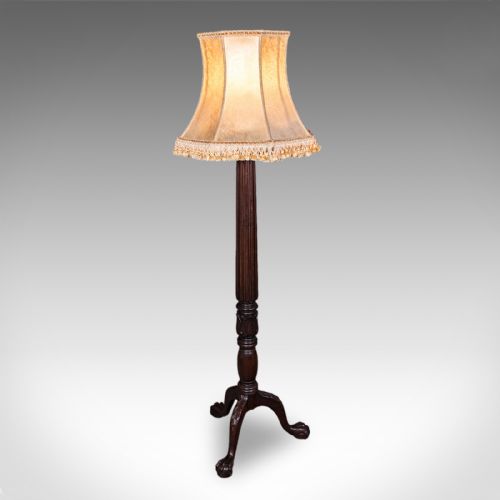
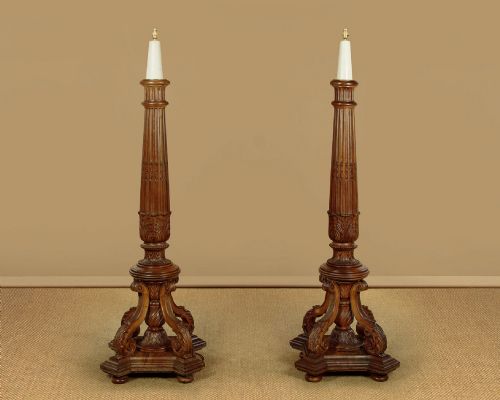
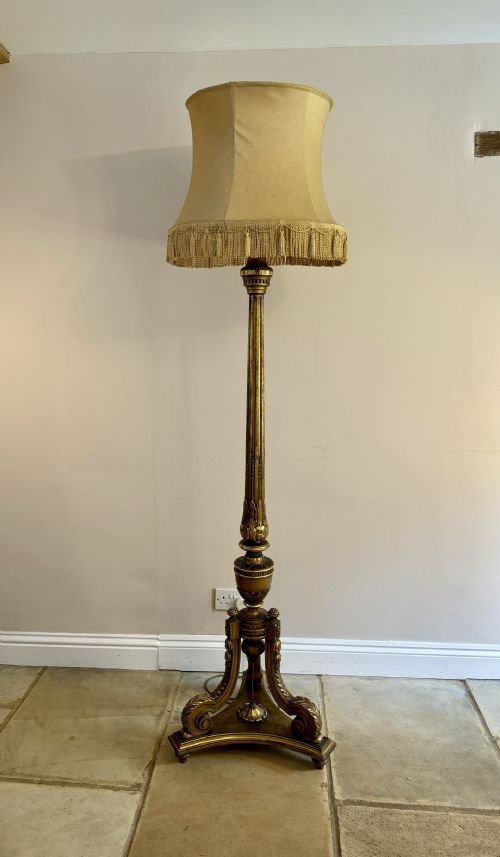
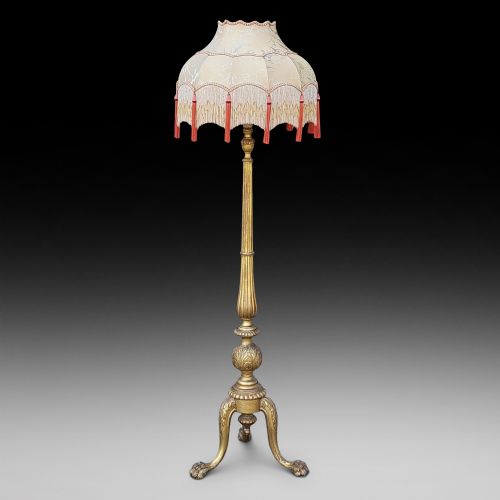


Traditional Carved Floor Lamp
These traditional carved floor lamp examples bring height and presence to a room, offering both character and functional illumination.
Traditional Carved Floor Lamp
When you search for a traditional carved floor lamp, you encounter substantial vertical lighting fixtures designed to anchor a corner or sit beside seating. The selection spans periods from the Victorian era through the Edwardian years and into the interwar period.
Most pieces on this page appear in carved wood forms, including mahogany, oak, padauk wood, and giltwood. Standard lamps and floor lights dominate the inventory, often incorporating decorative details such as parcel gilt finishes or neoclassical motifs.
Origins range across English, French, and Italian workshops, reflecting diverse revival styles like William IV and Regency. These variations ensure that each lamp carries a distinct historical footprint while serving a practical domestic purpose.
How they were made
Maker techniques rely heavily on solid timber construction, utilising woods like mahogany, oak, and walnut shaped through detailed hand carving. Cabinetmakers turned and shaped the columns before applying finishes such as liming, parcel gilt, or heavy gilding to the gesso and wood.
Metal elements appear in brass, bronze, and mixed metal components that provide structural stability and weighted bases for the tall wooden shafts. Fabric shades typically complete the construction, paired with internal wiring adaptations made during subsequent decades.
Listings feature woods including mahogany, oak, walnut, and padauk, alongside giltwood and bronze finishes across several decades.
What varies in quality
The standard of carving defines the upper tier of these pieces, distinguishing crisp, deep relief work from softer, mechanical shaping. Wood selection also dictates grade, with dense timbers like mahogany and walnut holding finer detail than lesser woods.
Surface execution separates ordinary examples from exceptional ones, particularly in the application of genuine gold leaf versus modern paint. Proportions, stability of the weighted base, and the integrity of extending mechanisms contribute further to the distinction between tiers.
Whytock and Reid
The Traditional Carved Floor Lamp Glossary
- Standard lamp
- A term commonly used in British English for a floor lamp or tall standing light fixture. It usually consists of a heavy base, a vertical column, and a fitting at the top for a shade and bulb.
- Giltwood
- Timber that has been coated with gold leaf or a gold-coloured metallic finish. This technique was frequently applied to decorative furniture and lighting during the Victorian and Edwardian periods.
- Parcel gilt
- A decorative treatment where only specific portions of an object are gilded, leaving the underlying wood or paint visible elsewhere. This creates contrast and highlights carved details.
- Neoclassical
- A style inspired by classical antiquity, drawing heavily on Greek and Roman architectural motifs. In floor lamps, this appears as fluted columns, acanthus leaves, and urn shapes.
- Padauk wood
- A dense tropical hardwood known for its deep reddish-brown colour and durability. It is often used in fine cabinet making and occasional oriental-influenced pieces.
Traditional Carved Floor Lamp: Frequently Asked Questions
What is a standard lamp?
A standard lamp is simply the traditional British term for what is widely called a floor lamp today. These tall wooden or gilt fixtures are designed to stand directly on the floor and hold a lampshade at eye level.
They generally plug into standard wall sockets and serve as secondary or ambient lighting within a sitting room or study.
How do I date a wooden floor lamp?
Dating relies on examining the timber species, the style of the carving, and the construction methods used on the central column and base. Victorian and Edwardian pieces often display hand-carved motifs like acanthus leaves or fluting that match contemporary furniture styles.
Later interwar pieces may show simpler lines or different finishing techniques, while original wiring components, though usually replaced for safety, can sometimes offer clues.
Can I use modern lampshades on antique floor lamps?
Modern lampshades can be fitted to these lamps provided the inner fitter matches the shade carrier or harp mechanism on the lamp holder. Many older lamps use standard British bayonet fittings that accommodate a wide variety of contemporary or vintage-style shades.
Scale is the main consideration, as a heavy carved mahogany base requires a sufficiently wide shade to maintain visual balance.
Where should I place a floor lamp in a room?
These lamps function best in corners, beside armchairs, or framing larger pieces of furniture where their height can fill vertical space. Because many feature intricate carvings or giltwood surfaces, positioning them away from heavy foot traffic protects the finish.
They provide soft ambient or reading light without requiring table space, making them practical for traditional room layouts.