



Traditional Carved Desk Lamps
Traditional carved desk lamps combine tactile timber, polished metal and classic forms from past centuries to illuminate a working space with genuine character.
Traditional Carved Desk Lamps
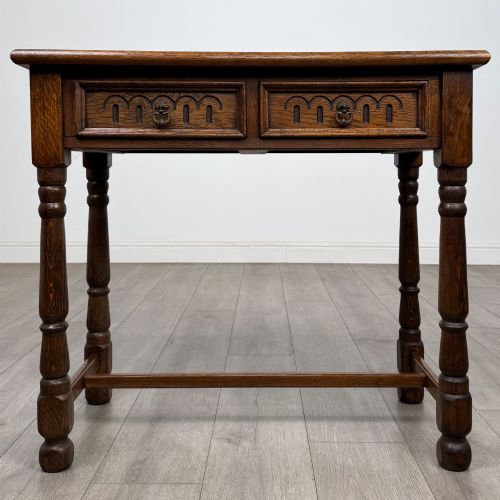
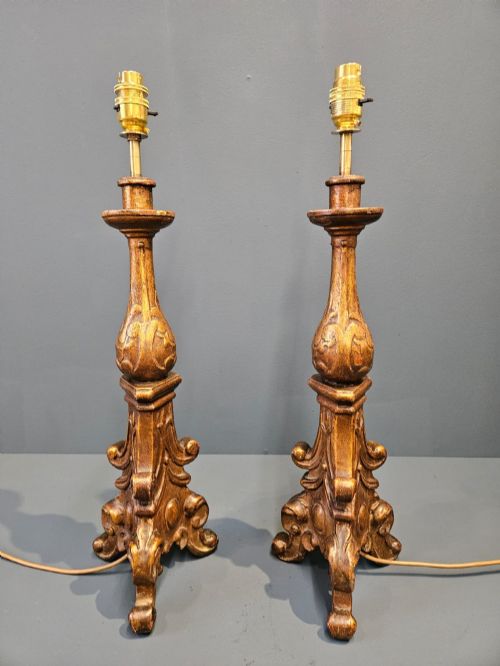
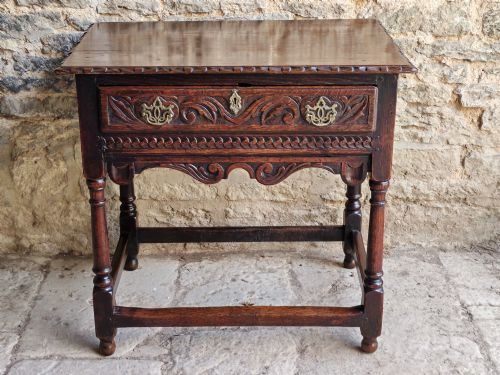
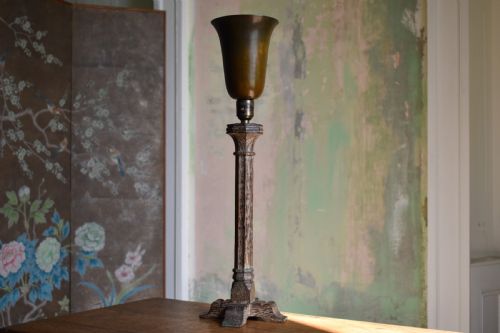
Traditional carved desk lamps encompass items described as table lamps, side tables and lowboys, reflecting how domestic lighting and writing furniture share timber and decorative forms. When exploring traditional carved desk lamps, buyers encounter diverse periods from the eighteenth century through to the Edwardian era, alongside distinct regional styles.
Most examples originate from British, continental European and Asian workshops, including specific expressions like Japanese Meiji period bronzes and Chinese hardwood lantern stands. Buyers frequently meet oak and mahogany lamp bases paired with fabric shades, or converted side tables serving a dual purpose.
Materials and construction methods
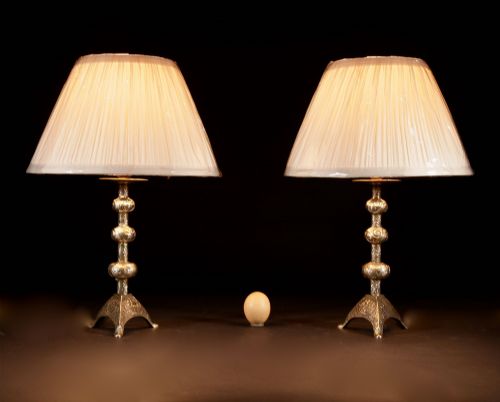
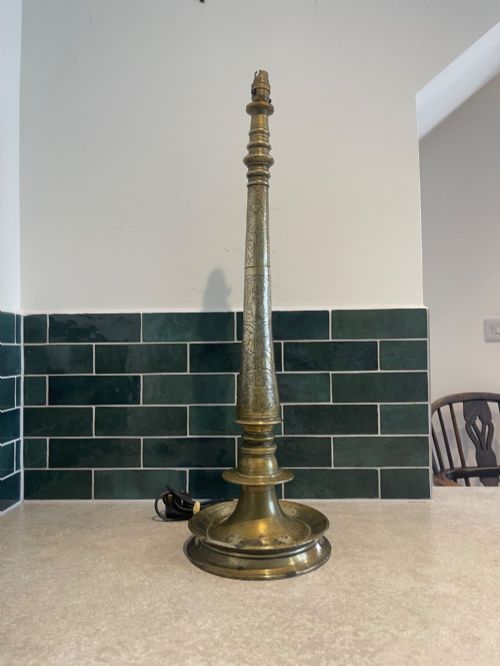
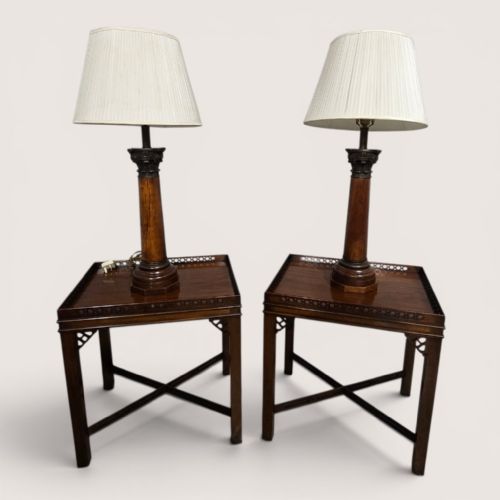
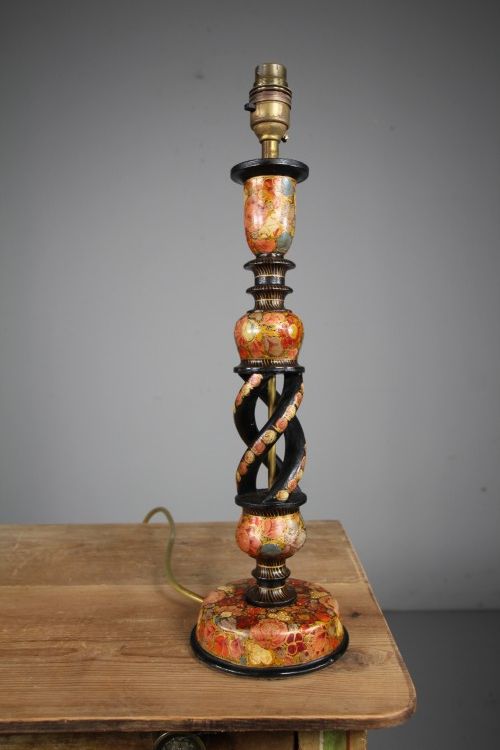
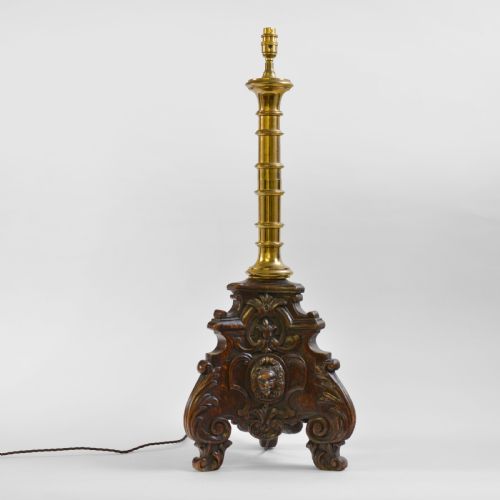
Craftsmen carved dense timbers like oak, mahogany, linden and walnut by hand, shaping cherubs, bears and Corinthian columns directly from the solid wood. Metal elements utilise cast brass and bronze, often finished with gilding or patination to complement the carved wooden bodies.
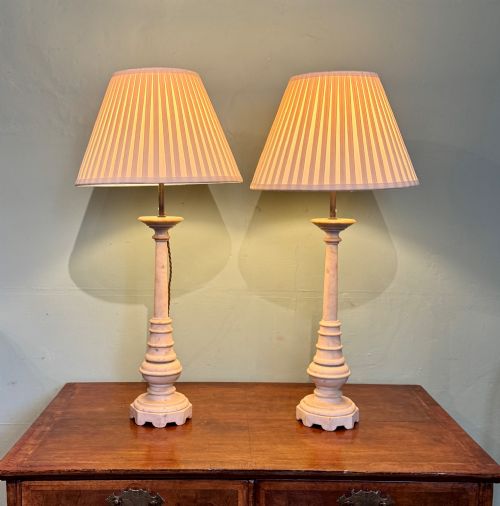
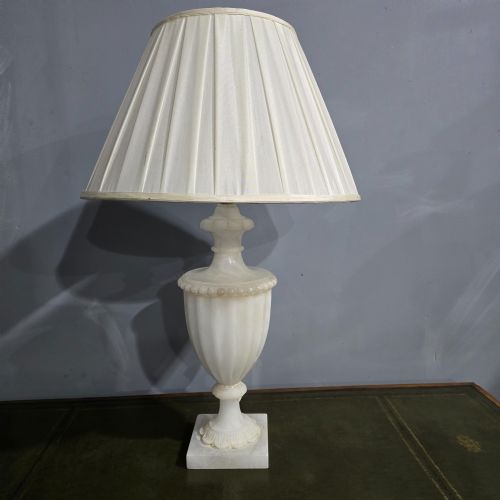
Stone components rely on carved white and Italian marble or translucent alabaster, shaped into substantial bases that support the lighting components. Cabinetmakers constructed the accompanying side tables and lowboys using traditional joinery, incorporating dovetailed drawers and turned legs.
Several pieces feature earnest carved bears and cherubs steadfastly holding up your reading light.
Distinctions in craftsmanship and design
Material selection dictates the overall presence, with dense, figured oak, unblemished alabaster and heavy cast brass setting a higher standard than painted or composite substitutes. The integrity of the original construction, whether in a carved linden animal figure or a mahogany table base, determines long-term stability.
The Traditional Carved Desk Lamps Glossary
- Lowboy
- A small oak or mahogany side table with drawers, frequently utilised as a writing surface or lamp stand in traditional interiors.
- Black Forest
- A nineteenth-century style originating in the wooded mountain regions of central Europe, celebrated for realistic animal carvings such as bears and foliage.
- Alabaster
- A fine-grained, translucent stone utilised for carving lamp bases that diffuse light softly across a desk.
- Neoclassical
- A decorative style drawing inspiration from classical antiquity, often expressed through columns, symmetry and restrained ornamentation.
Traditional Carved Desk Lamps: Frequently Asked Questions
How do I date an oak lamp?
Dating relies on examining the depth of the hand-carving, the type of timber grain, and the overall style of the turning or figural work. Earlier pieces often display tool marks and patination that distinguish them from twentieth-century reproductions.
Hardware, wiring methods and historical wear patterns also help establish the approximate period of manufacture.
Are these lamps safe for modern use?
Many older lamps have been rewired to meet contemporary standards, though professional inspection by a qualified electrician remains recommended before regular daily use. Preserving the original carved body while updating internal components ensures safety without compromising historical integrity.
Shades added to these bases should match the scale and thermal requirements of modern bulbs.
What is a lowboy used for?
A lowboy functions primarily as a small side table or writing desk equipped with one or more drawers. In a study, it provides a stable surface for a lamp and writing materials while occupying minimal floor space.
Its compact proportions made it versatile for hallways and parlours across the eighteenth and nineteenth centuries.
How do I maintain carved wood?
Regular dusting with a soft, dry cloth prevents particulate accumulation within the intricate recesses of the hand-carving. Avoiding direct sunlight and maintaining stable room humidity protects the timber from splitting or warping over time.
Application of appropriate natural wax feeds the wood and preserves its historical finish.