

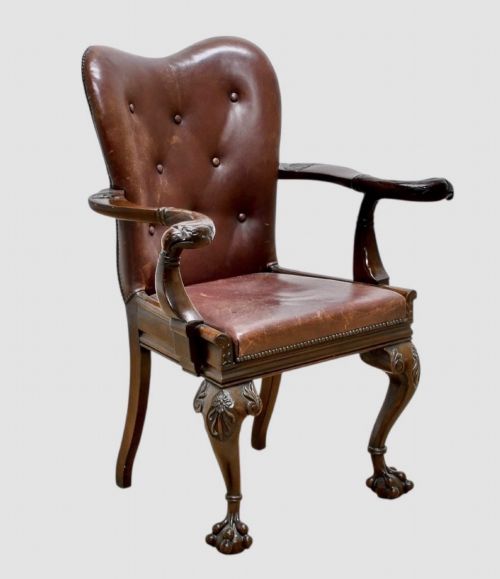


Traditional Captain Seat
A traditional captain seat brings sturdy timber framing and deep-seated comfort to a desk or study, combining functional work use with classic country house character.
Traditional Captain Seat
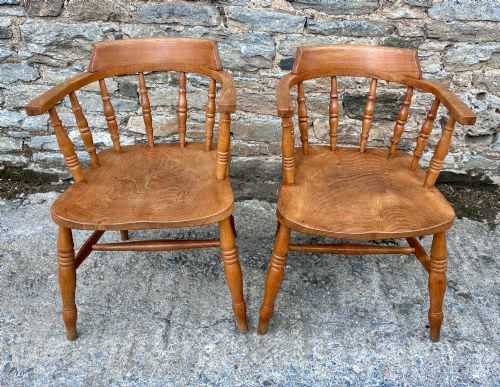
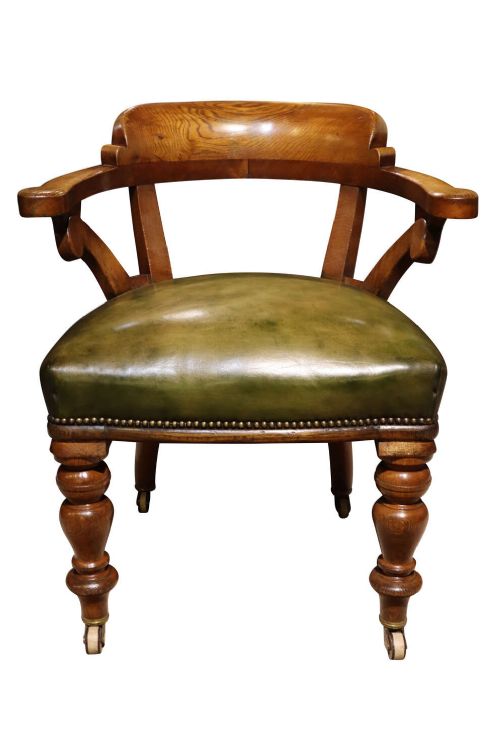
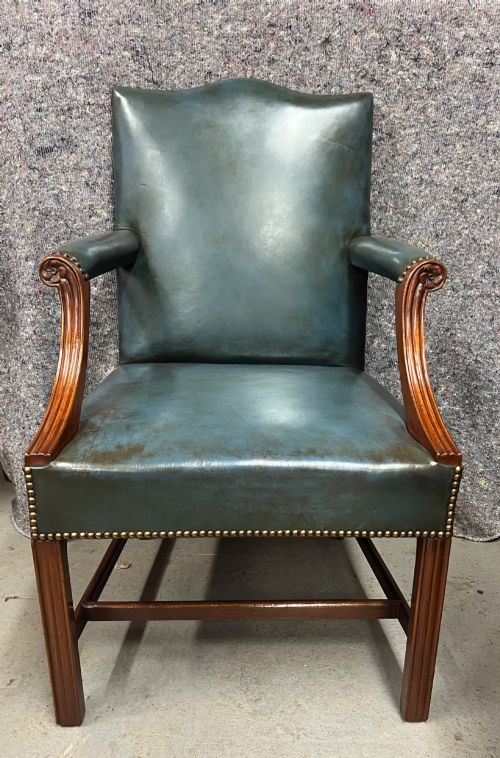
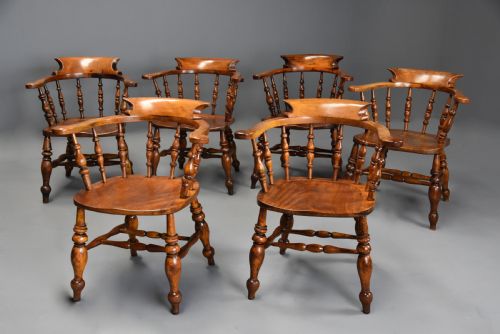
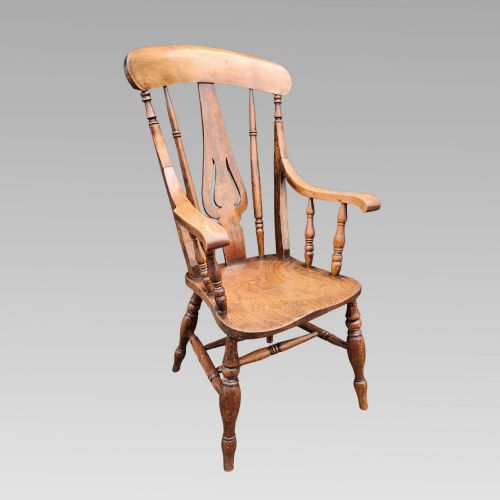
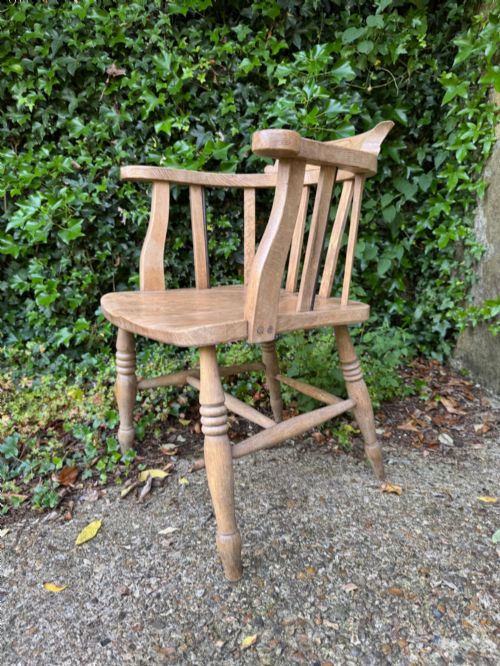
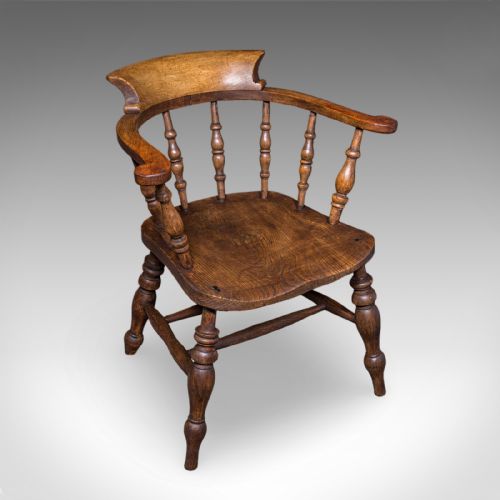
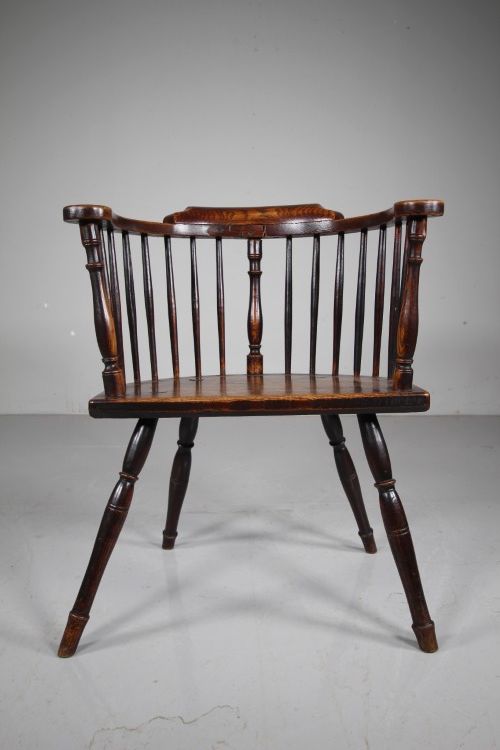
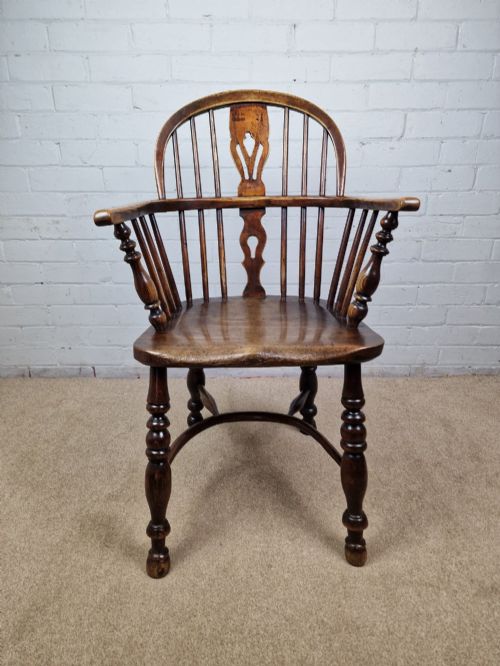
A traditional captain seat encompasses sturdy wooden armchairs and desk chairs built for prolonged seating, often featuring low backs and robust elbow rests. When searching for a traditional captain seat, buyers encounter vernacular Windsor forms, smokers bows, and heavier library or office armchairs originating from the nineteenth and early twentieth centuries.
The material palette of a traditional captain seat relies heavily on native timbers such as elm, ash, beech, and oak, frequently paired with supple leather or hide upholstery. Many examples demonstrate regional English country craftsmanship, merging utilitarian seating requirements with vernacular aesthetic traditions spanning the Georgian, Victorian, and Edwardian eras.
How they were made
Makers constructed the timber framework of a traditional captain seat using turned spindle supports, steam-bent arm bows, and deeply saddled solid wood seats designed for ergonomic endurance. Common joinery methods included wedged tenons and mortise joints that locked the uprights firmly into the heavy plank seat.
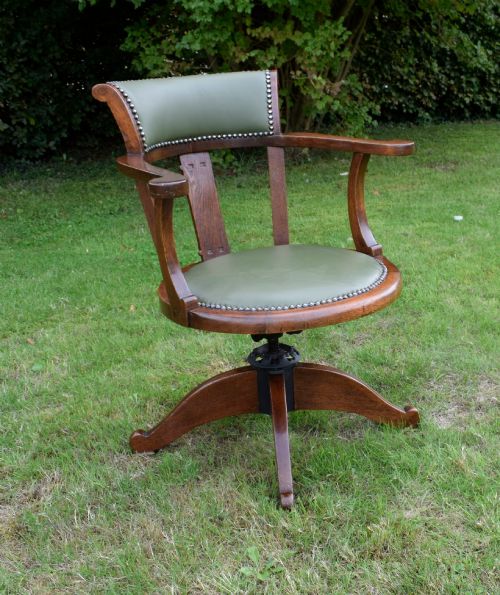
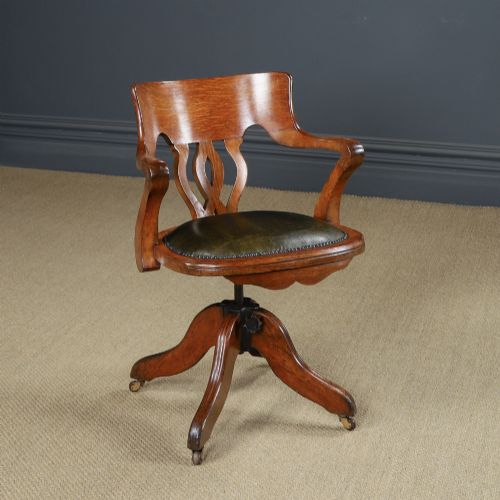
Revolving and tilting mechanisms emerged in later office iterations, incorporating iron swivel screws and brass fittings to allow movement for desk work. Upholstered variants utilised supportive stuffing secured beneath green or tan leather hides fixed with brass studding along the wooden borders.
Some nineteenth-century writers blamed unstable office swivel chairs for unexpected afternoon tumbles during heated bookkeeping.
What varies in quality
The distinction between ordinary and superior pieces rests upon the choice of timber and the depth of hand-shaping in the seat itself. A carefully scooped elm seat matched with finely turned spindles demonstrates a higher grade of regional joinery than a purely utilitarian workshop output.
Proportion and structural integrity dictate the standing of an example, particularly in swivel mechanisms and the seamless attachment of steam-bent arm rails. Pieces that retain their original timber surfaces without excessive sanding hold a greater architectural coherence.
Fred Walker Rockley
The Traditional Captain Seat Glossary
- Smoker's bow
- A low-backed wooden armchair with a continuous curved arm rail and turned spindles, closely related to the traditional captain seat. These robust elbow chairs were common in domestic parlours and rural institutions.
- Windsor chair
- A chair built with a solid wooden seat into which the legs and back spindles are directly bored and wedged. Regional variants often pair elm seats with ash or yew superstructures.
- Library chair
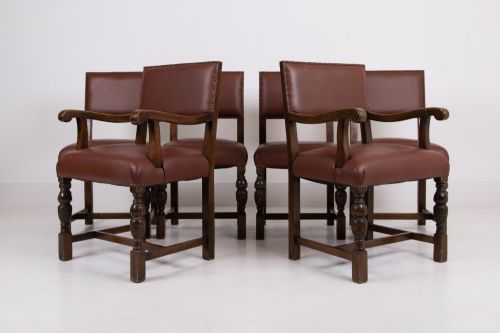
- A heavy upholstered armchair designed for reading rooms and studies, frequently framed in mahogany or oak and finished in leather. They offer wider proportions than standard dining seating.
- Swivel desk chair
- An office chair mounted on a central rotating pivot, often incorporating a tilting mechanism. These designs became prevalent during the late Victorian and Edwardian periods.
- Saddled seat
- A wooden chair seat hollowed out by hand into a concave contour for comfort. This technique requires considerable skill to maintain structural strength while removing timber.
Traditional Captain Seat: Frequently Asked Questions
What is a traditional captain seat?
A traditional captain seat is a sturdy wooden armchair designed for office or domestic use, characterised by a low curved back and a comfortable solid timber or leather-upholstered seat.
Originating in various regional British workshops during the nineteenth century, these chairs served practical roles at desks, libraries, and country tables.
How do I date a captain seat?
Dating relies on examining the timber species, construction joints, and any mechanical swivel hardware present beneath the seat. Earlier nineteenth-century examples often display vernacular turning and solid elm planks, whereas Edwardian versions incorporate iron tilt mechanisms.
Comparing the turned spindle profiles and upholstery attachment methods against known period styles helps narrow down the decade of production.
Were these chairs used at desks?
Many of these sturdy armchairs functioned as primary seating for writing desks, studies, and counting houses. Their robust elbow rests and supportive low backs made them suitable for prolonged administrative tasks.
Later Victorian and Edwardian variants specifically adapted the form into revolving office chairs with adjustable height mechanisms.
How do I care for leather upholstery?
Leather-upholstered desk chairs benefit from occasional cleaning with a damp cloth and the application of a neutral nourishing wax or leather cream. This prevents the hide from drying out and maintains the natural suppleness of the material.
Keeping the timber frame away from direct heat sources also protects the old polish and prevents shrinkage in the wooden joints.