




Traditional Cane Stand
A traditional cane stand brings order to a hallway while keeping walking sticks and umbrellas within easy reach.
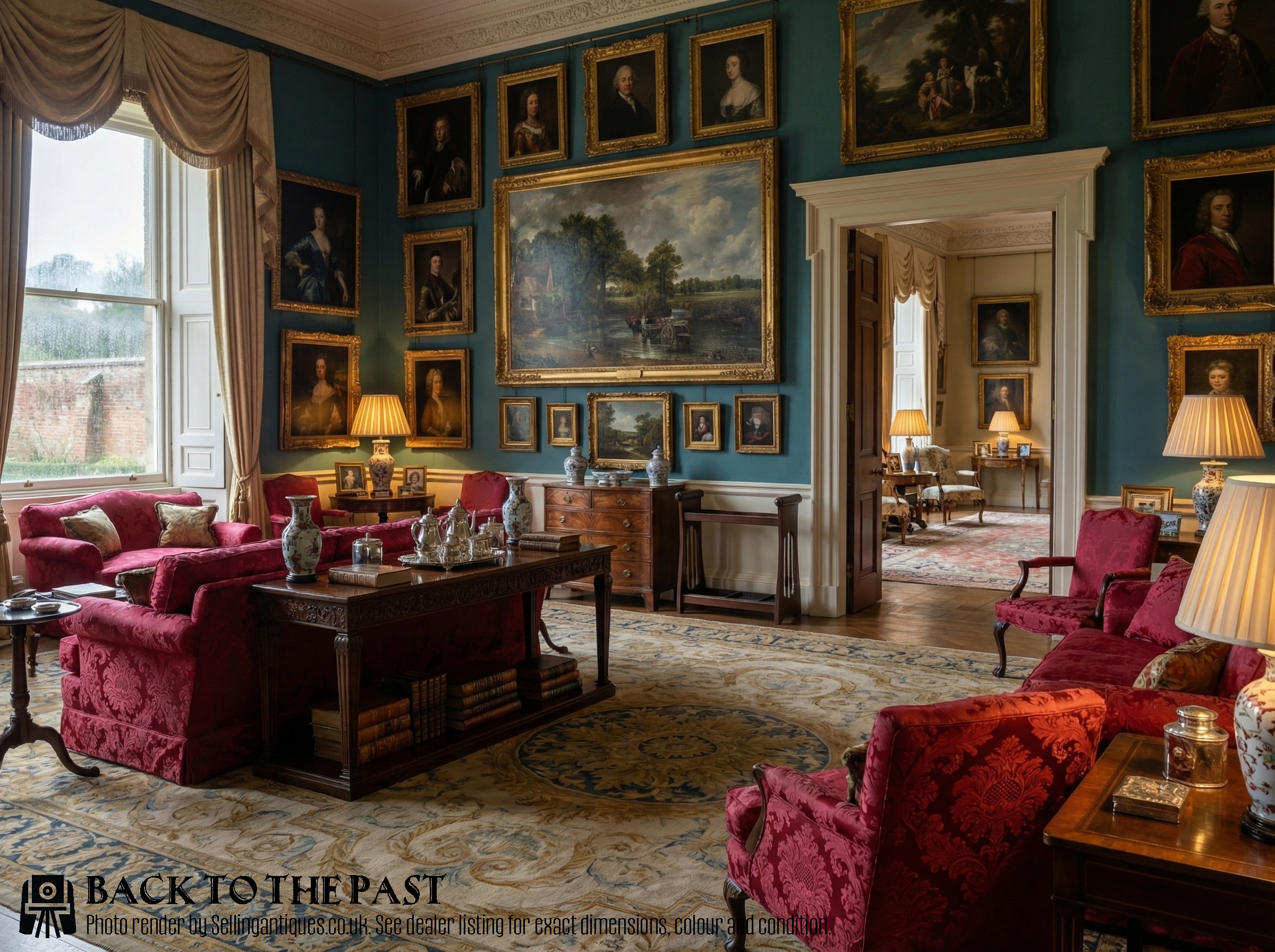
Traditional Cane Stand
A traditional cane stand is designed for the hallway to hold walking sticks, canes and umbrellas neatly upright. The pieces appearing here span the Victorian, Edwardian and early twentieth century periods, reflecting domestic needs from eighteen eighty onwards.
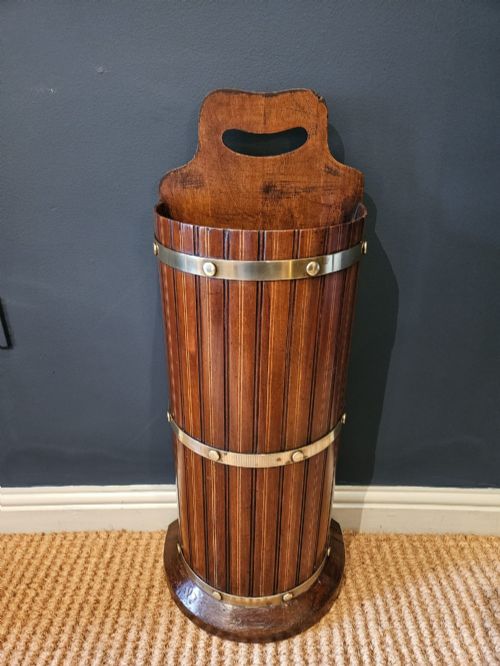
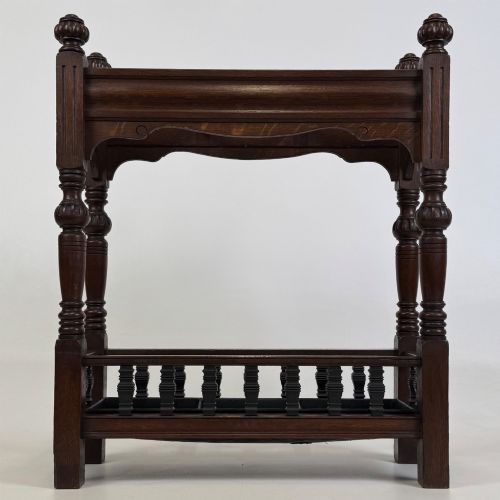
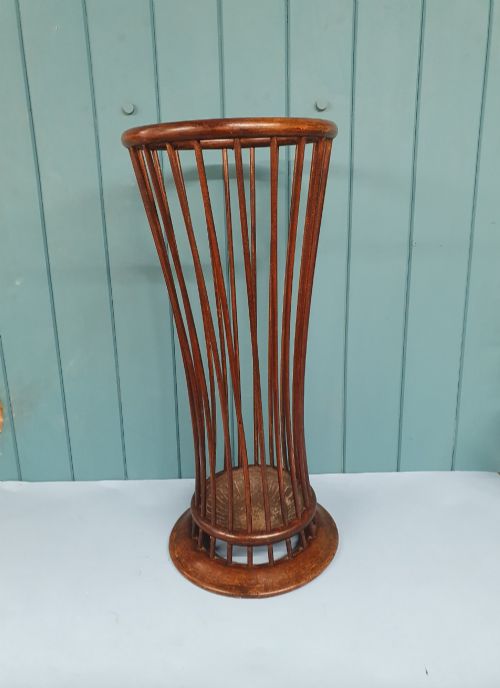
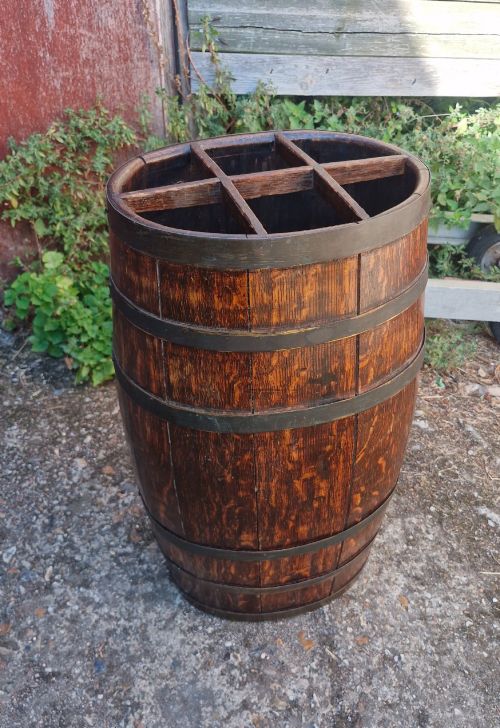
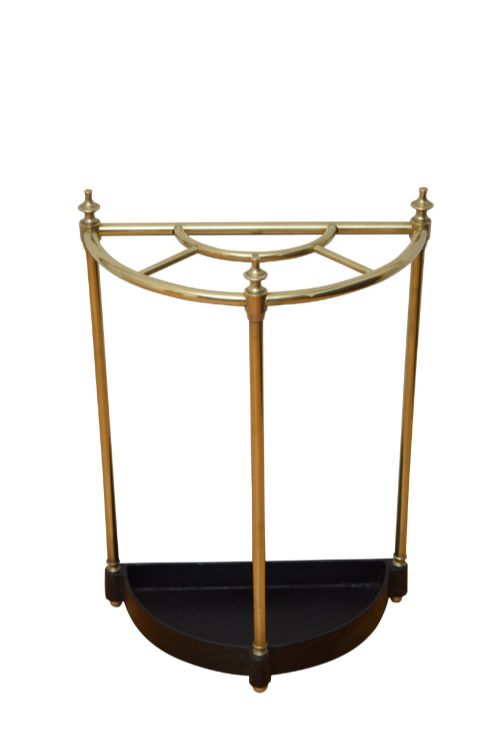
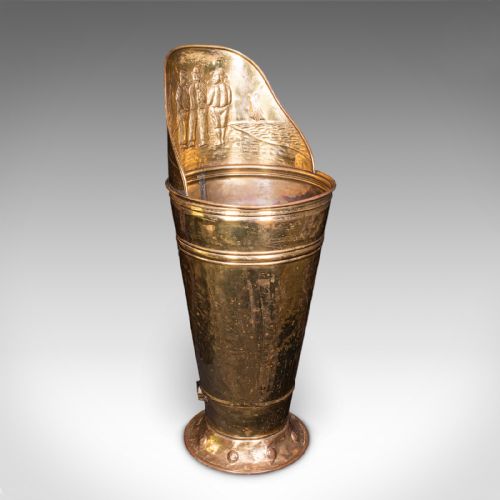
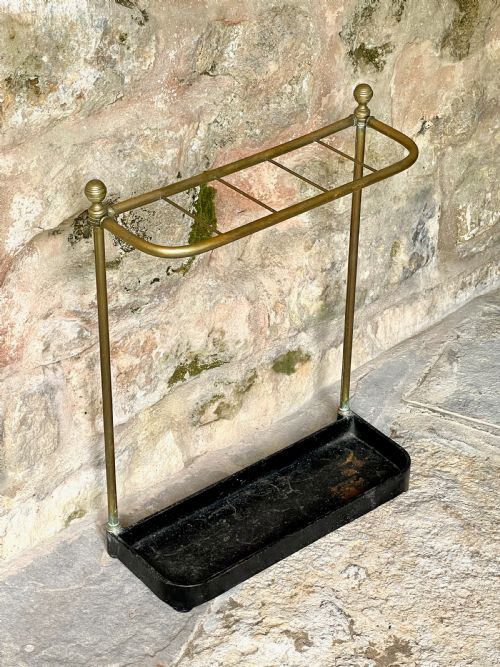
Most examples take the form of floor-standing barrels, corner racks or demi-lune shapes intended to fit compactly against a wall. Oak and mahogany dominate the wooden forms, whilst brass, cast iron and copper provide sturdy alternatives.
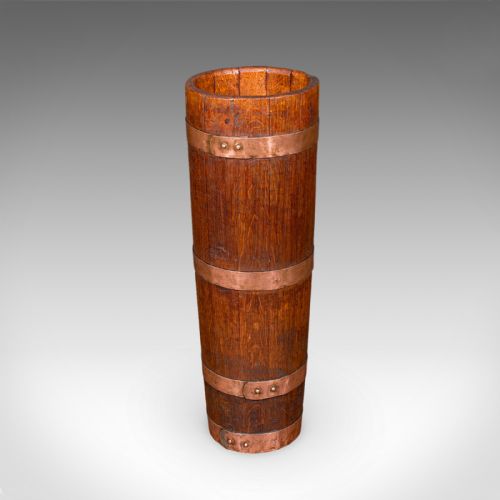
Makers utilised coopered staves for barrel stands and fashioned heavy metals for corner frames. These practical objects suited country houses and town residences alike, offering durable service for daily arrivals and departures.
Materials and Construction
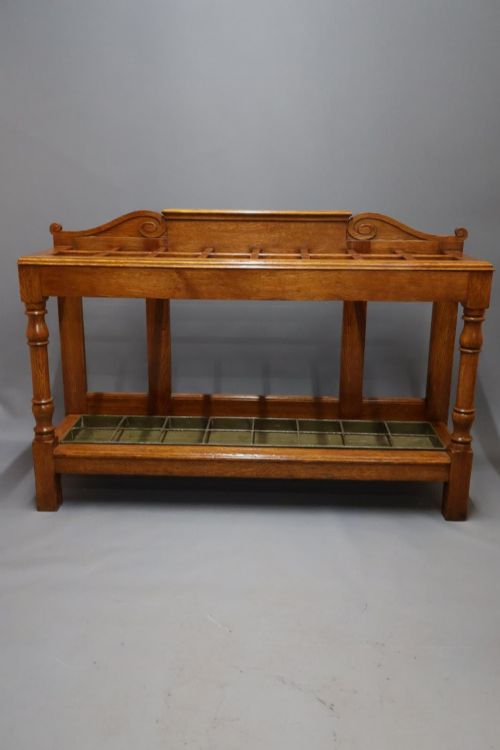
Timbers such as oak, walnut and mahogany are shaped into frames, panels and coopered staves bound with brass hoops. Joinery methods secure upright columns to sturdy bases designed to bear heavy wooden canes.
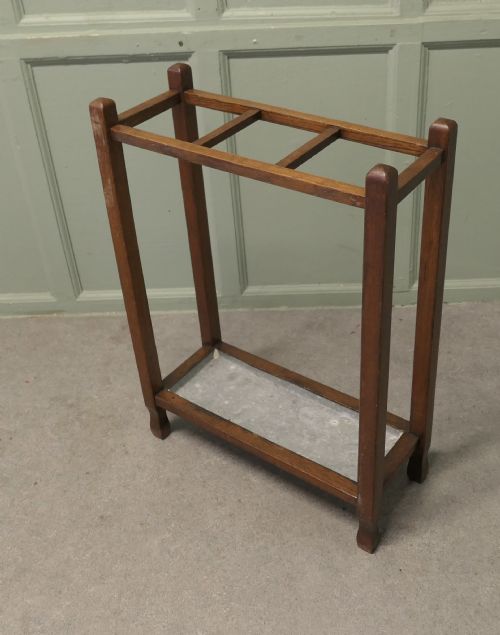
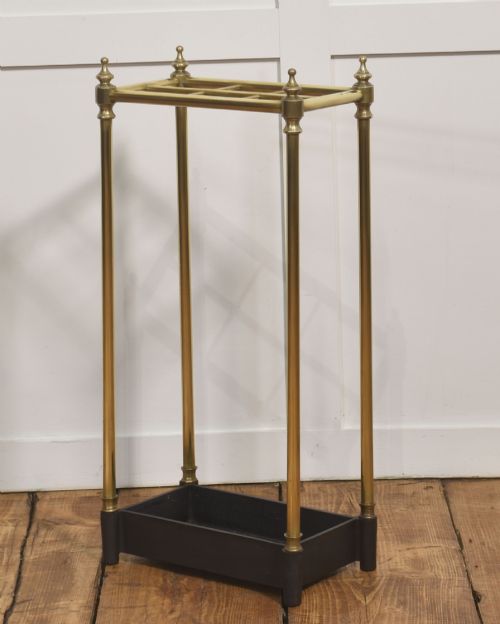
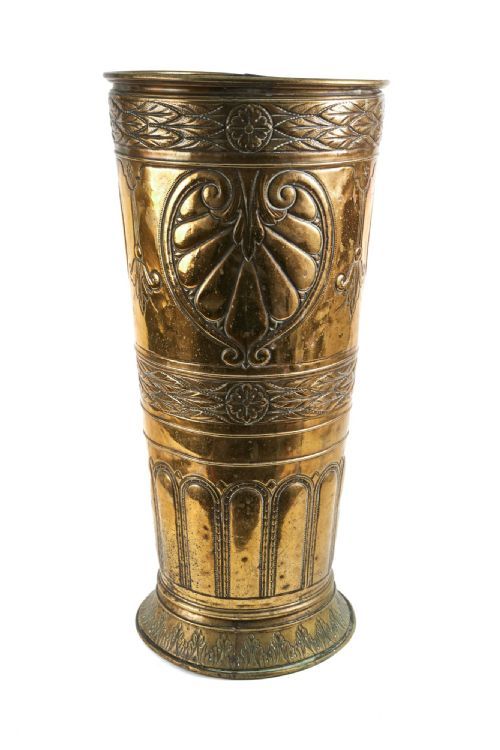
Metal components utilise cast iron, brass and copper, frequently paired with zinc or metal drip trays inserted at the base. These trays catch moisture from wet umbrellas, protecting the timber structure from water damage.
Current listings feature materials ranging from warm oak and mahogany to industrial cast iron, brass, copper and zinc.
Judging Quality
Quality rests upon the selection of timber, the precision of coopered staves and the robustness of the metal mounts. Finer pieces display well-figured oak or mahogany alongside heavy cast brass or iron fittings rather than thin pressed metal.
The presence of original drip trays indicates higher integrity, as these components frequently disappear over decades of use. Proportions also matter, separating simple utilitarian items from more decorative country house furnishings.
Falkirk Foundry
The Traditional Cane Stand Glossary
- Coopered
- Constructed using vertical wooden staves bound together with metal hoops, much like a traditional barrel. This technique ensures stability for holding heavy walking sticks.
- Demi-lune
- A half-moon shape designed to sit flush against a hallway wall. This profile saves floor space while accommodating multiple umbrellas.
- Drip tray
- A metal receptacle placed at the base of the stand to collect rainwater. Original trays are essential for preserving the surrounding timber.
- Arts and Crafts
- A design movement favouring honest construction and visible craftsmanship over mass production. Pieces from this style often feature plain oak and simple geometric lines.
Traditional Cane Stand: Frequently Asked Questions
Where should a cane stand go?
These stands belong in a hallway, porch or boot room where guests and residents enter the house. Placing them near the front door ensures wet umbrellas and walking sticks are deposited immediately upon arrival.
Because many designs feature an open framework or a compact half-moon shape, they tuck neatly against walls without obstructing narrow corridors.
How do I protect the floor?
Most traditional stands include an original metal or zinc tray at the base to catch water dripping from wet umbrellas. Checking for this component prevents moisture from reaching hardwood floors or carpets.
If a tray is missing, placing a small rubber mat underneath the stand offers a practical solution while preserving the piece.
Can they hold golf umbrellas?
Many Victorian and Edwardian stands accommodate wider shafts, though some narrow hallway racks suit slender walking canes best. Barrel-shaped stands and cast iron frames generally offer enough internal space for modern umbrellas.
Inspecting the diameter of the upper dividers helps determine whether oversized items will fit securely.
How do I date an oak stand?
Dating relies on stylistic clues, construction methods and the specific type of oak used in the frame. Pieces displaying golden oak and simplified joinery often point towards the eighteen nineties and the Arts and Crafts movement.
Earlier Victorian examples typically feature darker mahogany or heavily cast iron elements with more ornate decorative details.