
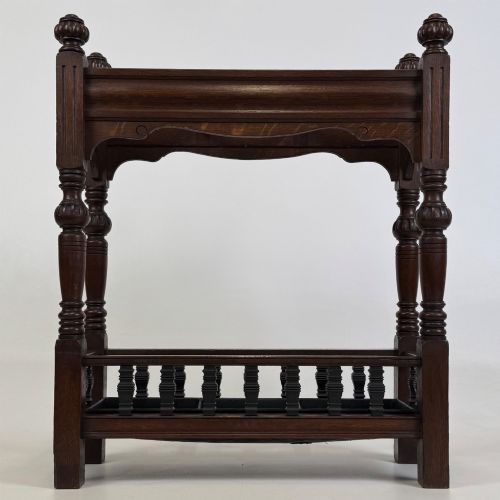
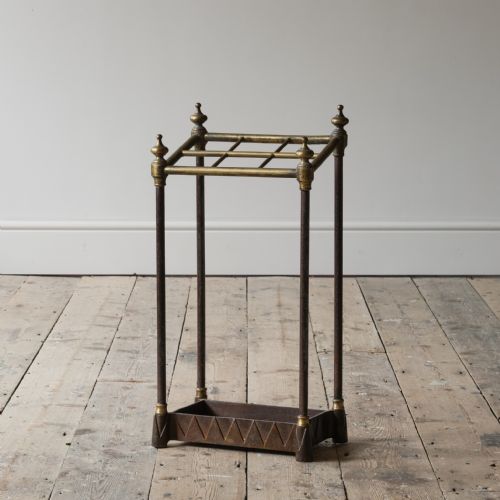
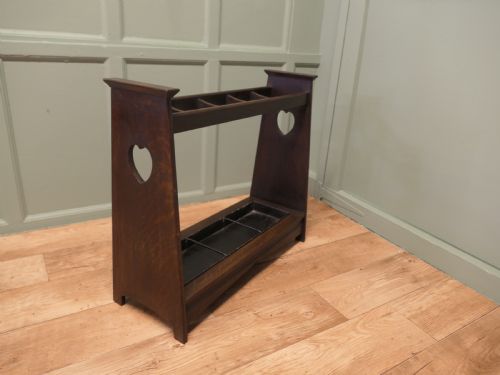

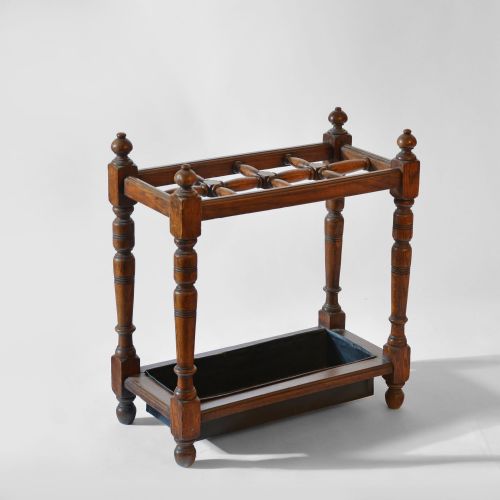

Edwardian Cane Rack
An Edwardian cane rack holds daily walking gear in a hallway while keeping floors dry with proper trays.
Edwardian Cane Rack
When you search for an Edwardian cane rack, you examine hallway furnishings designed to hold walking sticks, canes, and umbrellas in domestic settings. These pieces organise daily accessories near a doorway and manage the wetness brought in from the street.
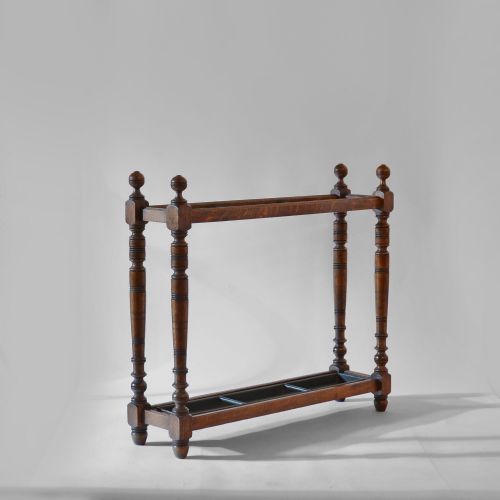
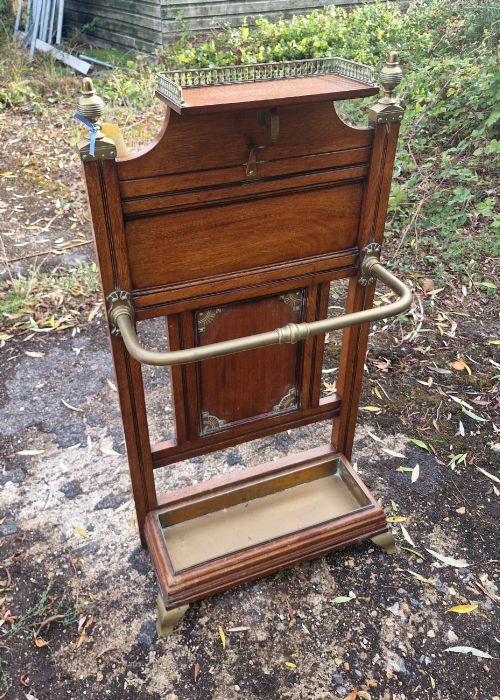
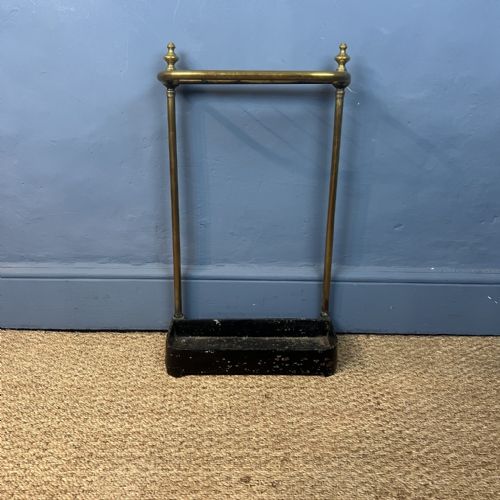
The versions most common on this page appear in durable timbers like oak and mahogany, alongside metal formations in brass and cast iron. They range from compact corner units to wall-mounted or freestanding hall stands built to serve heavy daily use.
Makers of the period also drew on preceding design movements, resulting in items showing Arts and Crafts simplicity, Aesthetic Movement detail, or Gothic Revival structure. Each format balances utility with the architectural character of an Edwardian hall.
Distinctions in construction and design
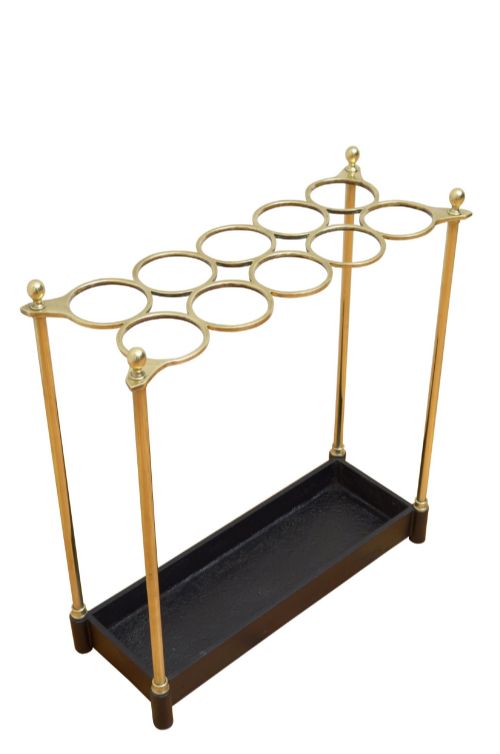
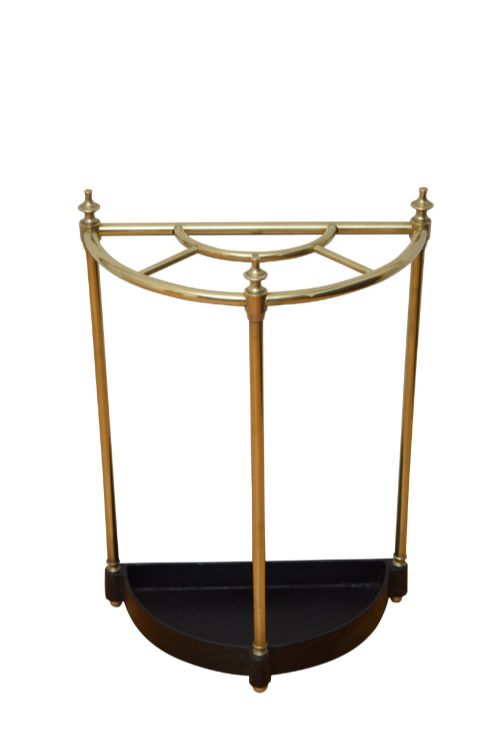
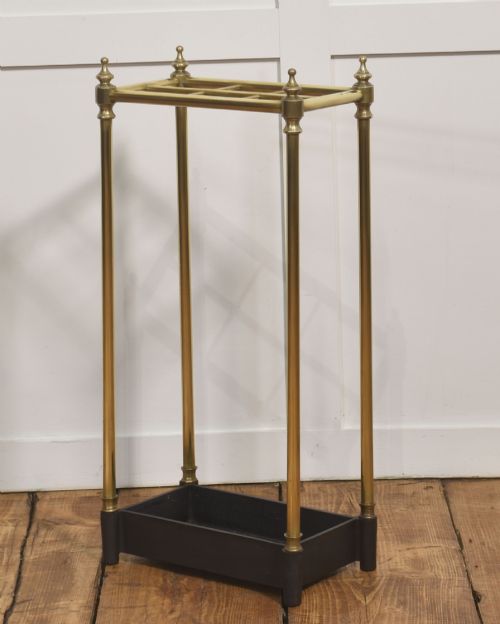
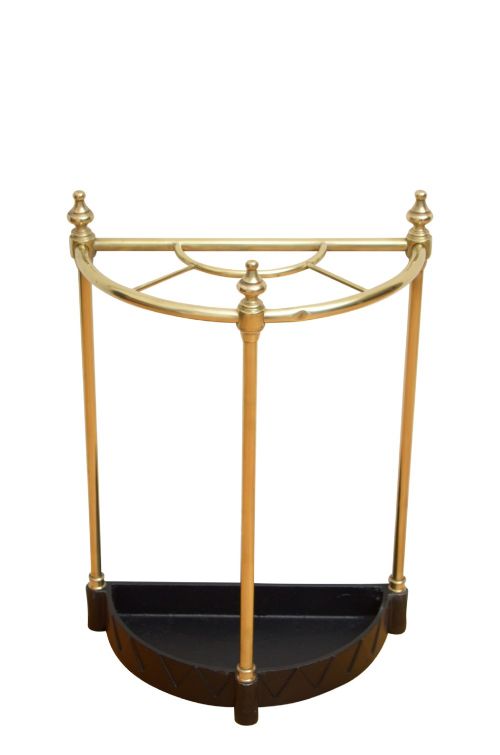
Superior examples show refined metal casting, particularly in brass frames with crisp surface patterns, decorative ball finials, and cleanly integrated dog tooth trays. Lesser pieces rely on thin gauge metals and simpler stamped components that lack distinct relief.
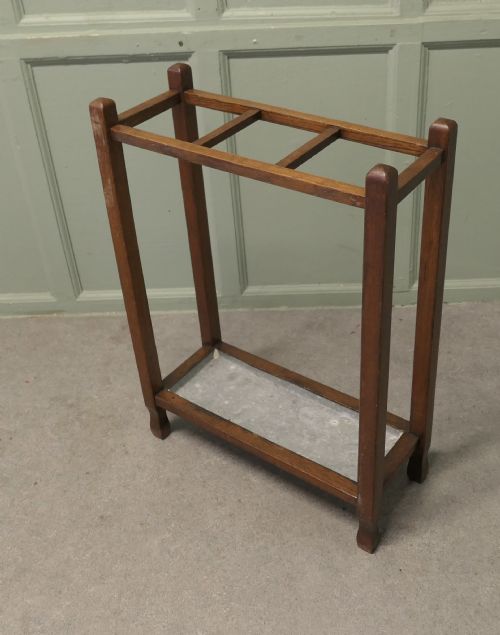
Timber quality separates standard items from exceptional pieces, with dense golden oak or figured mahogany displaying careful grain selection and solid framing. Poorer versions utilise softer secondary woods or lack the structural bracing required to handle daily weight.
Design ambition marks the upper tier of the range, where Arts and Crafts restraint or Aesthetic Movement motifs lift a utilitarian object into a considered decorative piece. Simpler utility stands serve a purely functional role with minimal attention to proportion or ornament.
Listings feature oak, mahogany, bamboo, brass, cast iron, and zinc across various hall stand forms.
The Edwardian Cane Rack Glossary
- Demi Lune
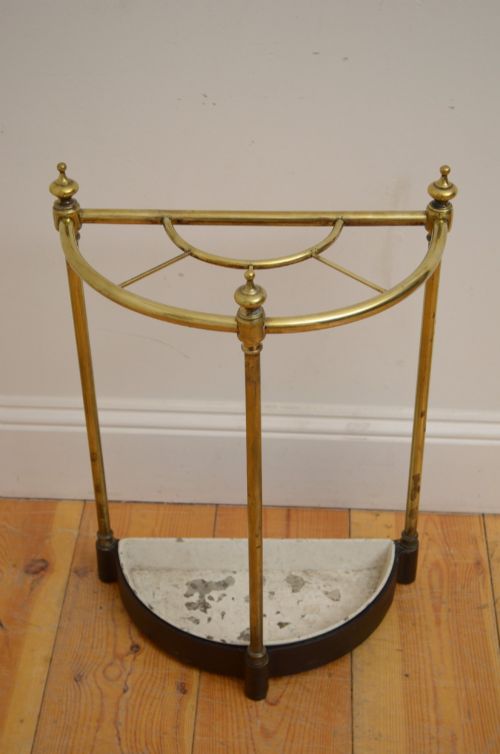
- A half moon shape used for stands designed to sit flat against a hallway wall. This profile saves floor space in narrow entrance passages.
- Drip tray
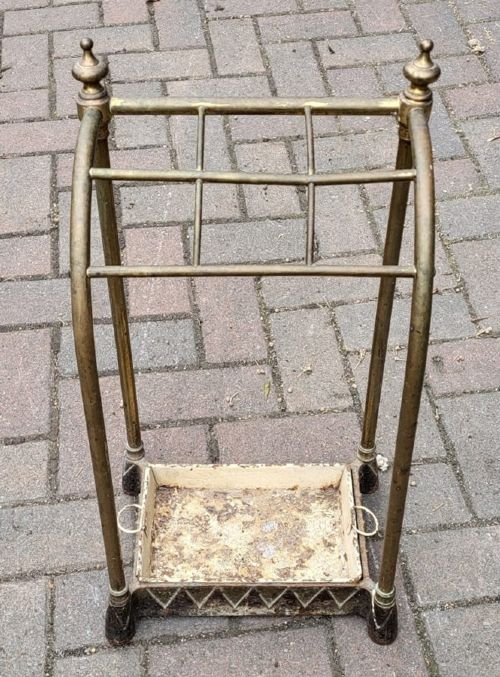
- A metal base insert positioned beneath the rack to catch water from wet umbrellas. These trays remove easily for cleaning.
- Ball finial
- A spherical metal ornament fitted to the top corners or structural joints of a brass stand. It provides a visual termination point for the metalwork.
- Dog tooth tray
- A specific patterned border found on the edge of metal drip trays. This detail adds texture to utilitarian components.
- Hall stand
- A larger entranceway furniture piece combining a cane rack, coat hooks, and often a mirror. It forms a central station for outdoor wear.
Edwardian Cane Rack: Frequently Asked Questions
What is an Edwardian cane rack used for?
These pieces function as dedicated storage for walking sticks, canes, and umbrellas within a domestic hallway. They keep daily accessories organised and immediately accessible near the front door.
Beneath the storage rings, integrated trays collect water from wet items to protect wooden hallway floors from damp damage.
Where should I place a cane rack?
Hallways, porches, and boot rooms serve as the traditional and practical locations for these stands. Placing one near the main entrance ensures wet umbrellas and walking aids are stored before entering living spaces.
Demi lune versions fit neatly against flat walls in narrow corridors without obstructing movement.
How do I care for wooden and brass stands?
Wooden frames require occasional cleaning with a dry cloth and mild beeswax to nourish the timber grain. Avoid placing them directly beside strong heat sources to prevent the wood from drying out.
Brass components benefit from gentle dusting, while removable metal drip trays need regular emptying and drying to prevent surface corrosion.
How do I distinguish Edwardian from Victorian stands?
Edwardian examples often display lighter timber tones, cleaner lines, and simplified proportions compared to earlier Victorian counterparts. They reflect a shift towards brighter, less cluttered hallway aesthetics.
Victorian pieces frequently feature heavier cast iron bases, darker mahogany timbers, and more ornate Gothic or Aesthetic Movement ornamentation.