
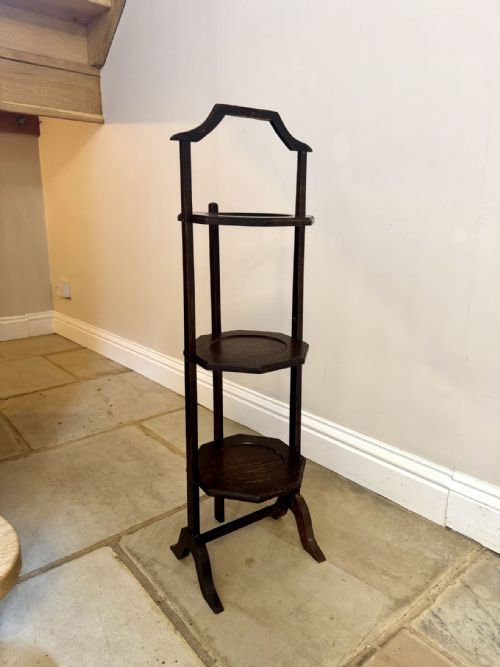


Traditional Cake Tier Stand
A traditional cake tier stand brings stacked elegance to interiors, offering multiple levels for display in solid timbers and polished metals.
Traditional Cake Tier Stand
A traditional cake tier stand provides stacked display surfaces for interiors, taking the form of tiered stands, cake stands, and dumb waiters. These pieces organise tiered levels vertically to save surface space while presenting items clearly.
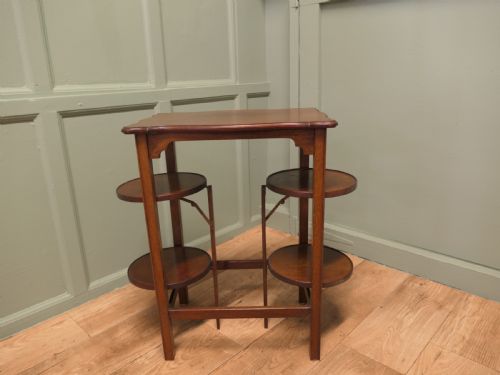
The Edwardian period dominates the selection alongside Victorian examples, spanning the nineteenth and early twentieth centuries. Forms range from revolving two-tier designs on tripod bases to folding structures with three or four tiers.
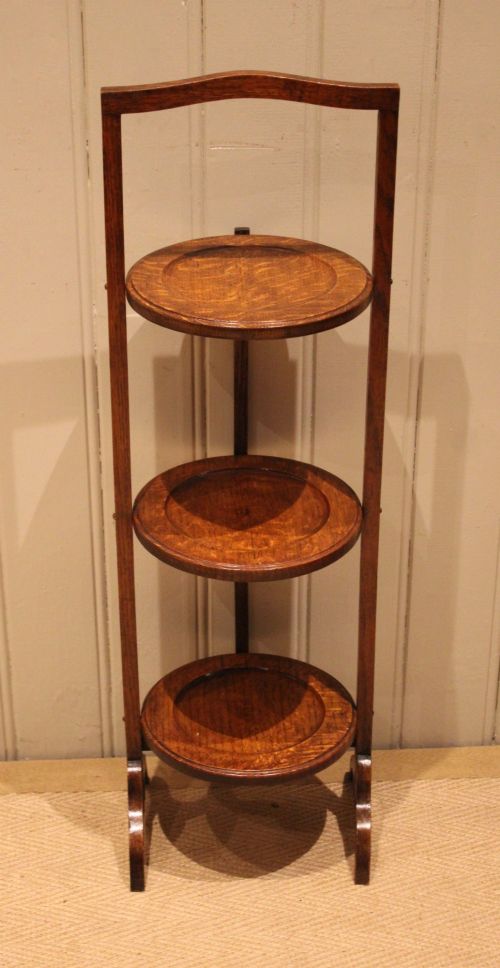
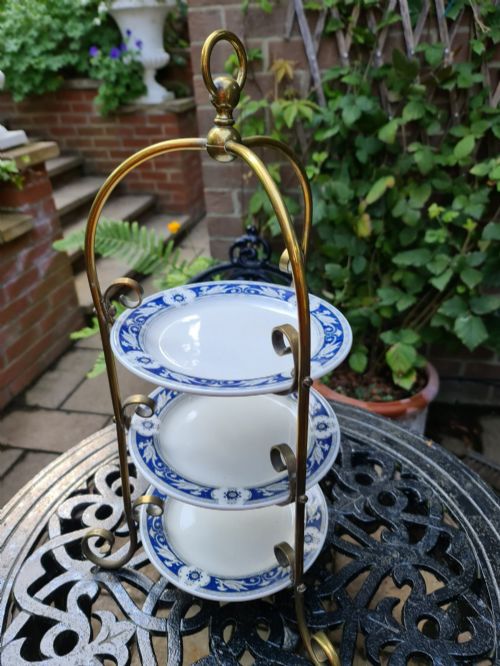
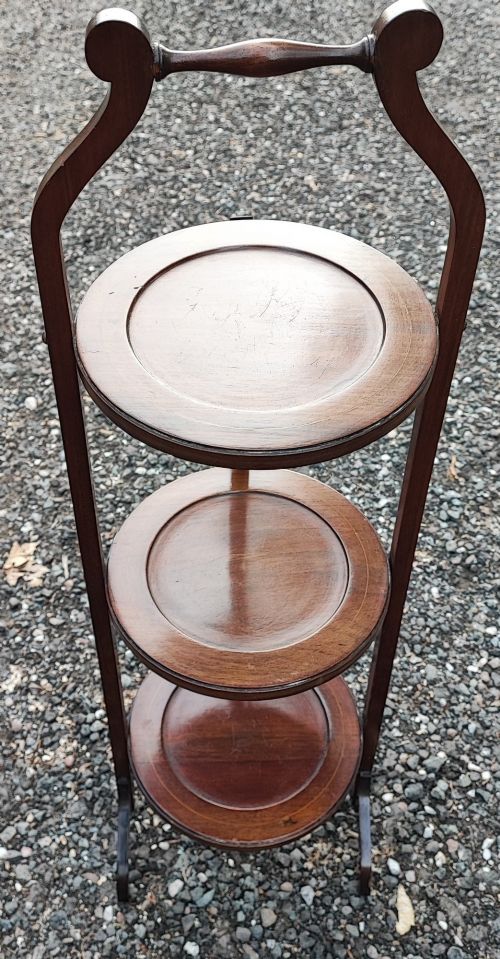
Mahogany and oak serve as the principal timbers for wooden variants, complemented by brass and glass constructions. Inlaid decoration appears on select mahogany models to add subtle surface detail.
How traditional cake tier stands were made
Cabinet makers built these pieces using solid timbers such as mahogany, oak, walnut, rosewood, and boxwood. Joinery techniques accommodated folding mechanisms and revolving tiers supported by tripod bases.
Makers incorporated brass hardware for hinges and structural supports, alongside glass shelves in polished metal display stands. Inlay work utilised lighter woods set into darker mahogany surfaces to create decorative borders.
What varies in quality
Timber selection dictates the distinction between standard production and superior examples, with figured mahogany and quarter-sawn oak showing greater depth of grain. The integration of boxwood inlay and careful polishing distinguishes finer models.
Mechanical execution defines the worth of folding and revolving variants. Smooth operation of folding hinges and steady rotation on tripod bases demonstrate precision in original construction.
The Traditional Cake Tier Stand Glossary
- Dumb Waiter
- A tiered stand designed to hold items without domestic assistance, often featuring revolving shelves on a central column. This form provides multiple levels for easy access from a seated position.
- Tripod Base
- A three-legged support structure that provides stability for revolving tier stands. This configuration prevents rocking on uneven floor surfaces.
- Sheraton Revival
- A late nineteenth and early twentieth-century design style drawing on eighteenth-century neoclassical furniture patterns. Pieces in this style typically feature straight tapered legs and delicate inlay.
- Folding Cake Stand
- A tiered frame engineered with hinges to collapse flat for storage when not in use. This practical mechanism allows for quick deployment and compact stowing.
Traditional Cake Tier Stand: Frequently Asked Questions
How were traditional cake tier stands used?
These stands served to present cakes and afternoon tea items across multiple vertical levels, keeping tables clear for guests.
In daily domestic life, they also functioned as moveable display furniture for ornaments and small objects in reception rooms.
What materials are common in these stands?
Solid hardwoods like mahogany, oak, walnut, and rosewood form the primary structure of most examples.
Alternative constructions combine polished brass frames with glass tiers, while felt sometimes appears on protective contact surfaces.
How do I identify an Edwardian stand?
Edwardian stands frequently utilise lighter oak or inlaid mahogany timbers, reflecting the decorative tastes of the early twentieth century.
They often feature folding frames or simple tiered arrangements suited to smaller drawing rooms of that era.
What is a revolving dumb waiter?
A revolving dumb waiter is an early Victorian form featuring tiers that turn around a central upright support.
Mounted on a tripod base, these pieces allow users to access items from all sides without moving the entire stand.