


Edwardian Afternoon Tea Display
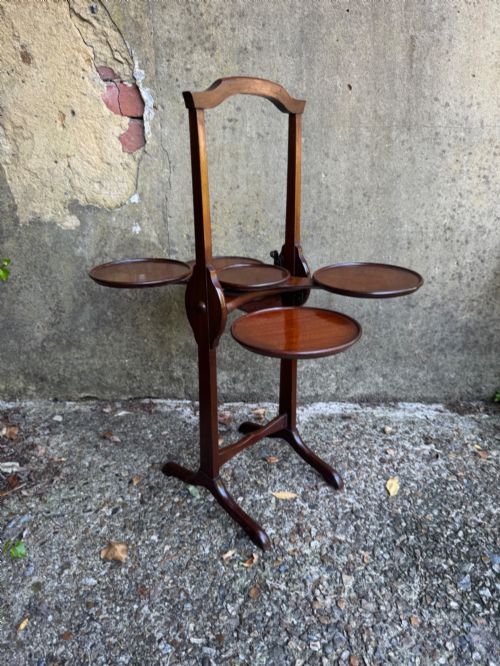
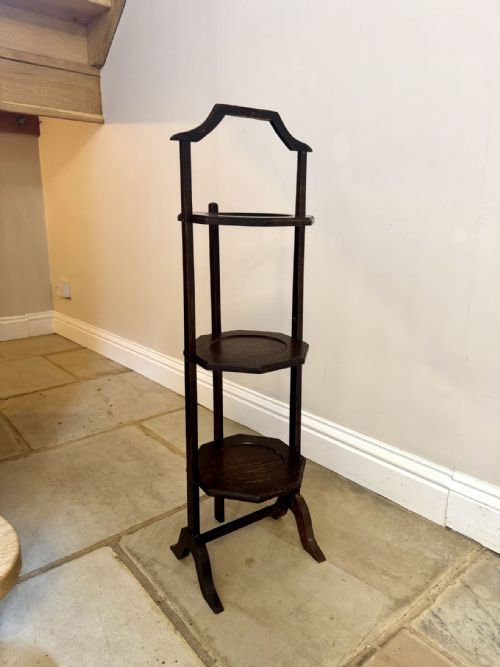
These edwardian afternoon tea display pieces are tiered folding stands designed to serve cakes and pastries with proper period elegance.
Edwardian Afternoon Tea Display
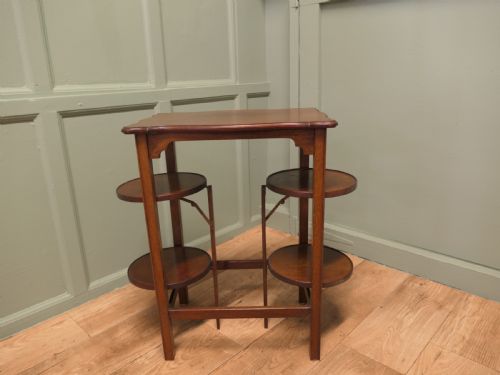
When you search for edwardian afternoon tea display, you are looking at practical furniture made for formal tea service in domestic parlours. The pieces on this page are predominantly tiered stands designed to fold away when not in use.
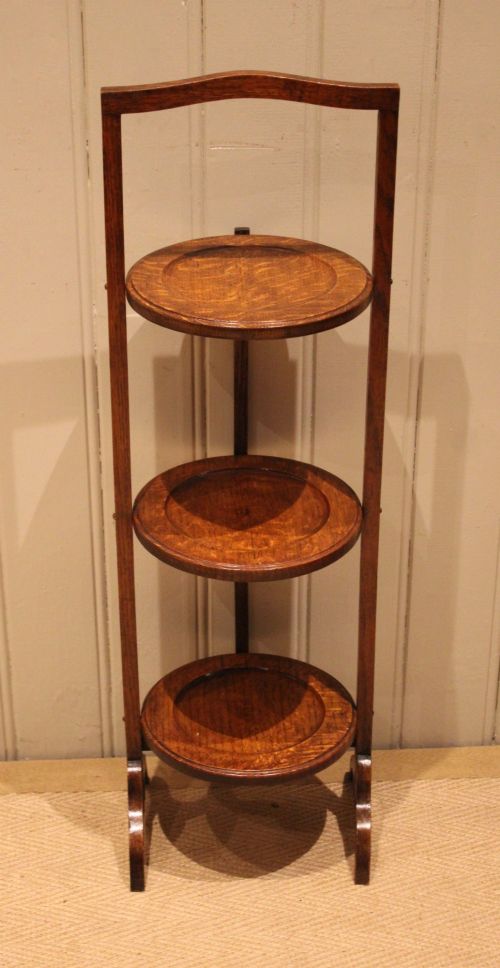
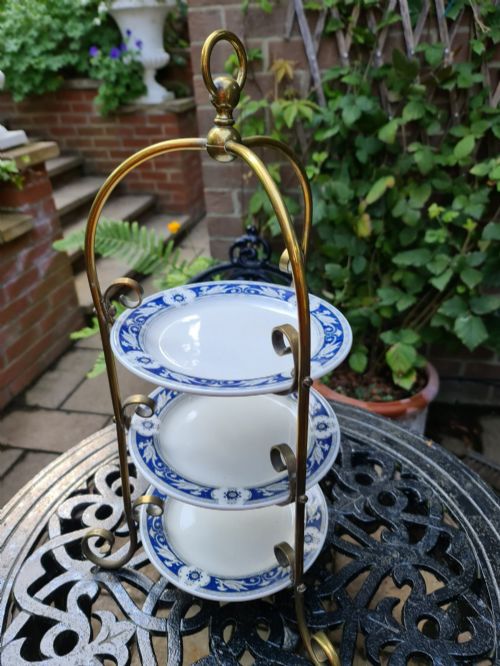
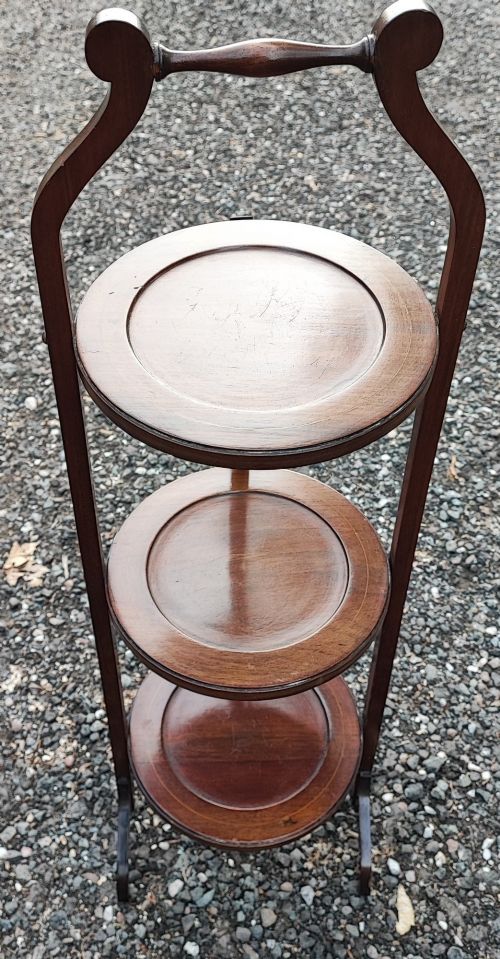
You will most commonly meet three-tier and four-tier examples dating from the Edwardian period, 1900, 1910, and 1920. These tiered stands take up minimal floor space while offering multiple levels for presentation.
The primary forms take shape as cake stands and folding tea tables constructed to support the social rituals of the era. Makers focused on portability and efficient design alongside decorative appeal.
How they were made
Cabinet makers utilised solid woods and veneers, selecting mahogany, oak, and satinwood for their grain and durability. These timbers were shaped into tiered platforms supported by folding wooden frames.
Decoration relied on fine boxwood inlay and boxwood stringing executed in the Sheraton Revival style. Brass hinges and fittings allowed the tiered structures to collapse smoothly.
Some stands hide clever mechanical hinges that let a towering four-tier structure fold flat enough to slip behind a parlour door.
What varies in quality
Quality rests upon the selection of timber and the precision of the folding mechanism. Finer examples display carefully matched mahogany veneers and crisp boxwood inlay rather than plain surfaces.
The joinery of the tiers and the stability of the upright supports separate standard utility stands from more ambitious pieces. Superior stands maintain balance and rigidity across all tiers when fully open.
The Edwardian Afternoon Tea Display Glossary
- Tiered stand
- Furniture featuring multiple levels rising vertically to display items. This configuration maximises surface area within a compact footprint.
- Sheraton Revival
- A late nineteenth and early twentieth century design style reviving the classical furniture forms of Thomas Sheraton. It relies on symmetrical geometry and delicate inlay.
- Boxwood inlay
- Contrasting light wood inserted into recesses within a darker wood ground to create decorative patterns. It frequently outlines the edges of tabletops and tiers.
- Folding mechanism
- The pivoting hardware and wooden joints that allow a stand to collapse flat for storage. Good examples operate without binding or excessive play.
Edwardian Afternoon Tea Display: Frequently Asked Questions
How were these stands used?
These stands served cakes, biscuits, and pastries during afternoon tea gatherings in Edwardian homes. Guests could easily reach pastries presented across the multiple tiers.
The folding design allowed hosts to clear the stands away once tea concluded, returning space to the drawing room.
How do I care for mahogany?
Keep mahogany furniture away from direct sunlight and heat sources to prevent the wood from drying and fading. Regular dusting with a soft dry cloth maintains the finish.
Apply occasional natural wax feeds to nourish the timber and preserve the depth of the grain.
Are all these stands folding?
The majority of pieces featured here are constructed with folding frames designed for easy storage. This practical aspect defined much of the production during the period.
A few standing variants exist without folding mechanisms, offering a more permanent display surface.
What woods were used?
Makers relied heavily on mahogany and oak for the primary structure of these stands. Satinwood and boxwood appeared as secondary timbers used specifically for decorative inlay.
These materials provided the necessary strength to support ceramic plates and food while keeping the weight manageable.