



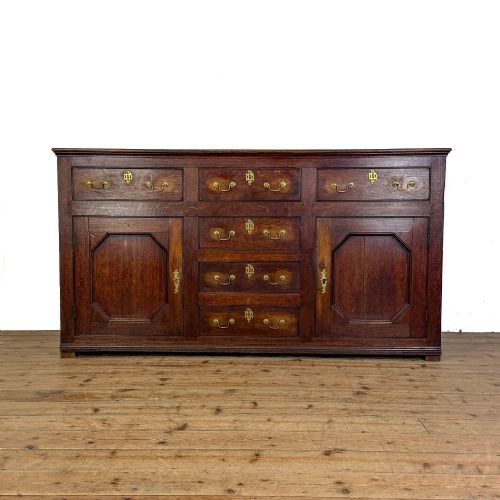
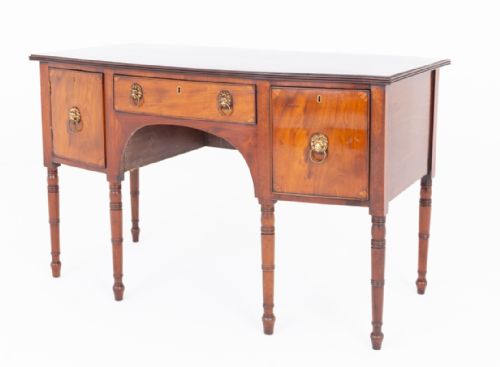
Traditional Buffet Table
These traditional buffet table designs span centuries of dining room service, offering robust timbers and stately proportions to anchor a proper interior.
Traditional Buffet Table
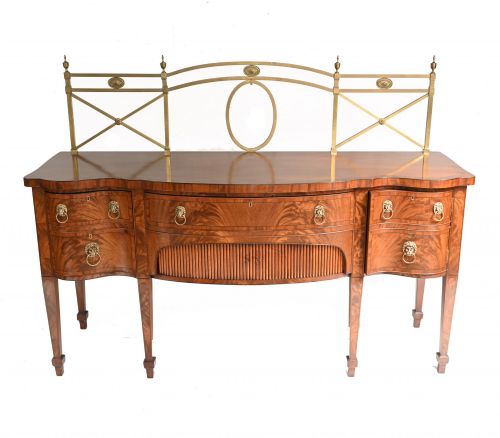
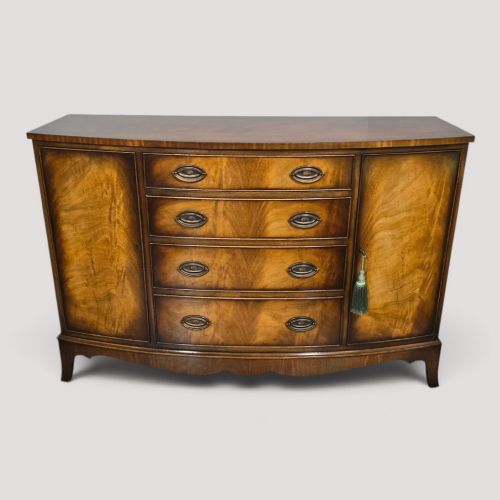
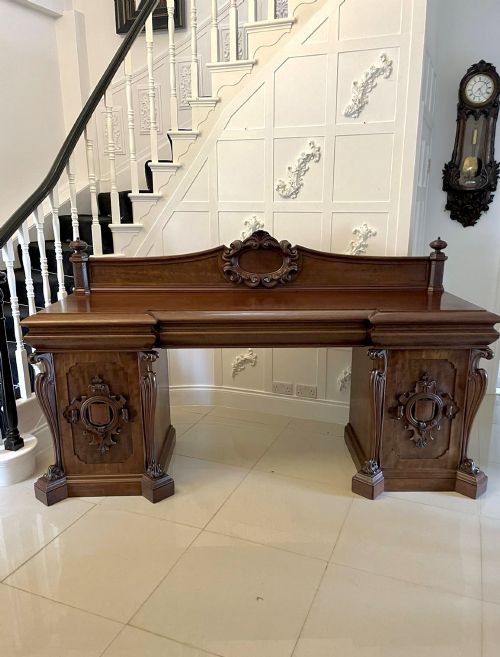
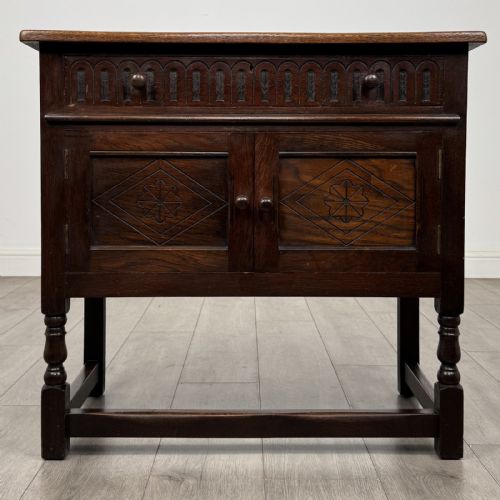
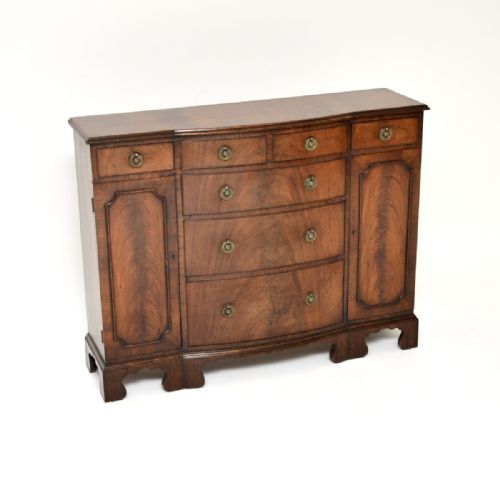
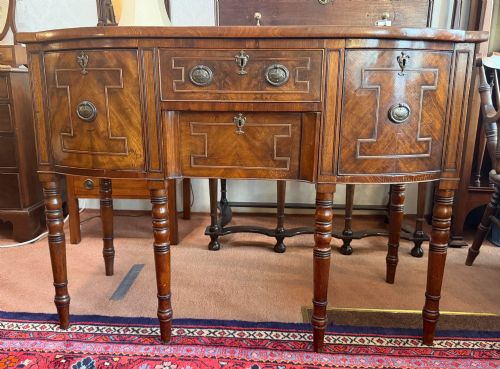
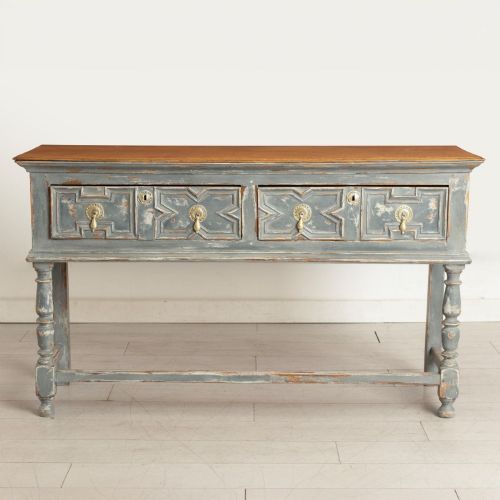
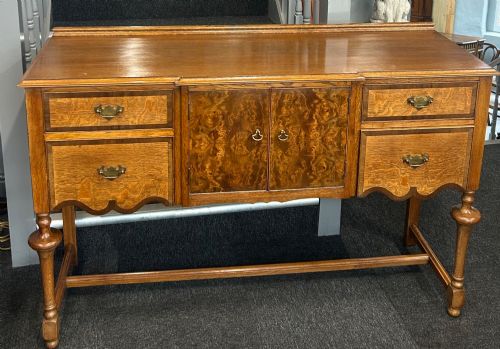
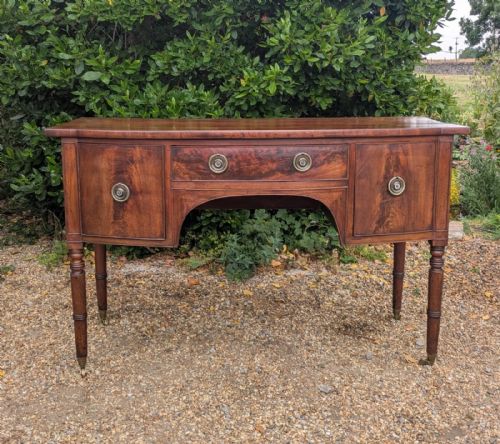
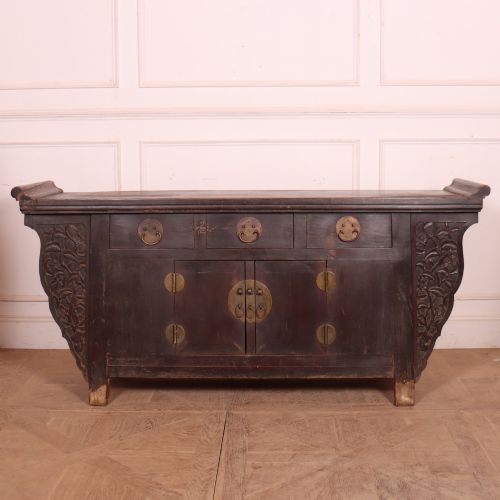
A traditional buffet table serves as a foundational piece for dining and serving, appearing across this selection primarily as sideboards, dresser bases, and servers. These forms are designed to hold dinnerware, linens, and food during meals while providing a substantial surface for display.
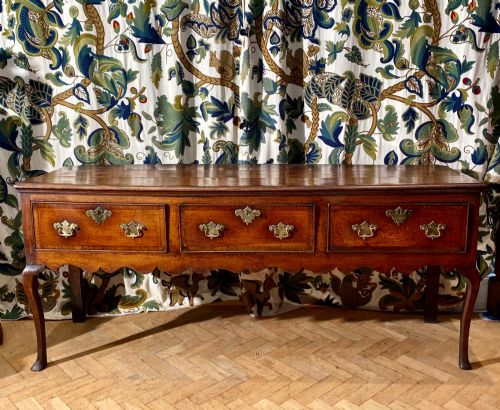
The pieces you encounter span from the 18th century through the early 20th century, covering Georgian, Victorian, and Edwardian eras. You will frequently find oak and mahogany examples, reflecting the dominant timber choices of British cabinet makers across these periods.
Beyond standard sideboards, the selection includes potboard dressers, console tables, and specialised buffets that incorporate cupboards and fitted drawers. Each variant answers to the practical demands of historic dining rooms, maintaining utility alongside period craftsmanship.
Materials and cabinet-making techniques
Cabinet makers relied heavily on solid oak and rich mahogany, often selecting flame mahogany veneers and burr walnut to add visual depth to drawer fronts and cupboard doors. Secondary timbers such as pine frequently appear in structural carcases and drawer linings.
Construction techniques combine dovetailed drawer construction with fielded panel doors and applied carved ornament. Carved details range from Neoclassical motifs to Jacobean style geometric panels, executed directly into the solid timber or applied as separate mouldings.
Finishing methods traditionally involved hand-waxing or polishing to bring out the natural grain of the wood, while some regional pieces show traces of historic paint or raw bleached surfaces.
Traditional Buffet Table Retail Price Guide 2026
Typical asking prices for traditional buffet table among the pieces listed under this phrase on Sellingantiques today, from the lower quarter to the upper quarter. They describe what is for sale here now, not the wider market.
Evaluating period standards and build quality
Quality in these pieces rests primarily on the selection of timber and the integrity of the joinery. Superior examples utilise dense, well-figured mahogany or quarter-sawn oak, ensuring the carcase remains stable and robust over centuries of use.
The refinement of the carving and the precision of secondary elements distinguish finer specimens. Crisp hand-carved mouldings, well-fitted drawers with hand-cut dovetails, and original brass hardware elevate a piece above standard utilitarian workshop production.
The Traditional Buffet Table Glossary
- Dresser base
- A low wooden sideboard or table fitted with drawers and occasionally a lower potboard shelf, traditionally used for food preparation and storage.
- Potboard
- An open lower shelf built into a dresser base or sideboard, originally intended for resting pots and heavy kitchen utensils.
- Bow-front
- A convex, curved front profile popular in Georgian and Edwardian cabinet making, designed to soften room angles and add interior depth.
- Fielded panel
- A wooden panel with bevelled edges set into a frame, commonly used on cupboard doors to allow timber movement while adding architectural relief.
- Breakfront
- A piece of furniture whose central section projects forward from the flanking cabinet sides, creating a dynamic architectural silhouette.
Traditional Buffet Table: Frequently Asked Questions
What is a traditional buffet table used for?
These pieces serve as functional storage and serving surfaces in dining spaces. They accommodate tableware, cutlery, and linens within drawers and cupboards.
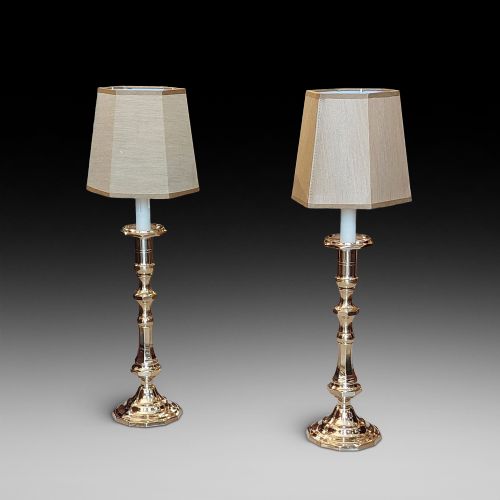
The top surface provides ample room for food presentation during meals or for displaying decorative lamps and ceramics when not in use.
How do I date an oak dresser base?
Dating relies on examining construction methods, timber selection, and stylistic details. Earlier 18th-century pieces often feature hand-split oak boards and pegged joints.
Later Victorian and Edwardian revivals incorporate machine-sawn elements and standardised hardware alongside period revival styling cues.
What is the difference between a sideboard and a buffet?
While terms often overlap in modern usage, traditional buffets and sideboards share similar roots in dining room service. Buffets frequently emphasise surface area for food layout.
Sideboards often incorporate more extensive cupboard and drawer arrangements tailored for storing heavy dining silver and porcelain.
How do I care for antique mahogany furniture?
Maintain antique mahogany by keeping it away from direct heat sources and strong sunlight, which can dry and fade the timber. Regular dusting with a soft, dry cloth prevents particulate accumulation.
Apply a traditional beeswax polish occasionally to nourish the wood and preserve the natural lustre of the polished surface.