




Traditional Broad Arm Chairs
Traditional broad arm chairs are sturdy seating built for comfort, and every buyer wants one for their robust timber frame and generous proportions.
Traditional Broad Arm Chairs
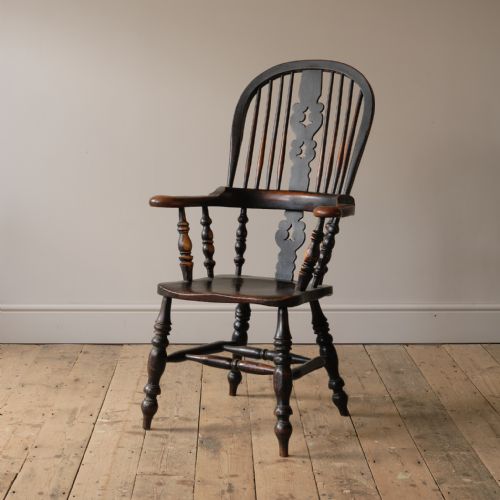
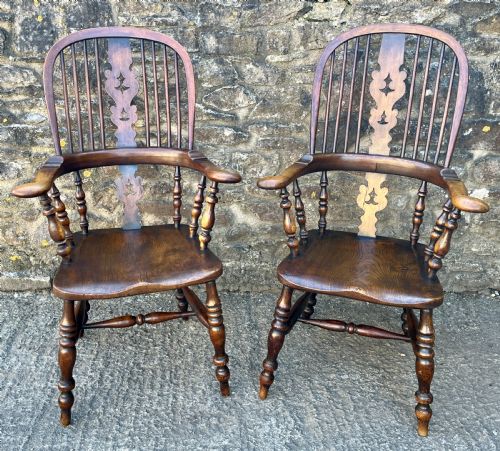
Traditional broad arm chairs are robust Windsor armchairs defined by their wide, flat armrests, providing a comfortable surface for the sitter. These pieces date principally from the nineteenth century, including Victorian and Edwardian periods, alongside a small number from the early twentieth century.
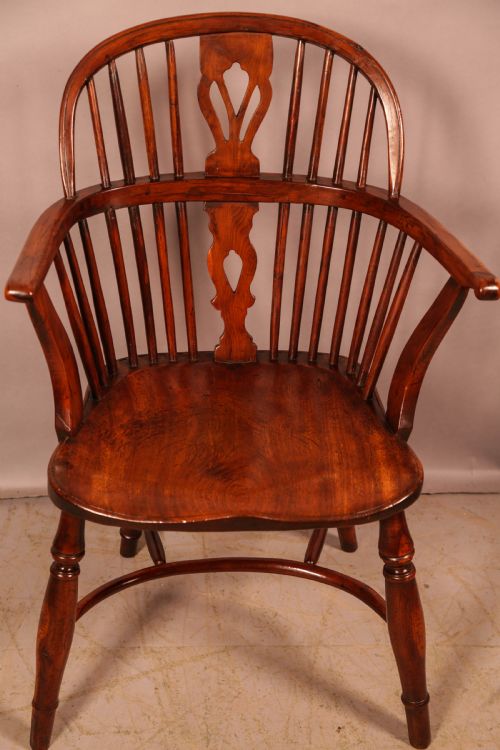
The dominant forms seen here are Windsor chairs featuring high or low backs, alongside English country and vernacular variations. Regional pieces, such as those from Yorkshire, also appear among the selections.
Makers utilised a combination of native timbers to construct these sturdy armchairs, pairing elm seats with yew, ash, or oak frames. A pair of oak framed throne chairs with turned legs represents the heavier stylistic end of the selection.
How traditional broad arm chairs were made
Craftsmen built these chairs using a mix of native hardwoods, turning spindles and legs from ash, beech, or oak, while shaping the wide armrests and seats from solid elm or yew wood. The seats were traditionally saddled or carved into a thick slab of elm to accommodate the body.
Construction relied on traditional joinery techniques, slotting turned spindles and legs directly into bored holes within the solid wood seat. Yew wood was frequently selected for its striking grain and durability, paired with contrasting timbers for the seat and undercarriage.
A Worksop maker signed their sturdy yew wood creation directly into the woodwork.
What varies in quality
The choice of timber heavily influences the character of each chair, with richly figured yew wood generally commanding greater visual weight than plainer elm or ash. The grain pattern and colouration of the wood dictate the overall aesthetic presence of the piece.
Proportion and scale distinguish individual examples, particularly the width and sweep of the broad armrests and the height of the spindle back. Chairs retaining their original surface finish and robust structural integrity stand apart from heavily restored or altered examples.
Allsop Worksop·Worksop Made
The Traditional Broad Arm Chairs Glossary
- Windsor chair
- A chair built with a solid wooden seat into which the legs and back spindles are direct-tenoned. These chairs originated in rural workshops and rely on sturdy frame construction rather than upholstered padding.
- Broad arm
- A wide, flat wooden armrest integrated into the chair design. This feature offers an extended surface area compared to standard narrow armrests.
- English vernacular
- Furniture made by regional craftsmen using local traditions and native timbers rather than following strict metropolitan stylistic rules. These pieces often reflect the specific needs of the local area.
- Low back
- A chair design where the upper rail sits lower relative to the seat. This form provides a compact profile while maintaining the structural rigidity of a Windsor chair.
- Saddled seat
- A wooden seat base carved into a shallow, concave depression resembling a saddle. This shaping improves comfort for the sitter.
Traditional Broad Arm Chairs: Frequently Asked Questions
Are traditional broad arm chairs comfortable?
These armchairs are designed with solid carved seats and wide armrests intended for daily use. Their supportive high or low backs offer a firm posture.
While they lack upholstered cushions, the ergonomic shaping of the wooden seat makes them practical for prolonged sitting.
How do I date a traditional broad arm chair?
Dating relies on examining the timber species, tool marks, and construction wear. Pieces from the nineteenth century often show distinct hand-turning on the spindles and natural patination on the yew or elm.
Later Edwardian or 1920s variations may exhibit different undercarriage turning styles or alternative wood pairings such as oak.
Can I use these chairs at a dining table?
The generous width of the broad armrests means these chairs require more lateral space than standard dining seats. They fit best at the ends of a large table or as standalone accent seating.
Measuring the clearance beneath your table edges is essential before pairing them with dining furniture.
What woods were used for these chairs?
Makers relied on native British hardwoods selected for strength and flexibility. Elm was the primary choice for solid, heavy seats due to its resistance to splitting.
Frames, backs, and armrests were constructed from yew wood, ash, or oak, often combining multiple timbers within a single chair.