


Traditional Brass Travel Clock
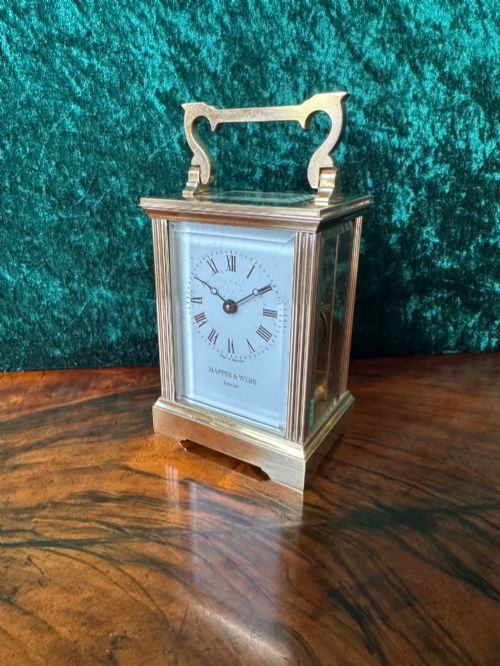
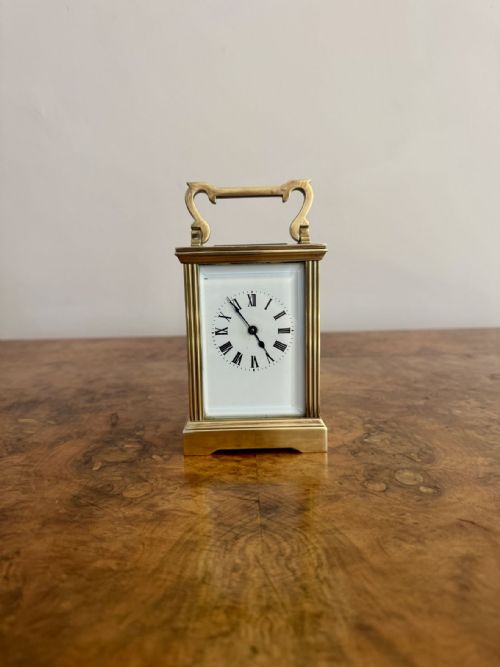
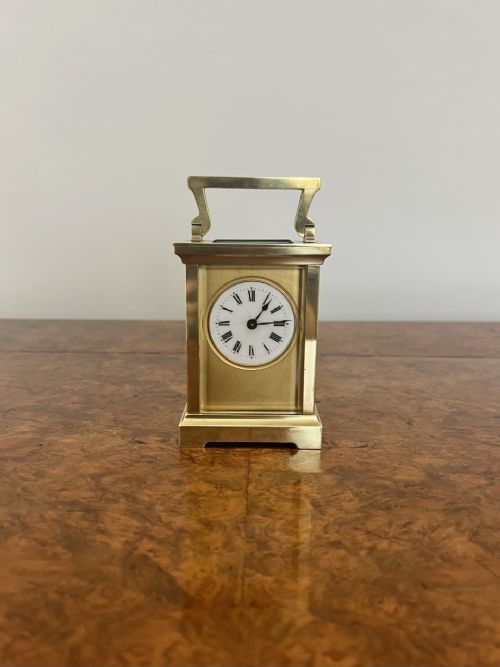
A traditional brass travel clock is a portable timepiece housed in glass and metal, prized by collectors for its mechanical ingenuity and classic desk presence.
Traditional Brass Travel Clock
When searching for a traditional brass travel clock, you encounter carriage clocks spanning the nineteenth and twentieth centuries, particularly Victorian and Edwardian examples. These pieces originated as portable timekeepers for travellers and gentlemen on the move.
Examples stretch chronologically from the mid nineteenth century through to mid century productions, encompassing simple timepieces alongside striking and repeating mechanisms.
How They Were Made
These clocks combine heavy cast or wrought brass frames with bevelled glass panels that reveal the intricate gear trains within. Gilt brass finishes appear frequently alongside plain polished metal, creating a bright reflective surface.
Some models hide tiny buttons on top that, when pressed, make the clock chime the time all over again in the dark.
What Varies in Quality
The refinement of the casting and the crispness of the case moulding separate standard models from finer productions. Heavier gilt brass frames and complex movements with striking or repeating functions indicate higher workshop standards.
The presence of an intact escapement and unblemished enamel dials contributes significantly to the integrity of the piece. Cases with sophisticated architectural details like gorge mouldings or serpentine shapes demand closer attention.
Mappin and Web·Henry Jacob·James Grohé·Garrard and Co·Penlington and Batty
The Traditional Brass Travel Clock Glossary
- Carriage clock
- A portable spring driven timepiece designed for travel during the nineteenth century. These clocks typically feature a rectangular brass case with glass sides and a handle on top.
- Gorge case
- A specific stepped brass case style popular on nineteenth century French carriage clocks. The distinctive moulded top profile adds architectural weight to the piece.
- Striking movement
- A mechanism that sounds the hours and half hours on a bell or gong. This function required more complex gear trains within the brass housing.
- Repeating movement
- A complication allowing the clock to repeat the last hour struck when a button on the case is pressed. Such movements represent higher technical achievement in portable timekeeping.
- Escapement
- The internal mechanism that controls the release of power from the mainspring to regulate the ticking. The platform escapement is standard in these travel pieces.
Traditional Brass Travel Clock: Frequently Asked Questions
How do I wind a carriage clock?
Most of these clocks utilise a key inserted into the backplate to tension the mainspring. Care must be taken not to overwind the movement.
Eight day versions require winding approximately once a week, while simpler timepieces follow similar weekly intervals depending on the gear train.
What is a gorge case?
A gorge case refers to a specific stepped brass frame construction with characteristic mouldings around the top and base. This style originated in France during the nineteenth century.
Such cases provide a heavier, more substantial housing for the glass panels and mechanical movement within.
Were these clocks actually used for travel?
Original owners carried these timepieces in carriages and railway coaches to maintain precise schedules away from home. Fitted leather outer cases protected the brass and glass from the bumps of travel.
Today they function primarily as desk or mantel clocks rather than portable journey companions.
How can I tell French and English clocks apart?
French makers produced the vast majority of nineteenth century carriage clocks, often marked on the backplate with maker stamps. English retailers frequently imported these movements and signed the dials.
English made examples from firms like Mappin and Web possess distinct workshop characteristics and movement layouts.