


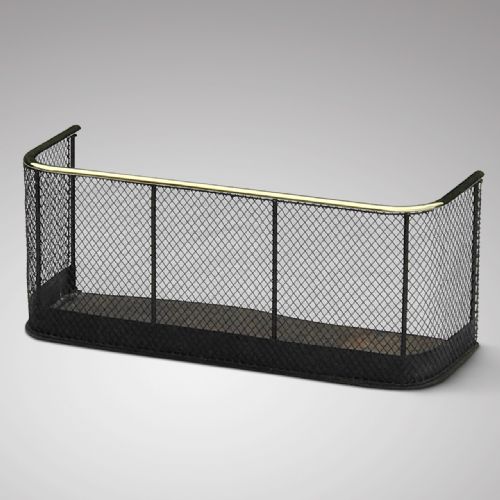
Traditional Brass Hearth Rail
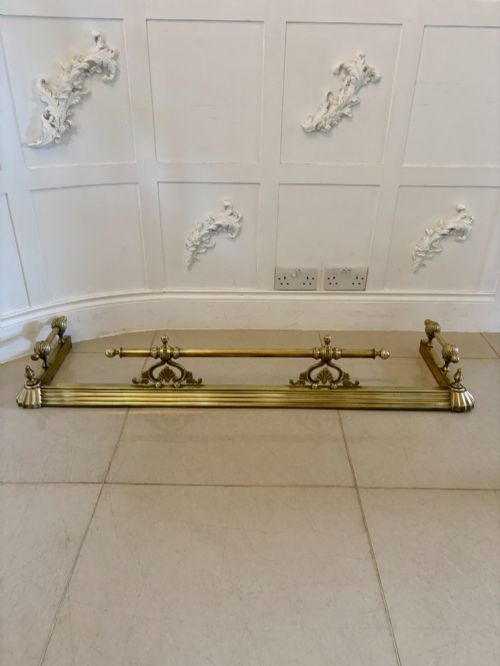
These traditional brass hearth rail pieces are the heavy metal frames that keep coal and ash contained while warming the rug.
Traditional Brass Hearth Rail
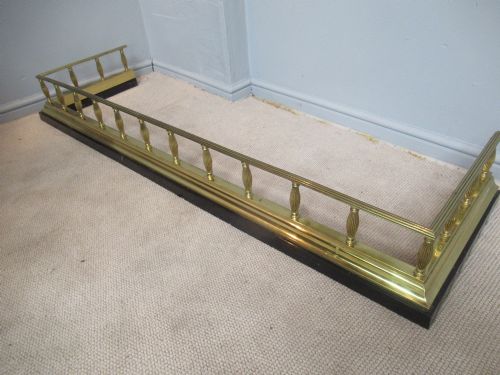
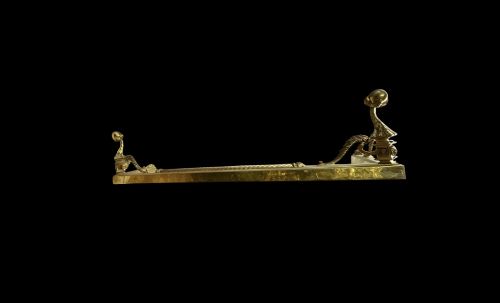
When you search for a traditional brass hearth rail, you are looking at nineteenth-century and early twentieth-century fireplace accessories designed to protect the room from stray embers. The pieces on this page span the Victorian and Edwardian eras, taking the form of curb fenders, fire guards, and club fenders.
You are most likely to meet straight brass fenders or combined brass and iron constructions. Some examples incorporate wire mesh, copper highlights, or upholstered leather seats for fireside sitting.
How they were made
Maker's workshops used heavy gauge brass and cast iron to build structural strength into these hearth rails. Pierced sheet metal, steel components, and applied copper elements provided decorative contrast to the primary brass frames.
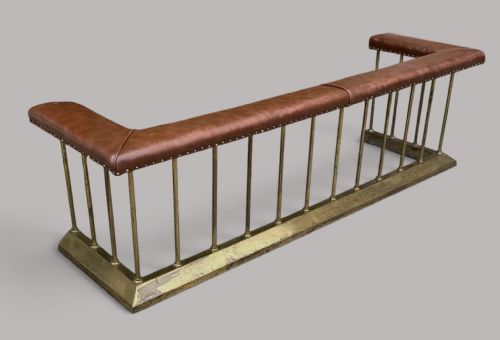
Leather upholstery was integrated into the top rails of club fenders using traditional padding and studding techniques. Scrollwork and cast ornamentation were affixed to heavy metal bases to withstand intense hearth heat.
Listings feature Victorian and Edwardian periods, utilising materials such as brass, iron, steel, copper, wire mesh, and leather.
What varies in quality
The distinction between ordinary and superior examples lies in the thickness of the metal gauge and the weight of the casting. Heavy gauge brass and solid iron cores demonstrate a more substantial build than lighter domestic iterations.
Refinement of detail also separates the range, visible in the precision of pierced metal panels and the quality of mature leather upholstery. Original components and structural integrity elevate the standing of a piece.
The Traditional Brass Hearth Rail Glossary
- Club fender
- A low fireside frame featuring upholstered leather seats on either side. These allowed Victorians to sit comfortably close to the warmth of the grate.
- Curb fender
- A metal barrier placed on the hearth around the fireplace opening. It prevents hot coals and embers from rolling onto the floorboards.
- Nursery fender
- A taller protective guard designed to keep children at a safe distance from the fire. Some examples include an integrated clothes rail for warming garments.
- Gauge
- The thickness of the sheet metal used in construction. Heavy gauge brass indicates a thicker, more durable build.
Traditional Brass Hearth Rail: Frequently Asked Questions
What is a club fender?
A club fender is a low hearth guard fitted with cushioned leather seats on top. It allowed people to sit directly beside the fireplace while containing stray embers.
These pieces combined practical hearth protection with extra fireside seating in nineteenth-century homes.
How do I date a brass fender?
Dating relies on stylistic markers from the Victorian and Edwardian periods, alongside construction methods like iron framing and heavy gauge brass casting.
Makers often incorporated cast lions, pierced panels, or specific leather upholstery styles that reflect late nineteenth and early twentieth-century workshops.
Can I use these with modern fireplaces?
These rails fit neatly around modern hearths to provide period character and physical protection from heat and ash.
Ensure you measure the width and depth of your hearth space carefully before selecting a fender.
What maintenance do brass rails need?
Brass surfaces benefit from occasional dusting and gentle cleaning to maintain their metal finish without stripping historical patina.
Leather seats on club fenders require standard conditioning suitable for antique hides to keep them supple.