
Traditional Brass Candlestick Lighting
Traditional brass candlestick lighting brings metalwork from the eighteenth and nineteenth centuries into modern rooms as functional table lamps and candleholders.
Traditional Brass Candlestick Lighting
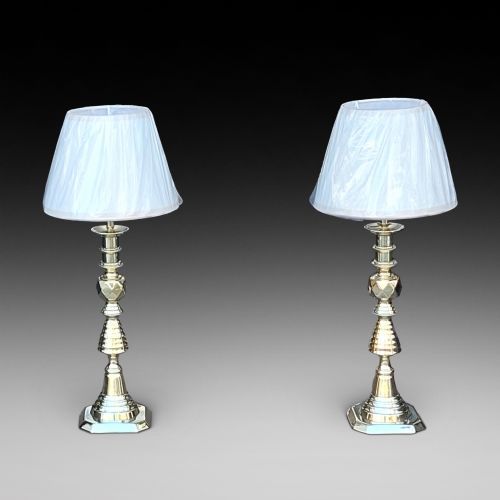
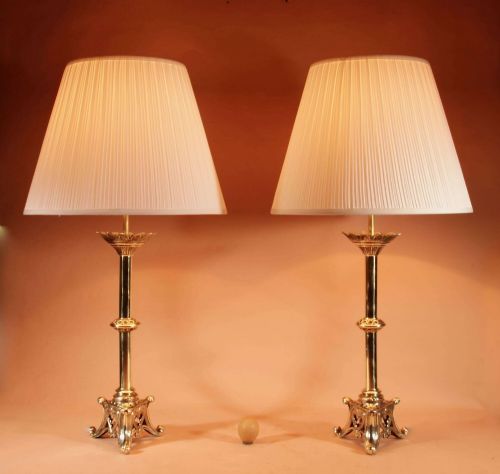
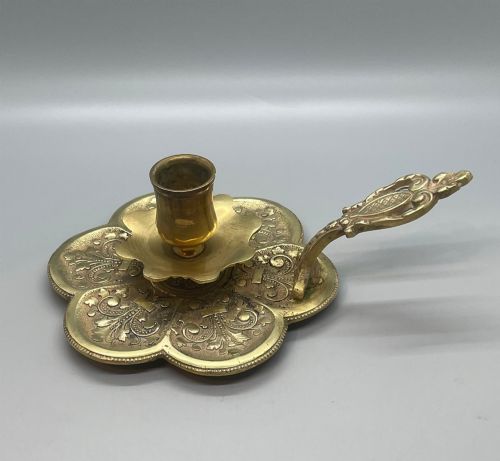
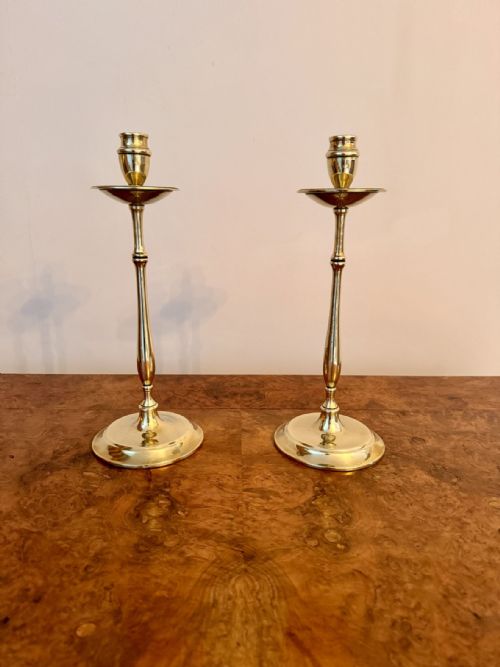
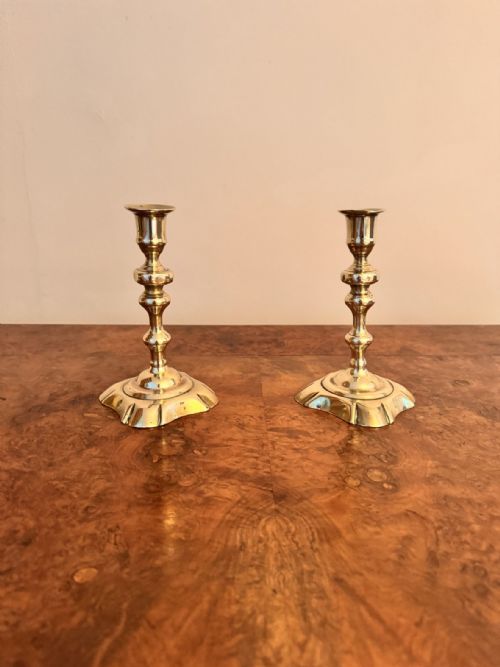
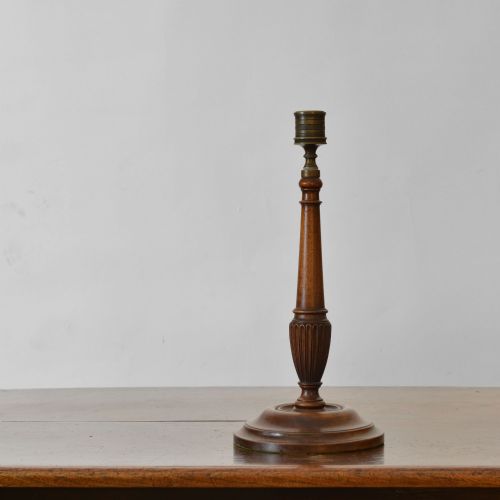
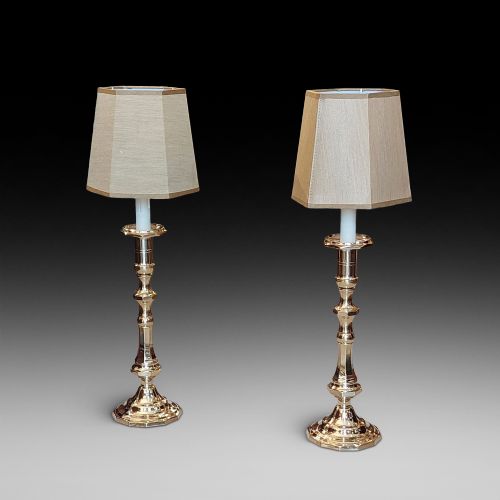
Traditional brass candlestick lighting encompasses antique table lamps, candleholders, and converted candlesticks originating from periods such as the Georgian, Victorian, and Edwardian eras. Buyers exploring traditional brass candlestick lighting will encounter single pieces alongside matched pairs formed from cast brass, bronze, and occasionally wood or fabric.
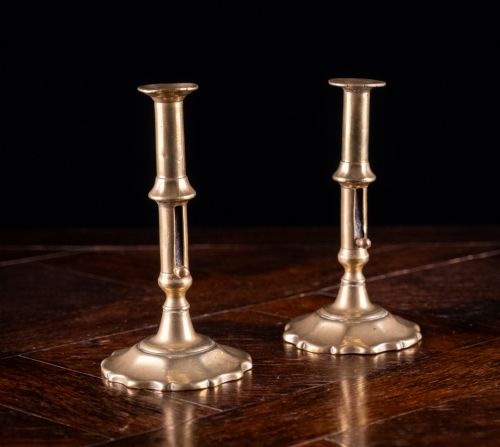
The selections range from simple domestic ejector candlesticks designed for everyday utility to grander church candlesticks and ionic column lamps. Many examples date from the eighteenth and nineteenth centuries, spanning Georgian and Victorian stylistic influences.
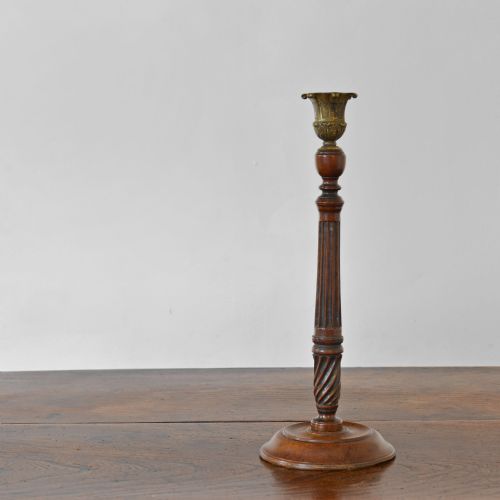
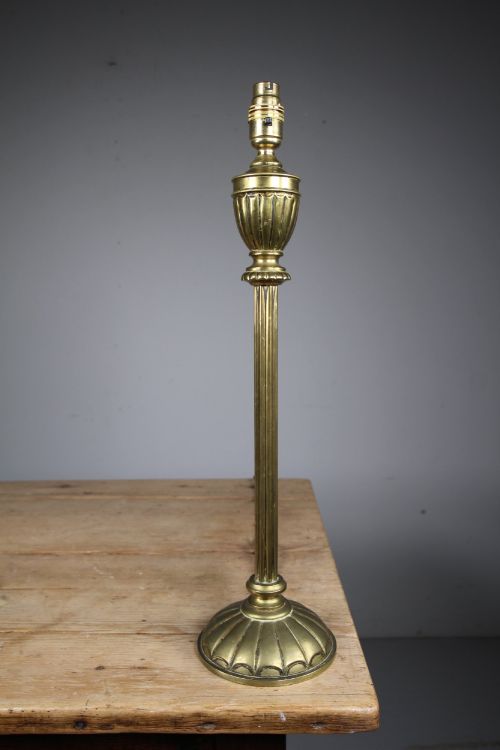
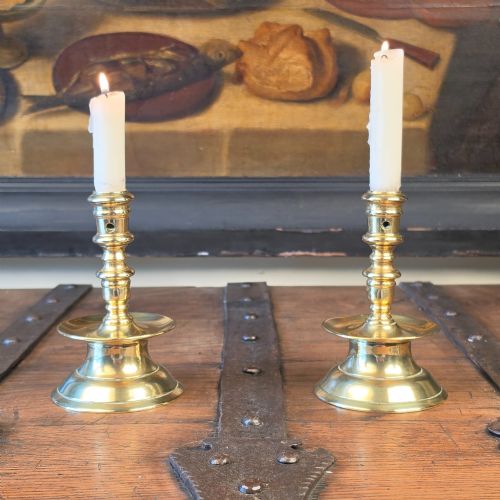
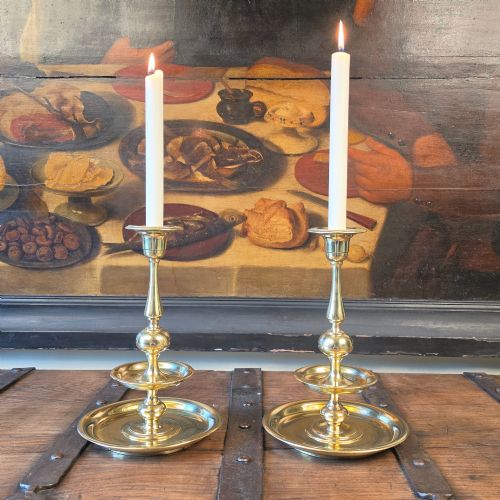
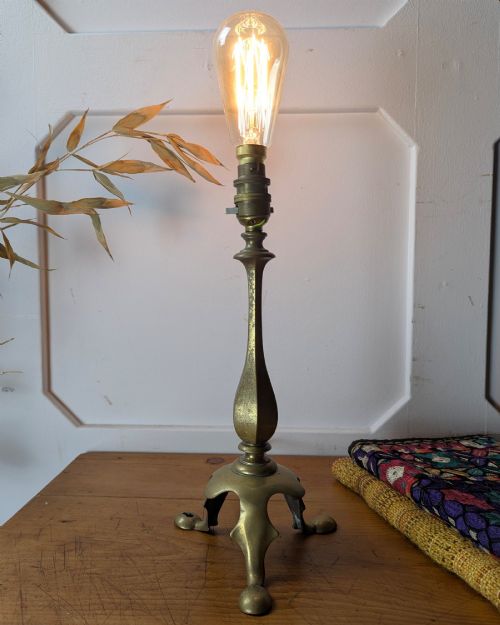
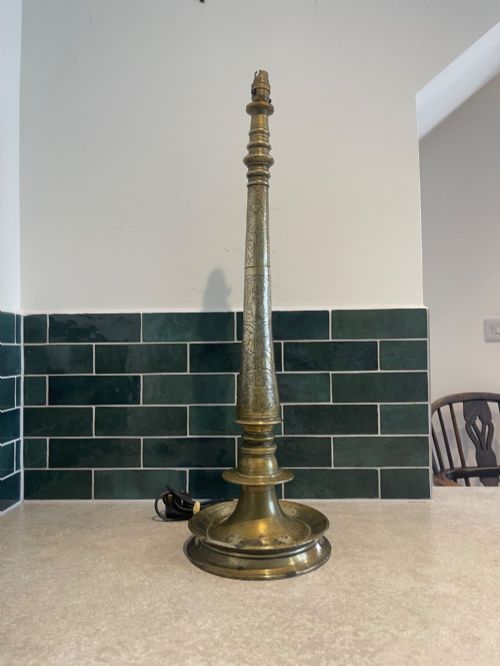
Makers and workshops produced these items in various forms, including twisted columns, baluster shapes, and adjustable student lights. Conversions from original wax-burning candlesticks to electrified table lamps also appear frequently within the listings.
What varies in quality
The refinement of the casting and the crispness of the chased or turned details separate standard domestic examples from finer productions. Heavier gauge metalwork and proportional balance in columns or balusters indicate superior workshop output.
Original patination and intact structural components, such as working ejector mechanisms or harmonious conversions to lamps, contribute to the standing of individual pieces.
Several Victorian candlesticks bear the cheerful moniker King of Diamonds.
J.T. & Co
The Traditional Brass Candlestick Lighting Glossary
- Ejector candlestick
- A candlestick fitted with an internal mechanism to push out the remaining candle stub. This device used a small side lever or sliding button.
- Pricket candlestick
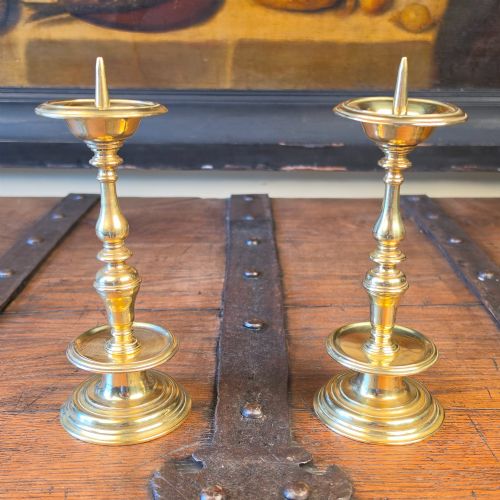
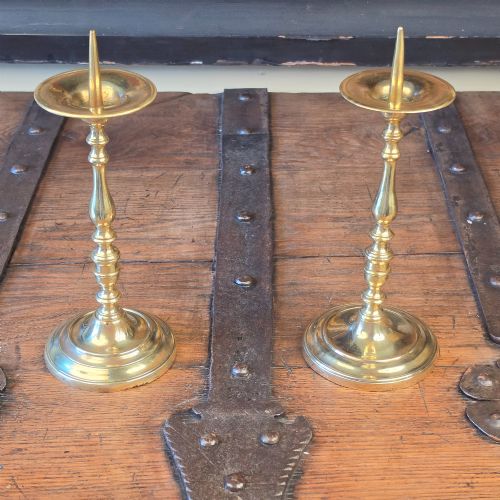
- A candlestick that holds a candle upon a sharp metal spike rather than inside a socket. These often appear in ecclesiastical contexts.
- Baluster form
- A architectural support shape characterised by a rounded, swelling lower portion tapering upward. This profile appears frequently on seventeenth and eighteenth-century stems.
- Ionic column lamp
- A lamp modelled after the classical Greek architectural order featuring volute scrolls on the capital. Victorian designers adapted this form for tall table lighting.
- Seamed brass
- Metalwork constructed from separate sections joined together at visible seams during the manufacturing process. This technique typifies earlier brass production before advanced extrusion methods.
Traditional Brass Candlestick Lighting: Frequently Asked Questions
How do I date an old brass candlestick?
Dating relies on manufacturing techniques like seamed construction, base shapes, and prevailing period styles such as Georgian or Victorian. Examining the wear patterns and patination helps confirm the age of the brass.
Earlier pieces often display heavier casting and simpler forms, while nineteenth-century examples introduce ornate twists, ionic columns, and mechanical ejector systems.
Were these candlesticks converted into lamps?
Many antique candlesticks and candelabra have been adapted for electricity to serve as functional table lamps. These conversions allow historical metalwork to be used safely with modern wiring.
Original forms are preserved wherever possible during the rewiring process, maintaining the aesthetic of the antique base.
What is an ejector candlestick?
An ejector candlestick contains a built-in sliding mechanism designed to expel spent candle stubs easily. A small side tab moves an internal plate up the socket.
This practical feature became common during the mid-eighteenth and nineteenth centuries for domestic lighting maintenance.
How should I clean antique brass?
Antique brass is best maintained with gentle dusting and minimal interference to preserve the historic patina. Aggressive chemical polishing removes the dark oxidation valued by collectors.
Light cleaning with a soft cloth keeps the metal stable without erasing the signs of age.