




Traditional Brass Bell
Traditional brass bell examples bring historic weight to a room, ranging from schoolhouse handbells to substantial tavern hardware.
Traditional Brass Bell
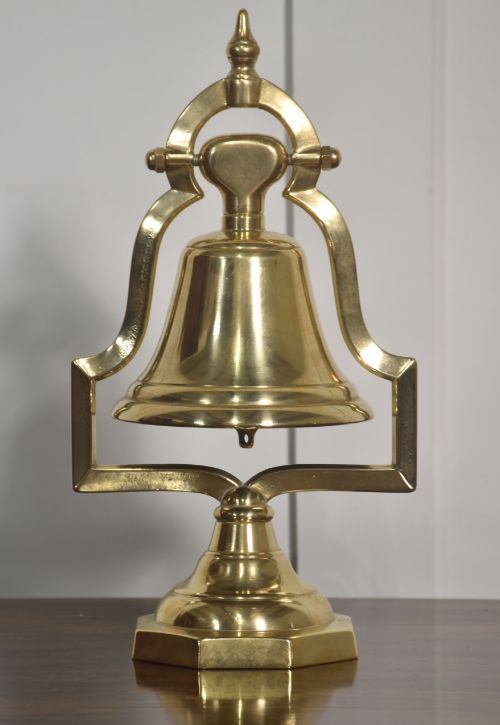
A traditional brass bell covers a broad spectrum of historical utility objects, stretching from domestic table and counter bells to sturdy school pieces and grander dining gongs. The listings present items primarily from the Victorian and Georgian periods, alongside later 19th-century and early 20th-century variations.
Buyers seeking a traditional brass bell encounter everything from simple handheld town cryer designs to complex clock movements and mounted door hardware. Oak, mahogany, and cast iron frequently accompany the metalwork on gongs and servants' bells, creating robust functional objects designed for daily use.
Materials and construction methods
Surface finishes range from polished golden brass to darkened patinas developed through decades of handling. Detail work involves careful turning, casting, and sometimes engraving, ensuring that structural supports match the quality of the sound-producing metal.
Traditional Brass Bell Retail Price Guide 2026
Typical asking prices for traditional brass bell among the pieces listed under this phrase on Sellingantiques today, from the lower quarter to the upper quarter. They describe what is for sale here now, not the wider market.
Some schoolmasters required remarkably loud handbells to cut through the din of nineteenth-century classrooms.
Differentiating quality across examples
Superior weight and thickness in the metal body distinguish finer specimens, directly influencing the depth and clarity of the ring. Thinner castings lack sustained resonance, whereas substantial bell metal produces a clean, sustained tone.
The integrity of the mounting woodwork and associated mechanisms separates standard utility pieces from finer items. Solid oak frames, original cast iron brackets, and intact striking levers retain their mechanical function more reliably than compromised replacements.
Winsor Bishop Norwich·Grey of Edinburgh·Peerless Mathias Bauerle·Warners of London
The Traditional Brass Bell Glossary
- Bell metal
- An alloy of copper and tin traditionally used for casting bells to maximise resonance. This specific formulation creates the bright, clear tone characteristic of quality pieces.
- Lantern clock
- An early form of domestic clock, usually brass and wall-hanging, driven by weights or springs. These often feature bell striking mechanisms mounted visibly on top.
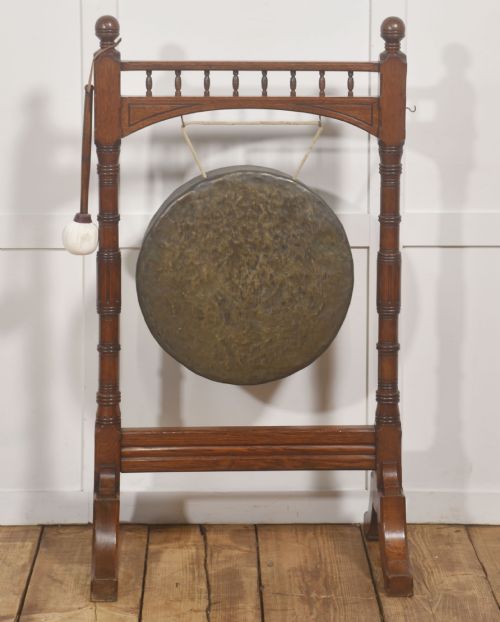
- Dinner gong
- A suspended metal disc or bowl struck with a mallet to summon people to meals. They are typically mounted in carved oak or bamboo frames.
- Counter bell
- A small spring-loaded bell placed on desks or service counters for summoning staff. Pressing the top plunger triggers an internal hammer against the dome.
Traditional Brass Bell: Frequently Asked Questions
How do I clean a traditional brass bell?
Dust the surface regularly with a soft cloth to prevent grime accumulation. Avoid harsh chemical polishes that strip away historical patina.
For stubborn residue, use mild soapy water on the metal parts only, ensuring wood or leather mounts stay dry. Dry thoroughly with a microfiber cloth to maintain the natural finish.
How can I tell a Victorian bell from a Georgian one?
Georgian examples often display simpler, utilitarian casting lines with heavier proportions suited to domestic service or tavern use. Their mounting brackets and pull mechanisms reflect earlier architectural ironmongery.
Victorian pieces frequently show more decorative detailing, incorporating elaborate handles, turned wooden bases, or aesthetic movement styling. Examining the fastening screws and casting methods helps confirm the manufacturing era.
Were these bells used in homes or schools?
Both environments utilised these objects extensively for different daily functions. Schoolmasters and town criers relied on handheld brass models for projection, while large households depended on counter bells and servants' assemblies.
Dinner gongs served dining rooms across grand houses, whereas smaller desk bells managed shop counter service. Each context required distinct acoustic properties and mounting styles.
What is bell metal and why does it matter?
Bell metal is a specific bronze alloy containing roughly four parts copper to one part tin. This precise mixture yields superior hardness and acoustic properties compared to ordinary brass.
Objects cast in this material produce a resonant tone that sustains much longer when struck. Collectors look for this composition when evaluating the acoustic performance of historical bells.